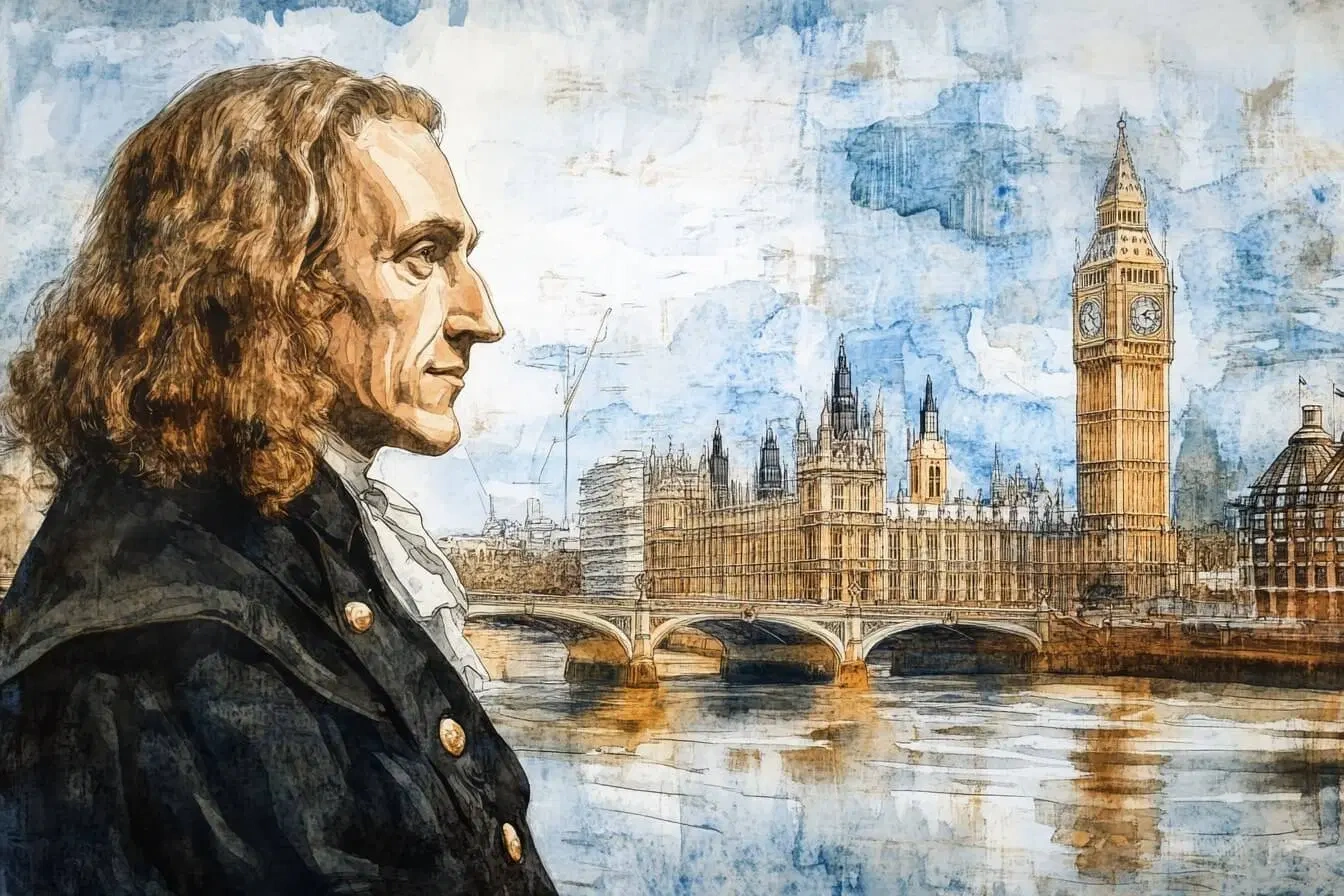
Milton! thou shouldst be living at this hour:
England hath need of thee: she is a fen
Of stagnant waters: altar, sword, and pen,
Fireside, the heroic wealth of hall and bower,
Have forfeited their ancient English dower
Of inward happiness. We are selfish men;
Oh! raise us up, return to us again;
And give us manners, virtue, freedom, power.
Thy soul was like a Star, and dwelt apart:
Thou hadst a voice whose sound was like the sea:
Pure as the naked heavens, majestic, free,
So didst thou travel on life's common way,
In cheerful godliness; and yet thy heart
The lowliest duties on herself did lay.
London, 1802 by William Wordsworth: Summary, Themes, and Short Analysis
London, 1802 is a famous sonnet written by William Wordsworth in 1802. In this powerful poem, Wordsworth expresses his concern about the moral and spiritual decline of England. He believes that the country has lost its values and calls upon the great English poet John Milton to return and guide the nation. Although Milton had died long before the poem was written, Wordsworth uses him as a symbol of wisdom, virtue, and leadership.
The poem is one of the finest examples of Romantic poetry because it combines patriotic feelings with a strong desire for moral reform.
Summary of London, 1802
The poem begins with Wordsworth directly addressing John Milton. He says that England needs Milton because the country has become selfish, materialistic, and morally weak. According to the poet, people no longer value kindness, honesty, courage, or public service.
Wordsworth describes England as losing its true greatness. Important institutions such as religion, family, and national leadership have become corrupted. Instead of living for the common good, people focus only on personal wealth and success.
In the second part of the poem, Wordsworth praises Milton’s character. He describes Milton as someone who lived a simple, pure, and noble life. Milton possessed qualities like humility, wisdom, freedom, and moral strength. Wordsworth wishes that England could learn from Milton’s example and regain its lost values.
Major Themes in London, 1802
1. Moral Decline
The central theme of the poem is the moral decline of society. Wordsworth believes that England has lost its ethical values and needs spiritual renewal.
2. Patriotism
The poem reflects the poet’s deep love for his country. His criticism comes from a desire to see England become morally strong once again.
3. The Importance of Great Leaders
Milton represents the qualities of an ideal leader. Wordsworth believes that strong moral leadership can inspire society to improve.
4. Simplicity and Virtue
The poem praises a simple and honest way of life. Wordsworth admires Milton because he valued wisdom and duty over wealth and personal ambition.
Literary Devices Used in London, 1802
Wordsworth uses several literary devices to strengthen his message.
- Apostrophe: The poet speaks directly to John Milton, even though he is no longer alive.
- Personification: England is described as if it were a person capable of losing its virtues.
- Metaphor: Milton symbolizes moral excellence, wisdom, and spiritual guidance.
- Imagery: The poem creates vivid images that contrast England’s corruption with Milton’s pure character.
- Allusion: The reference to John Milton connects the poem to England’s literary and cultural history.
These literary devices make the poem both emotional and persuasive.
Why London, 1802 Is Still Relevant Today
The message of London, 1802 remains meaningful in the modern world. Many societies continue to face challenges such as corruption, selfishness, and the decline of moral values. Wordsworth reminds readers that true progress depends not only on economic success but also on honesty, compassion, and responsibility.
The poem also encourages people to learn from great individuals whose lives demonstrate integrity and public service. Its themes continue to inspire discussions about leadership, ethics, and national identity.
Conclusion
London, 1802 by William Wordsworth is a timeless sonnet that combines patriotism with moral criticism. Through his passionate appeal to John Milton, Wordsworth expresses his hope that England can recover its lost virtues and become a better nation.
The poem teaches that greatness is built on honesty, humility, wisdom, and service to others. Its powerful message, elegant language, and lasting relevance make it one of the most important poems in English literature.
FAQs
What is the main theme of London, 1802?
The main theme is the moral and spiritual decline of England and the need for ethical renewal.
Why does Wordsworth address John Milton?
Wordsworth sees Milton as a symbol of wisdom, virtue, and strong moral leadership. He wishes England had leaders like him.
What type of poem is London, 1802?
It is a Petrarchan (Italian) sonnet consisting of 14 lines.
What does Milton symbolize in the poem?
Milton symbolizes purity, wisdom, freedom, integrity, and moral excellence.