
Introduction
Two of the most-studied plays in world literature sit roughly 2,000 years apart — and yet a single Greek word connects them at the root: hamartia.
Sophocles wrote Oedipus Rex around 429 BCE for an audience in Athens that watched tragedy as a civic and religious ritual. William Shakespeare wrote Macbeth around 1606 for an English court audience fascinated by power, witchcraft, and political betrayal. The worlds could not be more different. But both playwrights built their tragedies on the same Aristotelian foundation: a great man brought down by a fatal flaw, a fatal error — or perhaps something far more complicated than either of those labels suggests.
The concept of hamartia in Oedipus Rex and Macbeth is not simply “what went wrong for the hero.” It is a philosophical question about whether human suffering comes from character, circumstance, fate, or a tragic knot of all three.
This article examines how hamartia functions differently in each play, why scholars have debated its meaning for centuries, and what a careful comparative reading reveals that most classroom essays miss entirely.
Quick Answer
What is hamartia in Oedipus Rex and Macbeth? In Oedipus Rex, hamartia is best understood not as a personality flaw but as a fatal error of action — Oedipus unknowingly kills his father and marries his mother. In Macbeth, it is a character-driven flaw, unchecked ambition that leads to deliberate murder. One hero falls through ignorance; the other through choice.
What Is Hamartia? The Aristotelian Origin
Aristotle introduced the term hamartia in his Poetics (c. 335 BCE) while describing the ideal tragic hero. The word comes from the Greek verb hamartanein, meaning “to miss the mark” — a term originally used in archery, not morality.
This etymology matters enormously. Missing the mark does not imply wickedness. It implies error — an arrow loosed with good aim that still fails to hit its target.
Aristotle described the ideal tragic hero as a man of high standing, neither perfectly virtuous nor wholly corrupt, who falls from prosperity to ruin through hamartia. He did not define this strictly as a personality defect. The word hovers between “mistake,” “error of judgment,” and “moral failing” depending on context — and scholars have argued about the correct reading ever since.
This ambiguity is the key to understanding why Oedipus and Macbeth produce such different tragedies despite sharing the same underlying structure.
Hamartia in Oedipus Rex — Error, Fate, or Hubris?
The Problem with Calling It “Pride”
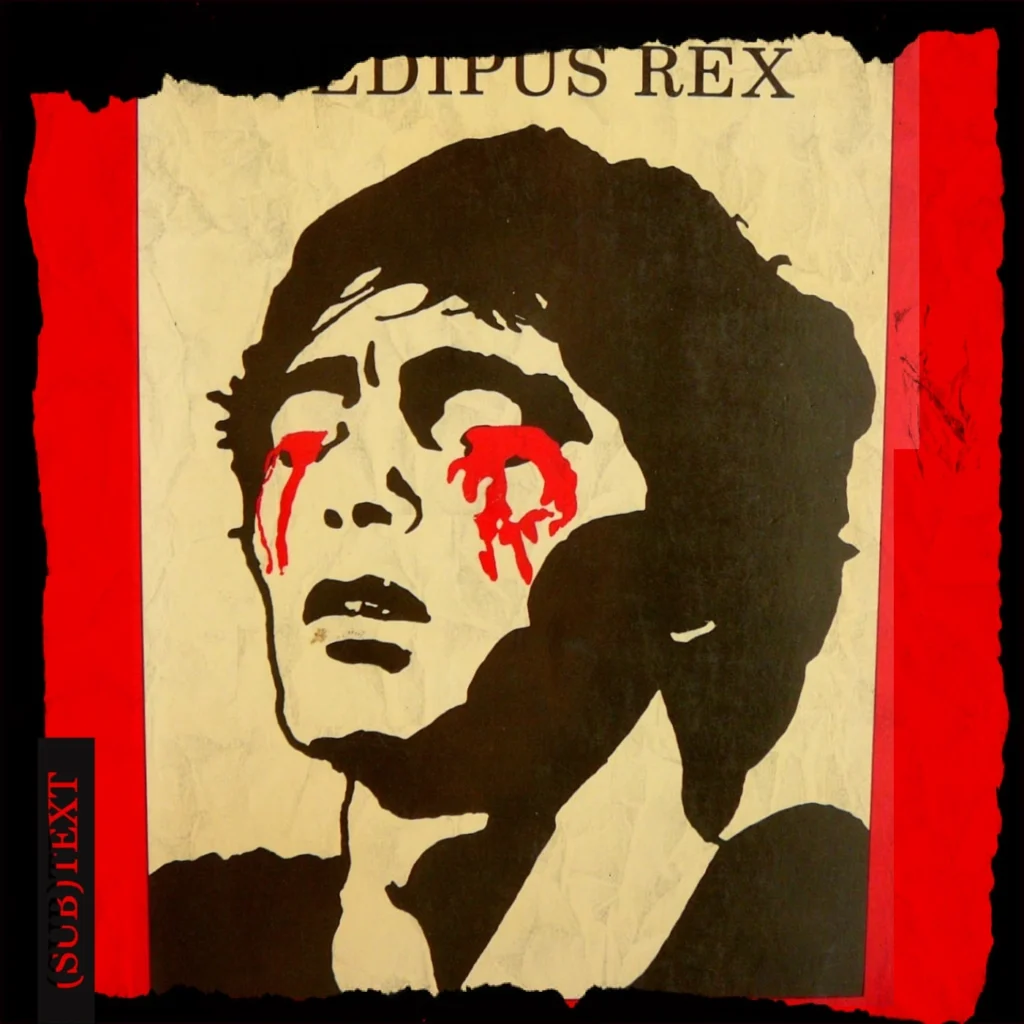
Most students first encounter Oedipus with the ready-made answer: his hamartia is hubris — excessive pride. This reading is popular, comfortable, and largely inadequate.
Pride alone does not explain the structure of Oedipus Rex. Oedipus commits his catastrophic acts — killing his father Laius and marrying his mother Jocasta — before the play begins. The entire dramatic action unfolds after these events, as Oedipus investigates a plague he does not know he caused. His pride in the investigation is real. But the tragedy was already set in motion before that pride had any chance to act.
Hamartia as Ignorance — and Something More
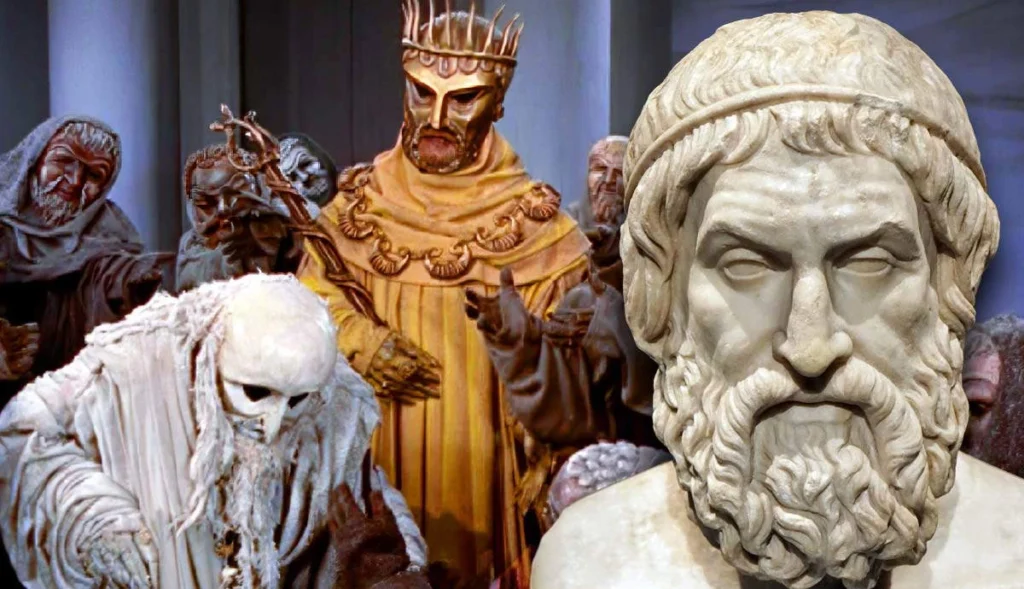
A more textually supported reading is that Oedipus’s hamartia is agnoia — ignorance of his own identity. He does not know who he is. He does not know who his father was. This ignorance, not arrogance, is what makes him a killer without malice and a husband without knowledge.
But even this is incomplete. Sophocles designed the play so that every attempt to escape fate accelerates its fulfillment. When Oedipus hears the prophecy at Delphi, he flees Corinth to avoid killing the king and marrying the queen — not knowing that Polybus and Merope are his adoptive parents, not his biological ones. The very act of avoidance becomes the mechanism of catastrophe.
This means Oedipus’s hamartia is neither pure pride nor simple ignorance — it is the tragic coincidence of an error embedded in a universe that cannot be escaped. His is a cosmic hamartia: built into his birth, reinforced by fate, and executed through well-intentioned actions.
Read: Literary Terms in English Literature: The Complete Guide
The Relentless Pursuit of Truth
There is one quality in Oedipus that functions unmistakably as a flaw: his absolute refusal to stop searching when warned to do so. Tiresias begs him to leave the investigation alone. Jocasta pleads with him. Oedipus pushes forward anyway.
This determination — this hunger for truth at any cost — is admirable in a king and catastrophic in a man whose truth is monstrous. The quality that makes him great is exactly what destroys him. This irony is the signature of Sophoclean tragedy, and it gives Oedipus Rex its uniquely suffocating power.
Hamartia in Macbeth — Ambition as a Loaded Weapon
Shakespeare’s Deliberate Choice
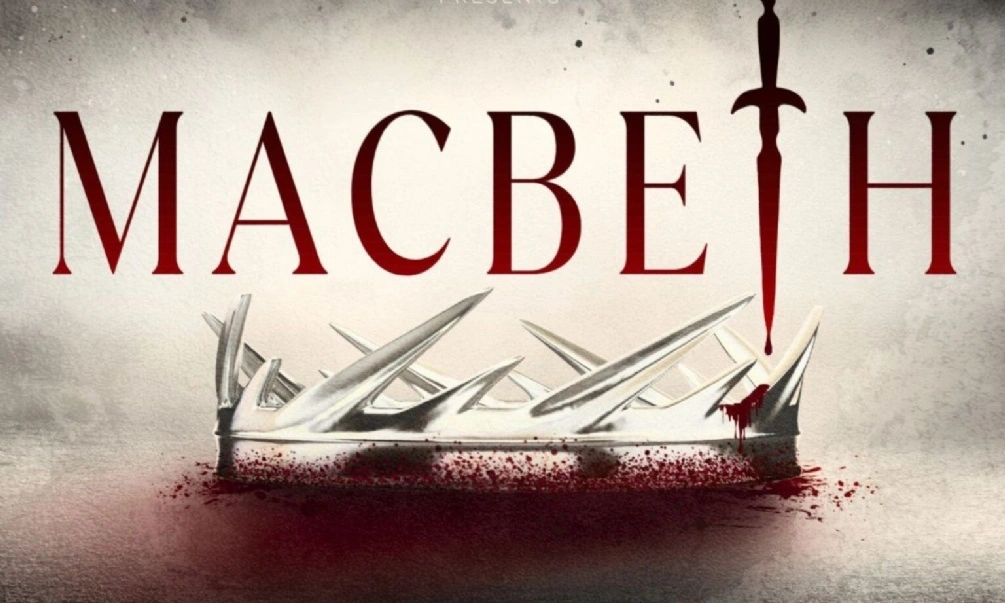
Where Sophocles makes his hero a victim of circumstances beyond his knowledge, Shakespeare makes his hero an agent of his own destruction. Macbeth knows what he is doing when he murders Duncan. He thinks through the moral consequences — “I have no spur / To prick the sides of my intent, but only / Vaulting ambition” — and does it anyway.
This is a fundamentally different kind of hamartia: one rooted in character, not circumstance. Macbeth’s fatal flaw is not ignorance. It is the willingness to act on the worst impulse he possesses when someone gives him permission.
Ambition Alone Is Not the Full Story
Ambition is the obvious answer, but Shakespeare complicates it deliberately. Macbeth’s hamartia is more precisely described as moral cowardice married to excessive ambition — the inability to resist what he desires most, even when his own conscience screams at him to stop.
Before killing Duncan, Macbeth hallucinates a dagger. He hears voices. He knows the act is wrong. He commits it anyway. After the murder, he cannot function — he forgets to leave the daggers, he sees Banquo’s ghost at the feast, his mind unravels scene by scene. His hamartia does not end with the first murder; it replicates. Every act of violence required to protect the first act of violence becomes a new extension of the same fatal flaw.
Macbeth by William Shakespeare: Complete Explanation to the Play, Themes & Characters
The Role of Lady Macbeth and the Witches
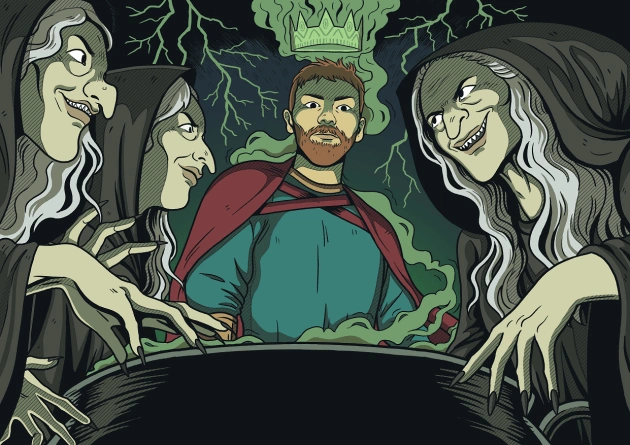
Many readings locate Macbeth’s hamartia not just inside him but in his susceptibility to external influence. Lady Macbeth understands precisely which lever to pull: “Was the hope drunk / Wherein you dressed yourself?” She attacks his masculinity because she knows that is where he is weakest.
The witches provide the prophecy, but — critically — they do not command action. They tell Macbeth he will be king. They never tell him to murder anyone. The leap from prophecy to violence is entirely his own. This is what makes Macbeth’s hamartia unambiguously internal: the witches hand him a match; he chooses to burn everything down.
Greek Tragedy vs. Shakespearean Tragedy: Structural Differences in the Tragic Flaw
The hamartia of Oedipus and Macbeth belong to fundamentally different dramatic systems.
| Feature | Greek Tragedy (Oedipus Rex) | Shakespearean Tragedy (Macbeth) |
|---|---|---|
| Origin of hamartia | Embedded in fate/divine order | Located in character and moral choice |
| Hero’s awareness | Ignorant of his error during the action | Fully aware, struggles with conscience |
| Role of gods/fate | Central — fate is unavoidable | Secondary — free will dominates |
| Moral responsibility | Ambiguous — Oedipus acts in ignorance | Clear — Macbeth chooses consciously |
| Nature of flaw | Ignorance + relentless truth-seeking | Ambition + susceptibility to manipulation |
| Dramatic irony | Extreme — audience knows the truth | Moderate — audience knows more than the court |
| Catharsis | Pity dominates (undeserved suffering) | Fear dominates (deserved punishment) |
| Tone of resolution | Cosmic and inevitable | Moral and corrective |
William Shakespeare: Life, Works & Enduring Legacy
Fate vs. Free Will — The Central Philosophical Divide
The deepest difference between these two tragedies is their underlying view of the universe.
In Oedipus Rex, fate is absolute. The oracle declares what will happen, and it happens — despite every effort to prevent it. Free will is not absent, but it is ineffective against divine decree. Oedipus makes choices constantly, and every choice tightens the trap. This worldview reflects the ancient Greek belief in moira — the portion of fate assigned to each person from birth, immune to human interference.
In Macbeth, the universe is morally ordered but not mechanically predetermined. The witches see the future, but they do not create it. Macbeth could have remained the Thane of Cawdor. He chooses not to. His tragedy is a study in what happens when a man with genuine virtues — courage, loyalty, intelligence — dismantles himself in pursuit of power he was not born to hold.
This distinction explains the different emotional experience of each play. Oedipus Rex produces a sense of cosmic horror and pity for a man caught in a divine machinery he cannot see. Macbeth produces something closer to dread and moral fascination — the particular discomfort of watching a good man choose to become a monster, step by deliberate step.
The Role of the Supernatural in Each Tragedy
Sophocles uses the oracle at Delphi as the mechanism of fate. The oracle does not lie, does not mislead, and cannot be outrun. The gods in Oedipus Rex are not cruel — they are simply indifferent to human comfort. Fate rolls forward whether Oedipus cooperates or resists.
Shakespeare’s supernatural is more ambiguous and arguably more sinister. The three witches in Macbeth are not gods and do not speak absolute truth — they speak selective truth. Their prophecies are technically accurate but deliberately misleading: Macbeth is told he cannot be harmed by any man born of woman and that he will not fall until Birnam Wood moves. Both predictions come true in ways that expose Macbeth’s fatal credulity rather than supernatural protection.
The gods in Sophocles feel above the human drama. The witches in Shakespeare are inside it, stirring it, feeding on its darkness. This is a significant shift in how tragedy conceptualizes external forces and their relationship to human hamartia.
Anagnorisis and Peripeteia: Recognition and Reversal
Aristotle identified two key dramatic moments that accompany hamartia in the best tragedies: anagnorisis (recognition) and peripeteia (reversal of fortune). Both plays deploy these brilliantly — but in opposite emotional registers.
In Oedipus Rex, the anagnorisis is arguably the most powerful moment in all of dramatic literature. The moment Oedipus recognizes himself as the pollution he has been hunting — the murderer of his father, the husband of his mother — is a scene of absolute devastation. His peripeteia is simultaneous: the king who commanded everything becomes a blinded exile who owns nothing.
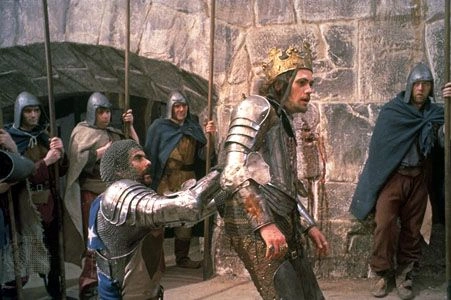
In Macbeth, the recognition comes more gradually and with a different emotional quality. Macbeth begins to understand the trap the witches set when Birnam Wood does, in fact, move — and when he learns that Macduff was untimely ripped from his mother’s womb. His peripeteia — from tyrant-king to cornered warrior dying alone — carries not pity but a grim sense of justice. He earned it.
Catharsis: What Each Play Demands from Its Audience
Aristotle’s catharsis — the emotional purging of pity and fear — operates differently in each play.
Oedipus Rex generates pity above all else. An essentially good man, devoted to his city, beloved by his people, is revealed to be the author of unspeakable crimes he did not know he was committing. The Greek audience watching knew the story from myth. The dramatic tension came not from what happens but from how it must happen — watching inevitability unfold produces an almost unbearable pity.
Macbeth generates fear as its primary emotion. The audience watches a man they initially admire dismantle himself through choices they understand because those choices are recognizably human — ambition, pride, the desire for security, the doubling-down that happens after the first terrible decision has been made. That recognition — I can see how a person becomes this — is exactly what makes Shakespearean tragedy different in texture from its Greek predecessor.
Common Misconceptions About Hamartia
Misconception 1: Hamartia always means “pride.” Pride (hubris) is one possible hamartia, not the definition. Aristotle did not equate them. Macbeth’s hamartia is ambition; Oedipus’s is best understood as a fatal error amplified by relentless inquiry.
Misconception 2: Oedipus could have avoided his fate. The entire design of the play argues against this. Every choice that could have averted the prophecy was made before Oedipus had the information to make a different one. The tragedy is precisely that avoidance was structurally impossible.
Misconception 3: Macbeth is only a victim of the witches. The witches give Macbeth a possibility; his own character gives it traction. Without his ambition, the prophecy would have meant nothing. The witches could not have caused the tragedy in a man without Macbeth’s particular fatal flaw.
Misconception 4: The tragic flaw must be a negative quality. Oedipus’s truth-seeking is a virtue. His intellectual courage, his refusal to let a mystery go unsolved — these are not flaws in themselves. The tragedy arises because a virtue, taken to its extreme in the wrong circumstances, produces catastrophic outcomes. This is perhaps the most sophisticated insight in all of Aristotelian tragedy theory.
Expert Tips for Literary Analysis
Tip 1: Always define hamartia before you argue. “Tragic flaw” is a shortcut that loses precision. Name the specific error, and explain whether it is a character trait, an action, or an error of judgment. Your argument becomes sharper immediately.
Tip 2: Follow the moment of anagnorisis carefully. How and when a tragic hero recognizes his error tells you what the playwright believes about self-knowledge. Oedipus’s recognition is sudden and total. Macbeth’s is gradual and partial — he never fully repents. That difference is the philosophical statement each play makes.
Tip 3: Use the fate/free will axis as your organizing structure. Comparing these two tragedies is most productive when you frame it as two different theories of why human beings suffer — one cosmic, one moral.
Tip 4: Context the plays historically. Oedipus Rex was written within a theocentric worldview where the gods’ will was sovereign. Macbeth was written for a Renaissance audience that had inherited both Christian theology and emerging humanist ideas about individual moral agency. The difference in hamartia reflects the difference in worldview.
Tip 5: Read Aristotle’s Poetics directly. Most secondary readings of hamartia are paraphrases of paraphrases. The original text is short and repays close reading. Aristotle uses hamartia in Poetics Chapter 13, and the exact phrase is worth sitting with.
Frequently Asked Questions
What is hamartia in Oedipus Rex?
In Oedipus Rex, hamartia is most accurately understood as a fatal error of action rather than a character defect. Oedipus unknowingly kills his father and marries his mother — acts committed in complete ignorance of their true nature. His relentless pursuit of truth during the play compounds the tragedy, but the foundational error was set in motion before the drama begins, embedded in a fate he could not outrun.
What is hamartia in Macbeth?
Macbeth’s hamartia is his unchecked, vaulting ambition — a desire for power so intense that it overrides his moral conscience, his loyalty, and eventually his sanity. Unlike Oedipus, Macbeth acts in full knowledge of the wrong he commits. He thinks through the consequences, feels the weight of his guilt, and kills anyway. This conscious moral failure is what makes Macbeth a specifically Shakespearean tragic hero.
How is Oedipus Rex different from Macbeth in terms of the tragic flaw?
The core difference is between fate-driven error and character-driven choice. Oedipus’s hamartia is tied to a cosmic framework in which the gods decree what must happen and human actions merely fulfill the decree. Macbeth’s hamartia is entirely internal — the witches give him information, but the murders are his own. One hero falls through the universe’s design; the other through his own will.
Who is the better tragic hero — Oedipus or Macbeth?
Aristotle would likely favor Oedipus, and he says so directly in the Poetics, calling Oedipus Rex the finest tragedy he knows. Oedipus fits his criteria almost perfectly: noble, neither villainous nor wholly virtuous, suffering through error rather than wickedness. Macbeth is a more complex and psychologically modern tragic hero — morally compromised in ways Oedipus never is — which makes him feel less “classical” but arguably more psychologically realistic.
Is the witches’ prophecy Macbeth’s hamartia?
The prophecy itself is not the hamartia — it is the trigger. Macbeth’s hamartia is the internal weakness that makes the prophecy dangerous. Another man hearing the same prediction might have waited, trusted providence, or refused to act. Macbeth’s ambition and his susceptibility to Lady Macbeth’s manipulation transform a piece of information into a fatal engine.
Does Oedipus have hubris (excessive pride)?
Yes — but hubris alone does not explain his tragedy. Oedipus does display arrogance, particularly in his confrontation with Tiresias. However, the tragic events that destroy him were already in motion before that pride expressed itself. Pride accelerates and colors the tragedy; it does not cause it. This is why the hubris reading, while partially valid, does not fully satisfy as an explanation of Oedipus’s hamartia.
What is the role of fate in each tragedy?
In Oedipus Rex, fate is absolute — the oracle cannot be reversed, resisted, or reinterpreted. In Macbeth, fate is suggestive rather than deterministic. The witches predict futures without commanding actions. Macbeth’s fate is sealed not by divine decree but by the choices his character dictates. The two plays represent almost opposite theories of how tragedy works in a universe with or without a moral order.
What does catharsis feel like in each play?
Oedipus Rex produces catharsis primarily through pity: the experience of watching a genuinely good man destroyed by circumstances he could not control or comprehend. Macbeth produces catharsis primarily through fear: the recognition that the path from ambition to murder is not as incomprehensible as we might wish, and the grim moral satisfaction of watching that path end in destruction. Aristotle said the best tragedies evoke both emotions simultaneously — both plays achieve this, in very different proportions.
What does hamartia mean literally?
Hamartia literally means “to miss the mark” in Greek — a term from archery originally. In the Poetics, Aristotle repurposed it to describe the error or flaw in a tragic hero that causes their downfall. The literal etymology is important because it shifts the emphasis from moral corruption (deliberately sinning) to mistake (aiming wrong), which explains why Aristotle insists the tragic hero must retain audience sympathy despite their error.
Which of the two plays is more suitable for academic study of hamartia?
Oedipus Rex is traditionally the primary text for studying hamartia because Aristotle modeled his theory partly on it. It demonstrates hamartia in its purest, most fate-aligned form. Macbeth offers a richer psychological portrait and is better for studying how the concept evolved in post-Renaissance drama. Using both together — as this article does — gives the fullest picture of how hamartia works across different theatrical traditions and philosophical frameworks.
Conclusion
The concept of hamartia in Oedipus Rex and Macbeth reveals not just two tragic heroes but two entirely different visions of why human lives collapse.
Sophocles places Oedipus inside a universe governed by divine will, where the most admirable qualities — his courage, his love of truth, his devotion to his city — become the very instruments of his destruction. There is no moral lesson to extract, no warning to heed. The tragedy is that the universe does not care about merit.
Shakespeare places Macbeth inside a morally ordered world where choices have weight, where conscience speaks loudly if a person is willing to listen, and where ruin is the direct consequence of what a man chose to become. The tragedy is not cosmic indifference but human failure — and it is all the more disturbing for being so recognizably chosen.
Together, these two plays span the full range of what tragic literature has ever tried to say about human suffering: that sometimes we fall because the universe is indifferent, and sometimes we fall because we are exactly who we are.
Understanding both is essential to understanding tragedy itself.
Recommended External References
- Aristotle’s Poetics — Available via MIT Internet Classics Archive (classics.mit.edu)
- British Library — Shakespeare’s Macbeth — scholarly annotations and historical context
- Perseus Digital Library (Tufts University) — original Greek text of Oedipus Rex with English translation (perseus.tufts.edu)


1 comment
[…] […]