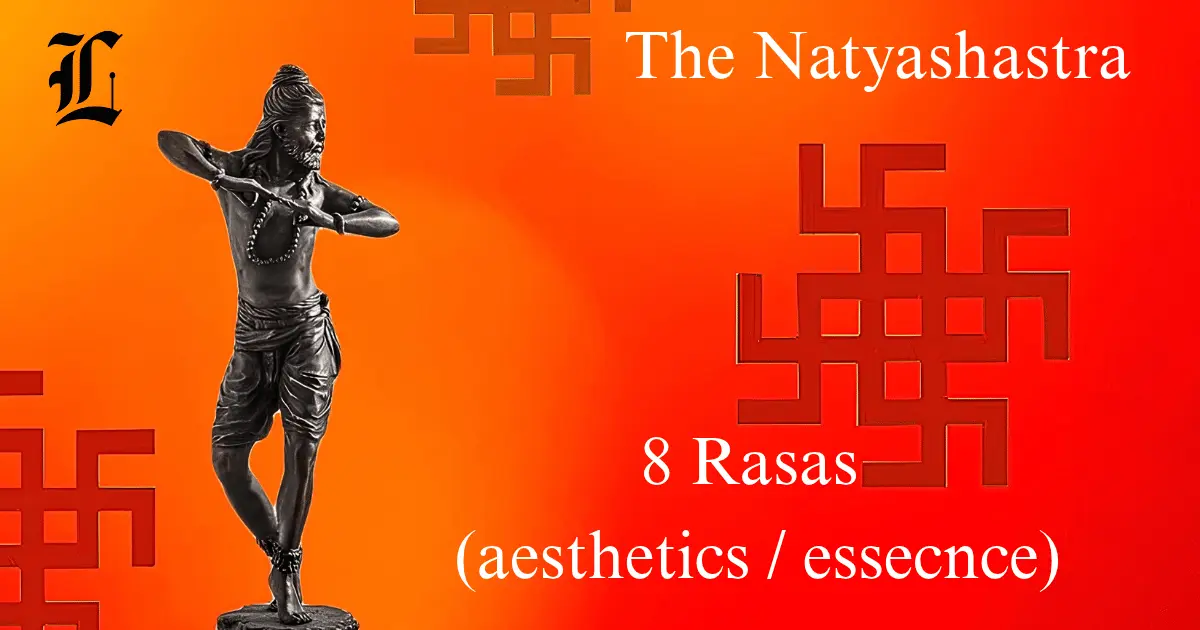
Bharata Muni’s Natyashastra introduced the eight rasas as the foundation of Indian aesthetic theory. Whether you are a student preparing for university exams or just curious about Indian literary tradition, this quick guide answers the most common questions clearly.
What Are the Eight Rasas?
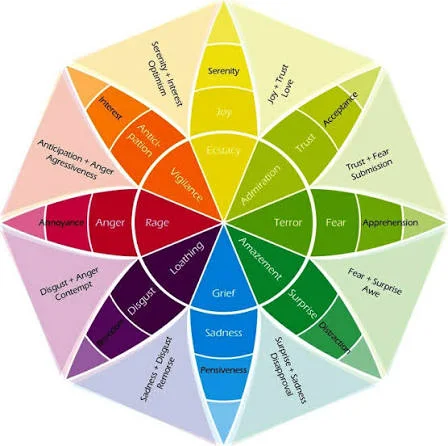
Rasa literally means “flavour” or “essence.” In the context of Indian aesthetics, it refers to the emotional experience an art form creates in the audience. Bharata Muni listed eight primary rasas in Chapter 6 of the Natyashastra, written approximately between 200 BCE and 200 CE.
Each rasa has a corresponding dominant emotion (Sthayi Bhava), a presiding deity, and a colour.
| Rasa | Meaning | Sthayi Bhava (Emotion) | Colour | Presiding Deity |
|---|---|---|---|---|
| Shringara | Love / Beauty | Rati (Love) | Green | Vishnu |
| Hasya | Comic / Humour | Hasa (Laughter) | White | Shiva |
| Karuna | Pathos / Sorrow | Shoka (Grief) | Grey | Yama |
| Raudra | Fury / Rage | Krodha (Anger) | Red | Rudra |
| Vira | Heroism | Utsaha (Courage) | Yellowish | Indra |
| Bhayanaka | Terror / Fear | Bhaya (Fear) | Black | Kala |
| Bibhatsa | Disgust | Jugupsa (Aversion) | Blue | Mahakala |
| Adbhuta | Wonder / Marvel | Vismaya (Astonishment) | Yellow | Brahma |
Meaning of 8 Rasas
Terms specific to Indian aesthetic theory used in this article.
Natyashastra — An ancient Sanskrit text attributed to Bharata Muni, covering drama, dance, music, and poetics. Considered the foundational text of Indian performing arts and aesthetics.
Sthayi Bhava — The dominant, stable emotional state that underlies a rasa. Each of the eight rasas has one corresponding sthayi bhava that sustains the emotional experience throughout a performance.
Vibhava — The stimulant or cause that excites an emotion. In rasa theory, vibhava is what triggers the aesthetic experience — a character’s action, a setting, or a situation.
Anubhava — The outward expression or physical reaction produced by an emotion — gestures, tone, posture, facial expressions shown by a performer.
Vyabhichari Bhava — Also called Sanchari Bhava, these are the 33 transitory or fleeting emotions that flow into and out of the dominant emotion, enriching the aesthetic experience.
Abhinavagupta — A 10th-century Kashmiri philosopher and literary theorist who wrote Abhinavabharati, a landmark commentary on the Natyashastra. He introduced Shanta as the ninth rasa.
Navarasa — The system of nine rasas, extending Bharata’s original eight by adding Shanta. Widely used in Indian classical dance, cinema, and literature to describe the full spectrum of human emotional experience.
Read those 8 Rasas in very Details : Natyashastra and the Eight Rasas: A Complete Analysis of India’s Ancient Theory of Aesthetic Experience↗
What are the eight rasas in the Natyashastra? The eight rasas described by Bharata Muni in the Natyashastra are: Shringara (love/romance), Hasya (laughter/comedy), Karuna (compassion/sorrow), Raudra (fury), Veera (heroism), Bhayanaka (fear), Bibhatsa (disgust), and Adbhuta (wonder). Each rasa corresponds to a permanent emotion (sthayi bhava) and is evoked through a combination of determinants, consequents, and transitory states.
What Is the Natyashastra?

The Natyashastra (also spelled Natya Shastra) is an ancient Sanskrit treatise on the performing arts, traditionally attributed to the sage Bharata Muni. Scholars date its composition to somewhere between 200 BCE and 200 CE, though this remains debated. The text itself claims a divine origin — Brahma is said to have distilled the essence of the four Vedas and entrusted it to Bharata, making drama the Fifth Veda.
Frequently Asked Questions
Who introduced the eight rasas?
Bharata Muni introduced the eight rasas in the Natyashastra, an ancient Sanskrit treatise on dramatic arts and performance theory. The text is dated approximately between 200 BCE and 200 CE and remains the foundational text of Indian aesthetics.
What is the Rasa Sutra?
The Rasa Sutra is Bharata’s original formula: “Vibhava-Anubhava-Vyabhichari-Samyogad Rasa Nishpattih” — meaning rasa arises from the combination of vibhavas (stimulants), anubhavas (reactions), and vyabhichari bhavas (transitory emotions). It is the single most quoted line in Indian literary theory.
Is there a ninth rasa?
Yes. The ninth rasa, Shanta (peace or tranquility), was added later. It was most clearly articulated by the Kashmiri philosopher Abhinavagupta (c. 950–1020 CE) in his commentary Abhinavabharati. Abhinavagupta considered Shanta the rasa of all rasas, through which a viewer attains aesthetic detachment. The nine-rasa system is known as Navarasa.
Which rasa is considered the king of rasas?
Bharata considered Shringara (love) the foremost of all rasas. It is considered the most complete rasa because love encompasses beauty, tenderness, joy, and longing simultaneously.
What is the difference between rasa and bhava?
Bhava is the emotion that exists within the performer or the characters. Rasa is the aesthetic emotion that the audience experiences as a result. Simply put: bhava is what you feel inside; rasa is what the spectator tastes from outside. The two are connected but distinct.
Where does the word “rasa” come from?
The word rasa originates from Sanskrit and primarily means “juice” or “sap.” In Vedic texts, it referred to the essence of life. Bharata extended it metaphorically to mean the “flavour” of aesthetic experience — an emotion distilled into its purest, most relishable form.
Which rasa is associated with fear?
Bhayanaka rasa is associated with fear. Its corresponding sthayi bhava is Bhaya (fear), its colour is black, and its presiding deity is Kala (god of time/death).
How do I remember all eight rasas for an exam?
A simple mnemonic: S-H-K-R-V-B-B-A — Shringara, Hasya, Karuna, Raudra, Vira, Bhayanaka, Bibhatsa, Adbhuta. Or use the sentence: “She Has Kept Rare Vivid Beauty Beyond Art.” Each first letter matches one rasa in sequence.
External Source Suggestions
- Natyashastra Chapter VI (CSJMU academic PDF): gyansanchay.csjmu.ac.in