
In Xanadu did Kubla Khan
A stately pleasure-dome decree:
Where Alph, the sacred river, ran
Through caverns measureless to man
   Down to a sunless sea.
So twice five miles of fertile ground
With walls and towers were girdled round;
And there were gardens bright with sinuous rills,
Where blossomed many an incense-bearing tree;
And here were forests ancient as the hills,
Enfolding sunny spots of greenery.

But oh! that deep romantic chasm which slanted
Down the green hill athwart a cedarn cover!
A savage place! as holy and enchanted
As e’er beneath a waning moon was haunted
By woman wailing for her demon-lover!
And from this chasm, with ceaseless turmoil seething,
As if this earth in fast thick pants were breathing,
A mighty fountain momently was forced:
Amid whose swift half-intermitted burst
Huge fragments vaulted like rebounding hail,
Or chaffy grain beneath the thresher’s flail:
And mid these dancing rocks at once and ever
It flung up momently the sacred river.
Five miles meandering with a mazy motion
Through wood and dale the sacred river ran,
Then reached the caverns measureless to man,
And sank in tumult to a lifeless ocean;
And ’mid this tumult Kubla heard from far
Ancestral voices prophesying war!
   The shadow of the dome of pleasure
   Floated midway on the waves;
   Where was heard the mingled measure
   From the fountain and the caves.
It was a miracle of rare device,
A sunny pleasure-dome with caves of ice!

   A damsel with a dulcimer
   In a vision once I saw:
   It was an Abyssinian maid
   And on her dulcimer she played,
   Singing of Mount Abora.
   Could I revive within me
   Her symphony and song,
   To such a deep delight ’twould win me,
That with music loud and long,
I would build that dome in air,
That sunny dome! those caves of ice!
And all who heard should see them there,
And all should cry, Beware! Beware!
His flashing eyes, his floating hair!
Weave a circle round him thrice,
And close your eyes with holy dread
For he on honey-dew hath fed,
And drunk the milk of Paradise.
Kubla Khan by Samuel Taylor Coleridge: Summary, Themes, and Analysis
Kubla Khan is one of the most famous poems written by Samuel Taylor Coleridge, a leading poet of the Romantic Age. First published in 1816, the poem is known for its dreamlike atmosphere, rich imagery, and mysterious symbols. According to Coleridge, he composed the poem after experiencing a vivid dream inspired by reading about the Mongol emperor Kublai Khan. Although the poem remains unfinished, it is regarded as one of the greatest masterpieces of English Romantic poetry.
The poem explores the power of imagination, creativity, nature, and the mysterious process of artistic inspiration.
Summary of Kubla Khan
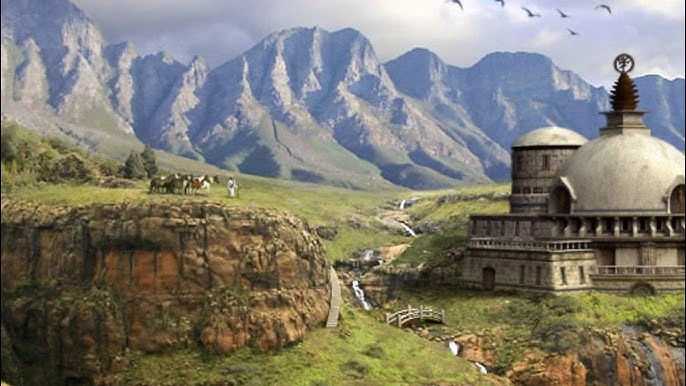
The poem begins by describing the magnificent palace built by Kubla Khan in Xanadu, a place of extraordinary beauty and mystery. He orders the construction of a “stately pleasure-dome” surrounded by fertile gardens, forests, streams, and ancient trees. The landscape appears peaceful and luxurious.
However, the calm scenery soon changes. The poet describes a deep and sacred chasm where a powerful river bursts violently from the earth. This wild natural force creates a striking contrast with the carefully designed gardens of the palace. The river, known as the Alph, flows through caves before disappearing into a “sunless sea,” adding a sense of mystery.
In the final section, the speaker recalls seeing a beautiful maiden playing a musical instrument and singing about Mount Abora. He imagines that if he could recreate her song, he would possess the creative power to build the magnificent pleasure-dome through poetry. The poem ends by celebrating the extraordinary imagination of the inspired poet.
Major Themes in Kubla Khan
1. The Power of Imagination
The central theme of Kubla Khan is imagination. Coleridge shows that creative imagination has the ability to create worlds beyond ordinary human experience.
2. Nature
Nature appears both beautiful and powerful. Peaceful gardens exist alongside violent rivers and mysterious caves, showing that nature is both creative and destructive.
3. Creativity and Artistic Inspiration
The poem explores how artistic inspiration often comes unexpectedly, almost like a dream or a vision. The poet suggests that true creativity cannot always be controlled.
4. The Supernatural and Mystery
The mysterious landscapes, sacred river, and magical atmosphere create a supernatural mood. These elements make the poem one of the finest examples of Romantic imagination.
Literary Devices Used in Kubla Khan
Coleridge uses many literary techniques to make the poem vivid and memorable.
- Imagery: Rich descriptions of gardens, rivers, caves, mountains, and palaces create powerful visual images.
- Symbolism: The pleasure-dome symbolizes artistic creation, while the river represents the flow of imagination and life.
- Alliteration: Repeated consonant sounds create musical rhythm.
- Personification: Natural elements are described as if they possess human energy and emotions.
- Contrast: The poem contrasts peaceful beauty with violent natural forces, highlighting the balance between order and chaos.
These literary devices give the poem its unique beauty and emotional depth.
Why Kubla Khan Is Still Relevant Today
Kubla Khan continues to fascinate readers because it explores creativity, imagination, and the mysteries of the human mind. Writers, artists, musicians, and students can all relate to the idea that inspiration often arrives unexpectedly.
The poem also reminds readers that imagination is a powerful force capable of creating beauty beyond reality. Its dreamlike style continues to influence modern literature, art, and creative thinking.
Conclusion
Kubla Khan by Samuel Taylor Coleridge is a remarkable celebration of imagination and artistic creativity. Through its magical landscapes, vivid imagery, and mysterious symbols, the poem transports readers into a world where dreams and reality blend together.
Although unfinished, Kubla Khan remains one of the greatest achievements of Romantic poetry. Its exploration of nature, inspiration, and the limitless power of imagination continues to captivate readers around the world.
Frequently Asked Questions (FAQs)
Who is Kubla Khan?
Kubla Khan was the Mongol emperor who ruled China in the 13th century. In the poem, he represents power, ambition, and artistic grandeur.
What does the pleasure-dome symbolize?
The pleasure-dome symbolizes creative imagination, artistic achievement, and human ambition.
Why is Kubla Khan considered an unfinished poem?
Coleridge claimed that he was interrupted while writing after a dream and could not remember the rest of the vision.
Why is Kubla Khan important in English literature?
The poem is celebrated for its rich imagery, dreamlike atmosphere, Romantic imagination, and exploration of artistic inspiration.


1 comment
[…] Also Read Poems of ST Coleridge: Kubla Khan by Samuel Taylor Coleridge […]