The world is charged with the grandeur of God.
    It will flame out, like shining from shook foil;
    It gathers to a greatness, like the ooze of oil
Crushed. Why do men then now not reck his rod?
Generations have trod, have trod, have trod;
    And all is seared with trade; bleared, smeared with toil;
    And wears man's smudge and shares man's smell: the soil
Is bare now, nor can foot feel, being shod.

And for all this, nature is never spent;
    There lives the dearest freshness deep down things;
And though the last lights off the black West went
    Oh, morning, at the brown brink eastward, springs —
Because the Holy Ghost over the bent
    World broods with warm breast and with ah! bright wings.
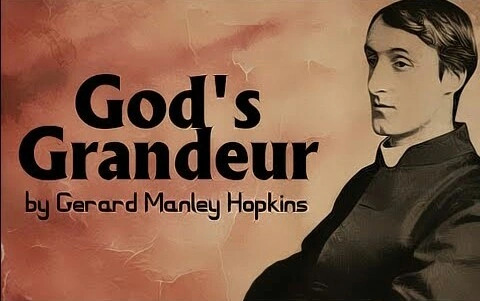
God’s Grandeur by Gerard Manley Hopkins: Summary, Themes, and Analysis
God’s Grandeur is one of the most celebrated sonnets written by Gerard Manley Hopkins. Published in 1918 after the poet’s death, the poem reflects Hopkins’ deep religious faith and his admiration for the beauty of nature. In this powerful work, he explains that God’s presence fills the entire world, even though human beings often damage nature through greed, industrialization, and selfish actions.
The poem combines spiritual belief with environmental awareness, making it one of the most meaningful works of Victorian poetry.
Summary of God’s Grandeur
The poem begins with the famous statement that “the world is charged with the grandeur of God.” Hopkins compares God’s power to the sudden flash of lightning and the rich flow of oil from crushed olives. These images suggest that God’s glory is present everywhere in creation.
However, the poet quickly shifts his focus to humanity. He asks why people fail to recognize God’s authority. According to Hopkins, generations of people have exploited the earth through hard labor, industry, and materialism. Smoke, pollution, and constant human activity have scarred the natural world, causing people to lose their connection with nature.
Despite this destruction, the poet remains hopeful. He believes that nature can never be completely destroyed because God’s creative power constantly renews it. Every morning brings fresh life, and the Holy Spirit watches over the world with loving care. The poem ends on an optimistic note, celebrating God’s endless protection and the resilience of nature.
Major Themes in God’s Grandeur
1. The Presence of God in Nature
The central theme of the poem is that God’s power and glory are present throughout the natural world. Every part of creation reflects His greatness.
2. Human Damage to Nature
Hopkins criticizes humanity for exploiting the environment. Industrialization and greed have polluted the earth and separated people from nature’s beauty.
3. Hope and Renewal
Although humans have harmed the environment, nature continues to recover because of God’s sustaining power. This message offers hope for renewal and restoration.
4. Faith and Spirituality
The poem reflects Hopkins’ strong Christian faith. He believes that God’s love and care continue to protect the world despite human mistakes.
Literary Devices Used in God’s Grandeur
Hopkins uses several poetic techniques to create vivid imagery and emotional impact.
- Metaphor: God’s greatness is compared to electricity charging the world and oil flowing from crushed olives.
- Imagery: Bright flashes, burning fire, rich oil, and fresh morning landscapes create strong visual images.
- Alliteration: Repeated consonant sounds give the poem a musical quality.
- Personification: Nature is presented as living and capable of renewal.
- Symbolism: Light symbolizes God’s presence, while darkness and pollution represent humanity’s spiritual decline.
These literary devices make the poem both beautiful and thought-provoking.
Why God’s Grandeur Is Still Relevant Today
The message of God’s Grandeur remains highly relevant in the modern world. Climate change, pollution, and environmental destruction continue to threaten the planet. Hopkins reminds readers that nature is precious and deserves respect.
The poem also encourages spiritual reflection. It suggests that people should appreciate the beauty of creation, live responsibly, and recognize the divine presence in everyday life. Its themes connect with both environmental concerns and personal faith.
Conclusion
God’s Grandeur by Gerard Manley Hopkins is a powerful sonnet that celebrates God’s presence in nature while criticizing humanity’s careless treatment of the environment. Through vivid imagery, rich symbolism, and deep religious faith, Hopkins shows that although people may damage the earth, God’s creative power continually renews it.
The poem offers a timeless message of hope, responsibility, and spiritual awareness. Its beauty and relevance continue to inspire readers, making it one of the greatest poems in English literature.
Frequently Asked Questions (FAQs)
What is the main theme of God’s Grandeur?
The main theme is God’s presence in nature and the constant renewal of creation despite human destruction.
Why does Hopkins criticize humanity?
He believes that greed, industrialization, and materialism have damaged nature and weakened people’s spiritual connection with the world.
What does “the world is charged with the grandeur of God” mean?
It means that God’s power, beauty, and glory fill every part of creation.