Introduction
On February 2, 1835, a single document changed the course of education in India forever. Thomas Babington Macaulay — British politician, historian, and then-President of the Committee of Public Instruction — submitted what became one of the most debated texts in colonial history: Macaulay’s Minute on Indian Education.
In fewer than ten thousand words, this document argued that English education was superior to all traditional Indian learning, that Sanskrit and Arabic had no place in a modern curriculum, and that the British should create a class of Indians who were, in Macaulay’s own words, “Indian in blood and colour, but English in tastes, in opinions, in morals and in intellect.”
The consequences were enormous. English became the medium of instruction. Centuries-old institutions of traditional learning lost state patronage. And a new educated class emerged — one that would, ironically, later use that same English education to argue and fight for India’s independence.
This article covers the complete story: the historical background, Macaulay’s arguments, the Orientalist-Anglicist controversy, the Downward Filtration Theory, the long-term impact on India, and why this document still sparks fierce debate nearly two centuries later.
Quick Answer
What is Macaulay’s Minute on Indian Education? Macaulay’s Minute on Indian Education is a policy document submitted on February 2, 1835, by Thomas Babington Macaulay to India’s Governor-General. It argued for replacing traditional Oriental education with English-medium Western education. Governor-General Lord William Bentinck accepted it, and it was officially sanctioned in March 1835, fundamentally reshaping India’s education system.
Who Was Thomas Babington Macaulay?
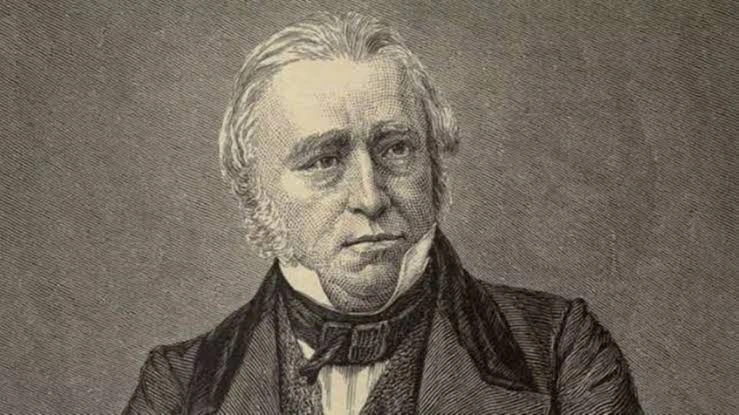
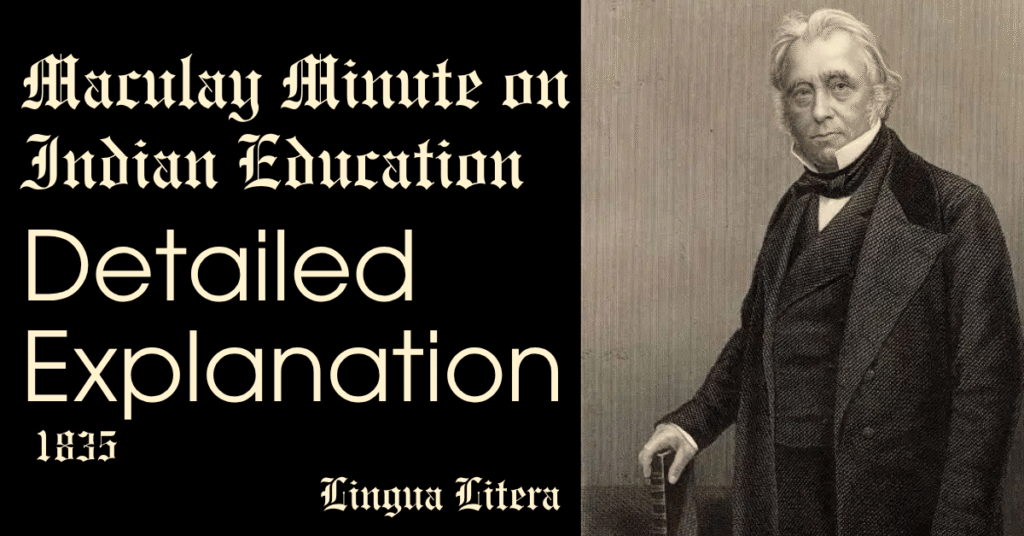
Thomas Babington Macaulay (October 25, 1800 – December 28, 1859) was a British Whig politician, essayist, and historian. He arrived in India in June 1834 as a Law Member of the Governor-General’s Executive Council and was subsequently appointed President of the General Committee of Public Instruction (GCPI).
Macaulay was deeply proud of British and Western civilization. He had written extensively on history and politics in England before arriving in India and brought with him a strong conviction about the supremacy of European knowledge and literature. His views on India — largely formed without any serious study of Sanskrit, Arabic, or Persian literature — reflected the confident, often dismissive attitudes of British intellectuals of his era.
He was not a specialist in education. He was a politician tasked with resolving a policy dispute that had divided the British administration in India for years.
Historical Background: Education in Colonial India Before 1835
The East India Company’s Early Approach
When the British East India Company first established its commercial presence in India, education was the last thing on its agenda. Trade and profit drove every decision. Traditional Indian education — conducted through gurukuls, pathshalas, madrasas, and tols — continued largely without British interference.
Over time, the company recognized that educated Indians could serve as valuable intermediaries between British administrators and the wider population. This practical realization, rather than any philanthropic impulse, prompted the first steps toward formal educational policy.
The Charter Act of 1813: The First Concrete Step
The Charter Act of 1813 was a turning point. It set aside ₹1 lakh (one hundred thousand rupees) annually for the education of Indians. However, the Act did not specify what kind of education this money should fund — whether Indian classical studies or Western subjects, and in what language.
This ambiguity created a simmering dispute that would remain unresolved for over two decades. The British administrators in India split into two factions: the Orientalists and the Anglicists.
The Orientalist vs. Anglicist Debate
This was one of the most significant intellectual controversies of colonial India, and it directly gave rise to Macaulay’s Minute.
| Feature | Orientalists | Anglicists |
|---|---|---|
| Language of instruction | Sanskrit, Arabic, Persian | English |
| Knowledge system promoted | Classical Indian learning | Western science and literature |
| Key figures | H.H. Wilson, Henry Prinsep | Macaulay, Charles Trevelyan |
| Approach | Respect for Indian tradition | Replacement with Western curriculum |
| View of Indian learning | Valuable and worth preserving | Inferior to European knowledge |
| Funding preference | Oriental colleges and madrasas | English-medium institutions |
The Orientalists argued that Indian classical texts contained genuine wisdom and that learning conducted in native languages was more accessible to the Indian population. They cited the work of scholars like William Jones, who had founded the Asiatic Society in 1784 and spent years studying Sanskrit literature with deep respect.
The Anglicists countered that Western knowledge — particularly in science, history, and philosophy — was more practically useful and that English would serve as a gateway to the modern world.
This dispute had remained at a stalemate when Macaulay arrived in 1834. His Minute broke the deadlock in decisive — and controversial — fashion.
Macaulay’s Minute on Indian Education: Key Arguments
The Central Claim: English Education Over All Others
Macaulay’s Minute, dated February 2, 1835, made the case that English education was superior to both Arabic and Sanskrit education, and that British funds should therefore support only English-medium instruction.
His core arguments were:
- English as a gateway to knowledge: Macaulay argued that English was the key to all modern knowledge — science, history, philosophy, and technology — and that Arabic and Sanskrit offered nothing comparable.
- Dismissal of Indian literature: He wrote that “a single shelf of a good European library was worth the whole native literature of India and Arabia” — a claim that reveals his almost complete ignorance of Indian literary and scientific traditions.
- Practical benefit: He believed that Western education would make Indians more useful to the British administration and more capable of participating in a modern economy.
- Creation of cultural intermediaries: Perhaps most revealingly, he proposed creating a class of Indians who could serve as bridges between the British rulers and Indian masses — people who were culturally British while remaining Indian by appearance.
The Famous Quote
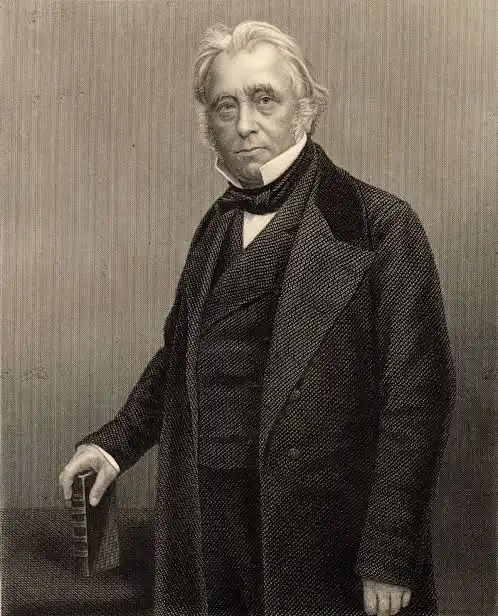
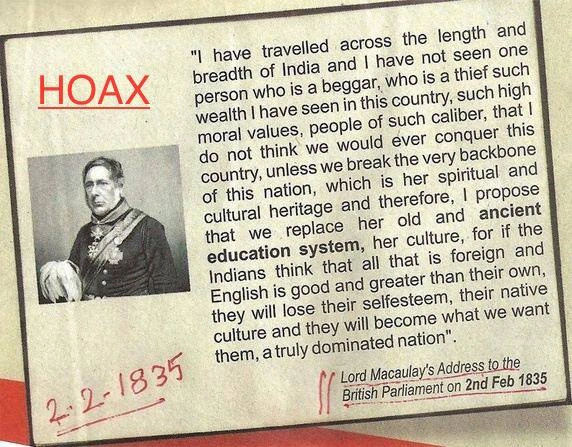
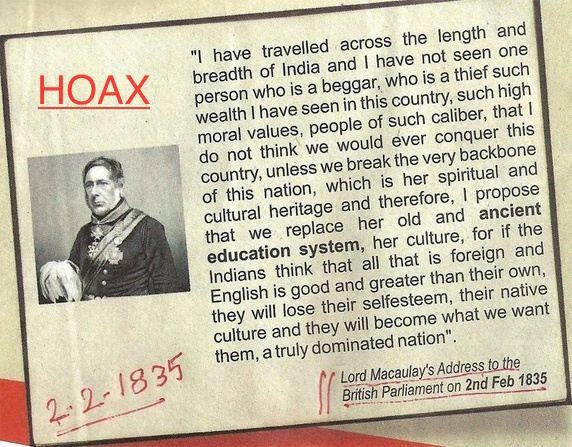
Macaulay’s most quoted — and most criticized — words from the Minute read:
“We must at present do our best to form a class of persons Indian in blood and colour, but English in tastes, in opinions, in morals, and in intellect.”
This sentence encapsulates both the ambition and the problem with his vision. It was explicitly a project of cultural replacement, not cultural exchange.
What Macaulay Proposed
- Stop the government printing of Arabic and Sanskrit books immediately.
- Abolish the Madrassa at Calcutta and the Sanskrit College at Calcutta.
- Redirect all funds to English-medium education.
- Retain only the Sanskrit College at Benares and the Mahometan College at Delhi as sufficient to maintain traditional learning.
- Promote English as the medium of all higher instruction.
The Downward Filtration Theory
One of the most consequential — and ultimately flawed — ideas embedded in Macaulay’s Minute was the Downward Filtration Theory.
What the theory proposed: The British should educate a small elite class of Indians in English and Western subjects. This educated elite would then pass knowledge down to the broader population through vernacular languages.
The logic: Rather than trying to educate the entire Indian population — an enormous and expensive undertaking — the British would invest in a small, capable upper class and allow education to “trickle down” naturally through social networks.
What actually happened: The theory failed almost completely in practice.
- The educated elite used their Western education for personal advancement, not mass upliftment.
- Only those who could afford higher English-medium education — mainly upper-class and upper-caste families — benefited.
- The masses remained largely uneducated.
- A sharp divide emerged between the English-educated minority and the vernacular-speaking majority.
The Downward Filtration Theory created a social gap that shaped Indian society well into the twentieth century and, in some ways, its effects persist today.
Governor-General Bentinck’s Response and Official Sanction
Lord William Bentinck, then Governor-General of India, accepted Macaulay’s recommendations promptly. However, he was cautious about announcing the policy publicly before leaving office, knowing it would provoke resistance.
Bentinck’s Resolution of March 7, 1835 officially sanctioned Macaulay’s Minute. It directed that:
- All funds available for education would be employed on English education alone.
- No new Oriental institutions would receive government support.
- Existing Oriental colleges would not be closed immediately, but no new appointments would be made.
This resolution transformed Macaulay’s personal opinion paper into official British colonial educational policy.
Key Outcomes After 1835
The effects of Macaulay’s Minute unfolded over the following decades in a clear sequence:
| Year | Development |
|---|---|
| February 2, 1835 | Macaulay submits the Minute to the Governor-General’s Council |
| March 7, 1835 | Lord Bentinck officially sanctions Macaulay’s recommendations |
| 1837 | English replaces Persian as the court language of India |
| 1844 | Government Resolution opens high government posts to English-educated Indians |
| 1854 | Wood’s Despatch expands the education policy to include a wider institutional framework |
| 1857 | Universities of Calcutta, Bombay, and Madras are established |
| Post-1857 | English education becomes the foundation of all professional and administrative careers |
Impact of Macaulay’s Minute on Indian Society
1. Foundation of Modern Education in India
Whatever its intentions, Macaulay’s Minute laid the structural foundation for India’s modern education system. English-medium schools and colleges multiplied. The universities of Calcutta, Bombay, and Madras — established in 1857 — followed the model of English universities and became the backbone of higher education in India.
2. English as a Common Language
English became, over time, something Macaulay never entirely intended — a genuinely Indian language. Indians adapted it, shaped it, and used it as a pan-regional lingua franca in a country with hundreds of native languages and dialects. This practical role of English remains central to India’s professional, academic, and legal life today.
3. Role in the Freedom Movement
Ironically, the English education that Macaulay designed to serve British colonial interests became one of the tools Indians used to challenge colonialism. Leaders like Bal Gangadhar Tilak, Gopal Krishna Gokhale, B.R. Ambedkar, Jawaharlal Nehru, and many others received Western-style educations and used that knowledge to articulate powerful arguments for self-rule, democracy, and social justice.
They read John Stuart Mill on liberty and applied it to argue against British rule. They studied European political philosophy and used it to write constitutions. Macaulay’s project of cultural intermediaries produced, among other things, the very people who ended British rule.
4. Decline of Indigenous Education Systems
The policy’s most damaging legacy was the rapid marginalization of traditional institutions. Gurukuls, pathshalas, madrasas, and tols lost government funding and social prestige. Students who aspired to government employment or professional status shifted to English-medium schools.
Many of these traditional institutions declined, closing over the following decades. The knowledge systems they carried — in Ayurveda, classical literature, astronomy, philosophy, and local history — lost the institutional support that had sustained them for centuries.
5. Social Stratification
Access to English education was not equal. It was concentrated in upper-class and upper-caste urban families who could afford missionary or government schools. This created a sharp division in Indian society — between those who had access to English and the opportunities it brought, and those who did not.
Criticism of Macaulay’s Minute
Macaulay’s Minute has attracted sustained criticism from multiple directions, both in his own time and since.
From Orientalists of His Era
Scholars like H.H. Wilson argued that Macaulay had no real knowledge of Sanskrit or Arabic literature and was therefore unqualified to declare it worthless. Wilson pointed out that Sanskrit texts contained sophisticated mathematics, astronomy, medicine, and philosophy that Macaulay had simply never encountered.
From Indian Nationalists and Reformers
Many Indian thinkers, including Rabindranath Tagore, argued that Macaulay’s system produced clerks rather than thinkers — people trained to pass exams and fill administrative posts, not to question, create, or lead.
Tagore famously established Visva-Bharati at Shantiniketan as a deliberate alternative: an institution rooted in Indian traditions, open-air learning, and vernacular languages.
From Postcolonial Scholars
Contemporary scholars including Partha Chatterjee, Ashis Nandy, and Ngugi wa Thiong’o (writing in the African context but with clear parallels) argue that colonial education was a form of cultural colonization — that it systematically devalued indigenous knowledge, created psychological dependence on Western thought, and erased local intellectual traditions.
The Factual Errors in Macaulay’s Claims
Macaulay’s claim that Indian literature and science were categorically inferior to European equivalents was factually wrong.
- Indian mathematicians had independently developed zero, the decimal system, and algebra centuries before European mathematicians.
- Sanskrit poetics, philosophy (Nyaya, Vedanta, Mimamsa), and literature (Kalidasa, Valmiki) represent traditions of considerable sophistication.
- Indian astronomy and medicine (Sushruta, Charaka) contained knowledge that European science was still catching up to in some areas.
Macaulay’s dismissal reflected ignorance, not evaluation.
Legacy and Modern Relevance
Macaulay’s Minute remains one of the most argued-over documents in Indian intellectual history. Its legacy is genuinely mixed.
What it enabled:
- A shared language (English) across a linguistically diverse country
- Access to global science, law, and literature
- A professional class that built modern India’s institutions
- The intellectual tools that powered the independence movement
What it damaged:
- Indigenous knowledge systems and institutions
- Vernacular languages’ status in formal education
- Cultural self-confidence in traditional Indian learning
- Equitable access to education (the Downward Filtration failure)
Modern India continues to debate some of these questions: How much should the education system prioritize English versus regional languages? What place should classical Indian knowledge have in a modern curriculum? These debates trace a direct line back to February 2, 1835.
Comparison: Macaulay’s Minute (1835) vs. Wood’s Despatch (1854)
| Feature | Macaulay’s Minute (1835) | Wood’s Despatch (1854) |
|---|---|---|
| Focus | Elite English education only | Comprehensive education at all levels |
| Language policy | English exclusively | English + vernacular languages |
| Target group | Upper-class elite | Broader population |
| Indigenous education | Actively dismissed | Partially accommodated |
| Institutional framework | Limited; closed Oriental institutions | Proposed universities, schools, teacher training |
| Mass education | Not a priority | Explicitly included |
| Historical significance | Set the direction | Regularized and expanded the system |
Wood’s Despatch is often called the “Magna Carta of English education in India” because it moved beyond Macaulay’s narrow focus and created a more structured, layered system of education from primary school to university.
Common Misconceptions
Misconception 1: Macaulay shut down all traditional Indian institutions. He recommended closing Oriental colleges, but the actual implementation was more measured. Lord Bentinck retained existing institutions, though they received no new state support.
Misconception 2: Macaulay studied Indian literature and found it inferior. He explicitly stated he had no knowledge of Sanskrit or Arabic. His dismissal was based on secondhand accounts, not direct study — a fact his critics have rightly emphasized.
Misconception 3: Macaulay’s Minute was the first British education policy in India. The Charter Act of 1813 was the first concrete policy step. Macaulay’s Minute resolved the implementation debate that had existed since 1813.
Misconception 4: The Downward Filtration Theory worked as intended. It did not. The educated elite did not systematically transmit knowledge to the masses. The theory was an assumption that collapsed under social and economic reality.
Misconception 5: Macaulay was the sole architect of English education in India. Wood’s Despatch (1854), the University Act of 1857, and subsequent policy decisions by multiple governors-general shaped the final form of colonial education. Macaulay set a direction; others built the structure.
Internal Link Opportunities
- After “Charter Act of 1813” mention → Link to: Charter Act of 1813: Education Provisions and Historical Significance
- After “Downward Filtration Theory” section → Link to: Downward Filtration Theory: Meaning, Criticism, and Impact on Indian Education
- After “Wood’s Despatch comparison table” → Link to: Wood’s Despatch 1854: Complete Notes for Students and UPSC Aspirants
- After “Role in Freedom Movement” section → Link to: How Western Education Shaped India’s Independence Movement
- In the FAQ section → Link to: History of Education in India: From Ancient Gurukuls to Modern Universities
Recommended External References
- IIT Kanpur Archives — Original text of Macaulay’s Minute (home.iitk.ac.in)
- British Library, India Office Records — Primary colonial education documents
- NCERT History Textbooks — Standard academic coverage for Indian students
- ResearchGate / IRJMETS — Peer-reviewed papers on the impact of Macaulay’s Minute
- Dharampal, The Beautiful Tree (1983) — Documentation of indigenous education systems before British intervention (widely cited in Indian academic scholarship)
Key Takeaways
✅ Macaulay’s Minute on Indian Education was submitted on February 2, 1835, and officially sanctioned on March 7, 1835.
✅ It argued for English-medium education and dismissed Sanskrit and Arabic learning as inferior.
✅ It proposed creating Indians who were “English in tastes, opinions, morals, and intellect” — cultural intermediaries for British administration.
✅ The Downward Filtration Theory it promoted largely failed: education did not reach the masses as intended.
✅ English became the court language in 1837; high government posts opened to English-educated Indians in 1844.
✅ Traditional institutions — gurukuls, madrasas, pathshalas — lost state patronage and many declined.
✅ Ironically, the English education Macaulay designed for colonial purposes later powered India’s independence movement.
✅ Wood’s Despatch (1854) provided a more comprehensive education framework, addressing Macaulay’s gaps.
People Also Search for
-
What is Macaulay’s Minute on Indian Education?
Macaulay’s Minute on Indian Education is a policy document presented on February 2, 1835, by Thomas Babington Macaulay to India’s Governor-General. It argued that English-medium education was superior to all traditional Oriental learning and recommended redirecting all British education funds to English-language institutions. Governor-General Lord William Bentinck accepted and officially sanctioned it in March 1835.
-
What was the main objective of Macaulay’s Minute?
The central objective was to create a class of Indians who could serve as cultural and administrative intermediaries between the British rulers and the Indian masses. Macaulay wanted these individuals to be educated in English and Western sciences, loyal to British interests, and capable of spreading Western knowledge to the wider Indian population through vernacular languages.
-
What is the Downward Filtration Theory?
The Downward Filtration Theory, proposed in Macaulay’s Minute, suggested educating only a small elite class of Indians in English and Western subjects. This elite would then pass knowledge down to the masses through local languages. In practice, the theory failed: the educated elite did not transmit knowledge downward, and education remained concentrated among the privileged upper classes.
-
Who accepted Macaulay’s Minute and when?
Governor-General Lord William Bentinck accepted Macaulay’s recommendations and officially sanctioned them through a resolution on March 7, 1835. Bentinck strategically delayed public implementation until near the end of his tenure to avoid political backlash from those who supported traditional Indian education.
-
What was the Orientalist vs. Anglicist debate?
Before Macaulay’s Minute, British administrators were divided over what kind of education to provide in India. Orientalists (led by scholars like H.H. Wilson) argued for education in Indian classical languages — Sanskrit, Arabic, and Persian. Anglicists (like Macaulay and Charles Trevelyan) argued for English-medium Western education. Macaulay’s Minute resolved this debate in favor of the Anglicists.
-
What was the impact of Macaulay’s Minute on Indian languages?
Traditional languages of learning — Sanskrit, Arabic, and Persian — lost official state support and social prestige in formal education. English rose as the language of administration, courts, and higher education. Vernacular languages were partly acknowledged in subsequent policies but remained underfunded. The dominance of English in India’s professional and academic life today traces directly to this policy shift.
-
How did Macaulay’s education policy contribute to India’s independence movement?
This is one of history’s more striking ironies. The English education that Macaulay designed to serve British colonial interests gave Indians access to Western ideas of democracy, liberty, and rights. Leaders like Jawaharlal Nehru, B.R. Ambedkar, Gopal Krishna Gokhale, and Bal Gangadhar Tilak used this education to articulate powerful arguments against colonial rule and to build the intellectual foundation of Indian nationalism.
-
What is the difference between Macaulay’s Minute (1835) and Wood’s Despatch (1854)?
Macaulay’s Minute focused narrowly on English-only education for an elite minority. Wood’s Despatch (1854) provided a comprehensive framework covering primary, secondary, and higher education in both English and vernacular languages. It proposed the establishment of universities, teacher training, and a broader reach of education. Wood’s Despatch is widely considered a more balanced and systematic policy than Macaulay’s Minute.
-
What did Macaulay say about Indian literature?
Macaulay infamously wrote that “a single shelf of a good European library was worth the whole native literature of India and Arabia.” He also claimed that all historical information in Sanskrit texts was less valuable than what could be found in entry-level textbooks used in English preparatory schools. These claims were made without any direct knowledge of Sanskrit or Arabic literature and have been widely criticized as ignorant and prejudiced.
-
Is Macaulay’s Minute relevant today?
Yes, in several ways. Debates about English versus regional-language instruction in Indian schools continue directly from the questions Macaulay’s Minute raised. Questions about whether classical Indian knowledge systems belong in modern curricula, and about equal access to quality education across class and caste lines, all have roots in the policy choices made in 1835. The Minute remains a reference point in any serious discussion of Indian education and colonial history.
Conclusion
Macaulay’s Minute on Indian Education is not simply a historical document — it is a mirror held up to one of the most consequential choices in India’s intellectual history. In 1835, it resolved a policy debate and set a direction. Over the following century, it reshaped language, learning, and social structure across an entire subcontinent.
Its legacy resists simple judgment. The same policy that marginalized centuries of Indian classical learning also produced the educated class that wrote India’s Constitution, argued its cases in court, and led its scientific institutions. The English it promoted became a bridge to the world’s knowledge, while simultaneously functioning as a symbol of colonial inequality.
What remains clear is this: Macaulay’s Minute was not neutral education policy. It was a political instrument — one that aimed to make a particular kind of Indian in the image of British cultural values. That India has since made English its own — bending, adapting, and Indianizing it — may be the most fitting historical response.
Also Read: Types of Nouns in English: Complete Classification Guide , Articles in English: The Complete Guide to A, An, and The , Alfred Lord Tennyson: Life, 7 Best Works & Why the Victorian Poet Still Inspires Millions Today
References: