
Introduction
There is something quietly brilliant about a story where a child’s small lie snowballs into a moral crisis — not through punishment, but through guilt. Father’s Help by RK Narayan does exactly that, and it does so with gentle humour and deep psychological insight that few short stories manage in so few pages.
This is Lesson 1 of the WBBSE Class 10 English textbook Bliss, and it is adapted from Narayan’s celebrated short story collection Malgudi Days. On the surface, it is a simple tale about a boy trying to skip school. Look a little deeper, and you find a story about imagination versus reality, the consequences of dishonesty, and a father’s unconventional way of teaching responsibility.
This guide covers everything you need — a complete summary, character analysis, theme exploration, important questions and answers for the Madhyamik exam, and the meaning behind the story’s ironic title.
Quick Answer
What is Father’s Help about? Father’s Help by RK Narayan follows Swaminathan (Swami), a Class 10 student who fakes a headache to avoid school on Monday. His strict father forces him to go, and writes a complaint letter about Swami’s teacher, Samuel. As the day unfolds, Swami realizes Samuel is not the cruel teacher he imagined — and faces the consequences of his own lies.
About the Author: RK Narayan
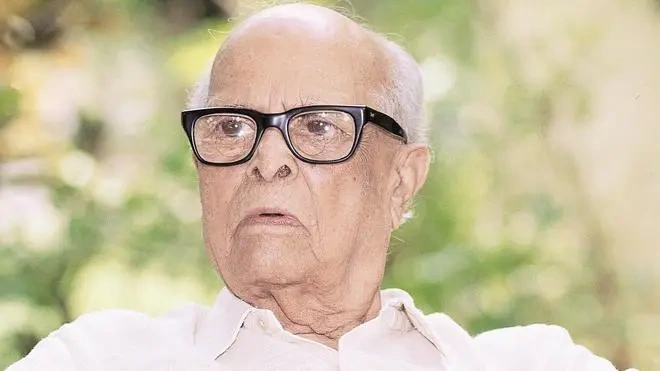
Rasipuram Krishnaswami Iyer Narayanaswami — known simply as R.K. Narayan — was born on 10 October 1906 in Madras (present-day Chennai). He is considered one of the foundational figures of Indian literature in English.
Narayan spent most of his writing life portraying the fictional South Indian town of Malgudi, which became one of the most recognizable literary settings in Indian fiction. Through Malgudi, he captured the rhythms of ordinary Indian life — its humour, its contradictions, and its deep humanity.
His major works include Swami and Friends (1935), The Bachelor of Arts (1937), The Guide (1958), and the short story collection Malgudi Days (1943). The Guide earned him the Sahitya Akademi Award in 1958, India’s highest literary honour.
Narayan wrote in simple, clean English that was accessible to readers everywhere. His stories rarely involved grand drama. Instead, they found meaning in the smallest, most familiar moments of daily life. He passed away on 13 May 2001.
| Detail | Information |
|---|---|
| Full Name | Rasipuram Krishnaswami Iyer Narayanaswami |
| Born | 10 October 1906, Madras |
| Died | 13 May 2001 |
| Genre | Fiction, Short Stories |
| Notable Works | Malgudi Days, The Guide, Swami and Friends |
| Award | Sahitya Akademi Award (1958) for The Guide |
| Setting | The fictional town of Malgudi |
About the Story: Source and Context
Father’s Help is an edited excerpt from Malgudi Days, a celebrated collection of short stories published in 1943. The story features Swaminathan, a recurring character who also appears in Narayan’s debut novel Swami and Friends.
The story is included as Lesson 1 of the WBBSE Class 10 English textbook Bliss. Its placement as the opening lesson is fitting — it is immediately engaging, psychologically rich, and accessible to young readers who will likely recognize Swami’s feelings on any given Monday morning.
Text Book Answer Solution
Father’s Help by RK Narayan WBBSE Class 10 Questions Solve
Full Summary of Father’s Help
Section 1: Monday Morning Blues
The story opens on a Monday morning. Swaminathan (Swami) lies in bed, realizing with a shudder that it is a new school week. The weekend passed in the blink of an eye, and school feels like a threat.
At nine o’clock, Swami wails that he has a headache. His mother, sympathetic as ever, suggests he stay at home. For a while, the plan seems to work. Swami lounges comfortably while he should have been in the school prayer hall.
His father, however, is not so easily convinced. He questions Swami firmly and gets to the truth — Swami simply does not want to attend school. The father insists that Swami must go, regardless of a Monday-morning headache.
Section 2: A Lie Grows Legs
To strengthen his case, Swami begins complaining about his teacher, Samuel. He tells his father that Samuel is a brutal, violent man who beats students mercilessly. He claims Samuel canes boys so harshly that their hands bleed and that he once injured a boy’s eardrum.
This description is almost entirely a product of Swami’s imagination and exaggeration. But the father takes it seriously.
Rather than showing sympathy to Swami’s side, the father does something unexpected. He sits down and writes a letter of complaint to the headmaster about Samuel’s alleged cruelty. He seals it, hands it to Swami, and tells him to deliver it personally.
Swami is horrified. His plan has backfired spectacularly.
Section 3: The Walk to School and the Moral Conflict
Walking to school, Swami’s mind is in turmoil. He begins to question whether his description of Samuel was accurate at all. He recalls that Samuel is actually a fairly reasonable teacher — that he sometimes laughs and is not the monster Swami painted him to be.
The more he thinks about Samuel, the more guilty he feels. He stops by the roadside, overwhelmed with confusion. He remembers Samuel’s dark face, thin moustache, and yellow coat. He feels a strange sadness.
Swami hatches a plan. He will deliver the letter at the end of the school day rather than at the beginning. Perhaps Samuel will do something harsh during the day that would justify the letter’s contents. That gives Swami an out.
Section 4: Samuel Surprises Swami
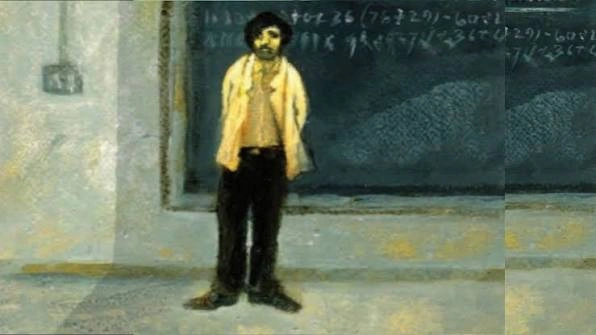
Swami arrives late to his class where Samuel is teaching arithmetic. Instead of scolding him, Samuel asks why he came to school at all if he was going to be late.
Swami tells Samuel that his father insisted he attend. Samuel’s response is not anger — it is admiration. He says he wishes there were more parents like Swami’s father. He praises the father’s discipline and allows Swami to take his seat.
Swami sits down, stunned. Samuel has been kind, understanding, even generous. The letter in Swami’s bag feels like a burning accusation. He thinks, “Oh, you poor man! You don’t know what my father has done to you.”
Throughout the day, Samuel never gives Swami a single reason to justify the letter. He is patient, even gentle.
Section 5: The Headmaster Is Gone
When the final bell rings, Swami rushes to the headmaster’s room to deliver the letter. He hopes to be done with it and relieve his conscience.
The peon at the headmaster’s room informs him that the headmaster has gone on a week’s leave and his room is locked.
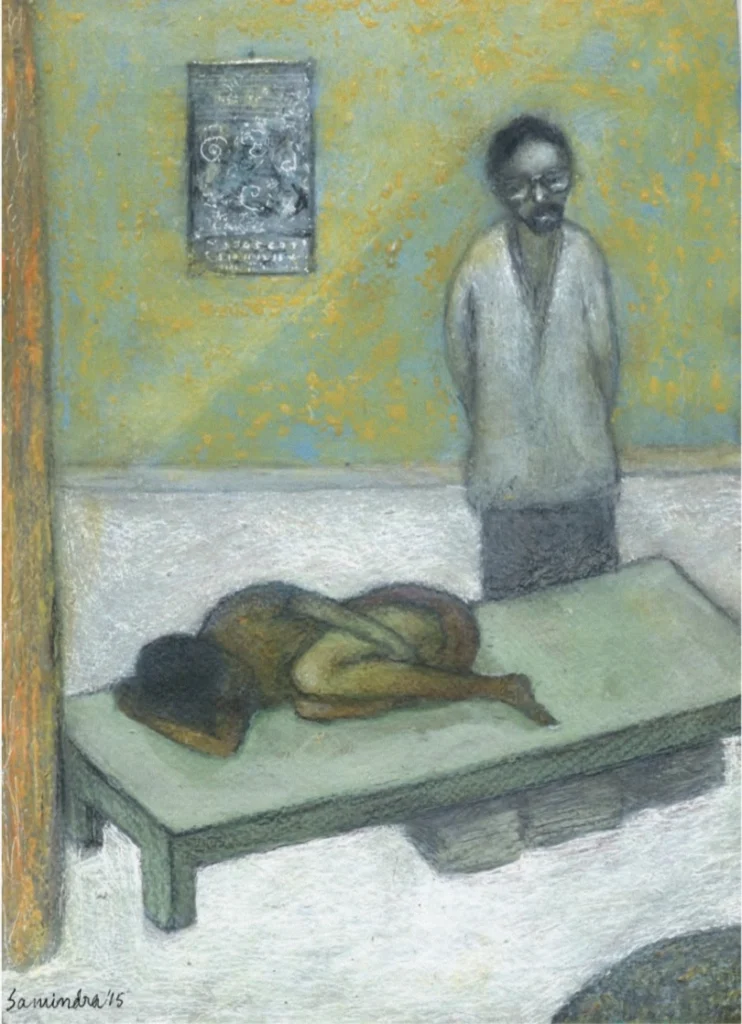
Swami returns home, letter still in hand — undelivered, but not for want of trying. He tells his father what happened. His father sees through everything immediately. He snatches the letter from Swami and tears it up.
He tells Swami never to come to him for help if Samuel scolds him again. He adds: “You deserve your Samuel.”
The story ends there — no dramatic punishment, no tearful confession. Just a father’s quiet, knowing response, and Swami left with his thoughts.
Character Analysis
Swaminathan (Swami)
Swami is the heart of this story. He is a typical child — imaginative, impulsive, and prone to exaggeration. His instinct to avoid discomfort is relatable, but his willingness to lie — and the consequences of that lie — form the story’s moral core.
Swami is not malicious. His accusations against Samuel come from panic, not cruelty. But he learns, painfully, that lies have unpredictable effects once set in motion. By the end, Swami’s guilt is more punishing than any cane could be.
The Father
Swami’s father is strict, perceptive, and unexpectedly complex. He sees through Swami’s excuses immediately but does not simply punish him. Instead, he turns Swami’s own lie into a lesson — forcing him to deliver the complaint letter himself.
This is the father’s real “help.” Not comfort, not sympathy — but a method that makes Swami confront the consequences of his dishonesty. His final act of tearing up the letter and saying “You deserve your Samuel” is not cruelty but wisdom.
The Mother
The mother represents indulgent sympathy. She readily accepts Swami’s headache excuse without question, offering him a comfortable escape. She contrasts sharply with the father’s stricter approach to parenting.
Samuel
Samuel is perhaps the story’s most interesting surprise. Swami builds him up as a monster — a violent, terrifying teacher. The reality is entirely different. Samuel is calm, reasonable, and even kind on the day Swami fears most.
This gap between Swami’s description and Samuel’s actual behaviour is the story’s most powerful irony. Samuel never acts cruelly. He praises Swami’s father. He poses no threat at all — and that, paradoxically, makes Swami feel worse.
| Character | Role | Key Trait |
|---|---|---|
| Swaminathan (Swami) | Protagonist | Imaginative, guilty, impulsive |
| Father | Antagonist/Guide | Strict, perceptive, wise |
| Mother | Supporting | Sympathetic, indulgent |
| Samuel | Teacher | Calm, kind, misrepresented |
| Headmaster | Minor | Absent at the crucial moment |
Themes in Father’s Help
1. Perception vs. Reality
The most central theme of the story is the gap between what we imagine and what is true. Swami builds Samuel into a figure of terror based on exaggeration. The real Samuel is nothing like that portrait. Narayan shows how fear distorts our perception, leading us to believe things that have no basis in fact.
2. Dishonesty and Its Consequences
Swami’s lie is small and motivated by a child’s desire for comfort. But it spirals into a full accusation against an innocent teacher and forces Swami to carry that guilt for an entire school day. The story suggests that lies rarely stay small — they create their own moral weight.
3. Parenting and Discipline
The contrast between the mother and the father represents two approaches to parenting. The mother offers comfort; the father offers accountability. Narayan does not judge either approach, but the plot suggests that the father’s method produces a more lasting lesson.
4. Child Psychology
Narayan was a master at portraying the inner life of children. Swami’s Monday dread, his elaborate excuses, his guilt on the walk to school — all of these are rendered with remarkable accuracy. The story treats child psychology with the same seriousness it would receive in any adult narrative.
5. Moral Responsibility
By making Swami deliver the letter himself, the father ensures that Swami must live with the consequences of his own words. This is a story about how moral responsibility cannot be transferred or avoided — it must be faced.
The Irony of the Title
The title “Father’s Help” carries a sharp irony that rewards careful reading.
Swami expects his father to help him in the way most children expect — by taking his side, protecting him, and excusing him from school. Instead, the father’s “help” takes the form of discipline and accountability.
The father’s letter, which Swami dreads, ultimately goes undelivered. Samuel turns out to be kind. The headmaster is absent. And the father tears the letter up at the end. In a sense, everything works out — but only because of the accidental intersection of circumstances, not because of Swami’s cunning.
The title is ironic because the help Swami receives is not the help he wanted. Yet it is arguably the help he needed most.
Significance of the Setting: Malgudi
Malgudi is Narayan’s fictional South Indian town — perhaps the most famous imaginary place in Indian literature. It is not based on a single real city, though Narayan drew inspiration from Mysore and its surroundings.
The Albert Mission School, where Swami studies, is over a hundred years old in the story’s world. The jutka (a two-wheeled horse-drawn carriage) that Swami’s mother suggests as transport tells us this is a pre-independence, colonial-era India.
Malgudi matters because it grounds the story in a specific cultural and historical world — one of colonial schooling, strict fathers, indulgent mothers, and children navigating the gap between home and the world outside.
Important Textbook Questions and Answers
Choose the Correct Alternative
1. With a shudder, Swami realized that it was ____. Answer: (iv) Monday
2. Swami’s school is the ____ Mission School. Answer: Albert
3. Swami’s father wrote the complaint letter to Swami’s ____. Answer: (B) Headmaster
4. The letter made Swami feel ____. Answer: (D) Worried
5. Samuel said they wanted more parents like ____. Answer: Swami’s father
True or False (with Supporting Sentences)
1. Samuel is especially angry with boys who come late. True. Supporting sentence: “He is especially angry with boys who come in late.”
2. Swami thought it was Monday morning. False. Supporting sentence: “It looked as though only a moment ago it was Friday.” (Swami felt it was still Friday; the shudder came when he realized it was Monday.)
3. Swami was lying on the bed in his father’s room when he ought to have been in the school prayer hall. False. Supporting sentence: Swami was lying on the bench in his mother’s room.
4. The headmaster had gone on a fortnight’s leave. False. Supporting sentence: The peon told Swami that the headmaster had gone on a week’s leave.
Short Answer Questions (SAQ)
Q. What excuse did Swami give to avoid going to school? Swami told his mother that he had a headache. He wailed and complained of pain to gain her sympathy and avoid attending school on Monday morning.
Q. How did Swami’s father react when he heard Swami’s excuse? Swami’s father was not convinced. He told Swami to loaf around less on Sundays if he wanted to avoid headaches on Mondays, and insisted that Swami attend school.
Q. What did Swami say about Samuel to his father? Swami told his father that Samuel was a brutal and cruel teacher who beat students mercilessly. He claimed Samuel caned boys until their hands bled and had even once injured a student’s eardrum. These claims were largely exaggerated.
Q. Why was Swami horrified when his father wrote the letter? Swami had exaggerated Samuel’s cruelty to avoid school. When his father took the complaint seriously and wrote a formal letter to the headmaster, Swami realized his lie had gone too far. He was now responsible for getting an innocent teacher into serious trouble.
Q. What idea occurred to Swami at the school gate? At the school gate, Swami decided to wait and deliver the letter only at the end of the day. He hoped that Samuel might do something harsh during the day that would justify the accusations in the letter.
Q. How did Samuel react when Swami arrived late? Instead of scolding Swami for being late, Samuel asked why he had come to school at all. When Swami said his father insisted, Samuel expressed admiration. He said that more parents like Swami’s father were needed and allowed Swami to take his seat.
Q. Why could Swami not deliver the letter? Swami could not deliver the letter because when he rushed to the headmaster’s room after the final bell, the peon informed him that the headmaster had gone on a week’s leave and his room was locked.
Q. What did Swami’s father do when Swami returned home with the letter? Swami’s father immediately understood that Swami had not delivered the letter intentionally. He snatched the letter from Swami and tore it up. He told Swami that he knew he would not deliver it, and added that Swami “deserved his Samuel.”
Long Answer Questions (LAQ — 100 words)
Q. How does the story highlight the theme of perception versus reality?
In Father’s Help, Swami creates a terrifying mental image of his teacher Samuel — a brutal man who beats students until they bleed. This image is built entirely from imagination and exaggeration, not experience. When Swami actually faces Samuel, the reality is completely different. Samuel is calm, kind, and even praises Swami’s father. Not once during the school day does Samuel behave cruelly. Narayan uses this contrast to show how fear distorts our perception of reality. We often build monsters in our minds that do not exist in the real world. Swami’s guilt grows precisely because he knows the truth.
Q. Justify the title “Father’s Help.”
The title Father’s Help is deeply ironic. Swami expects his father’s help to mean sympathy and an excuse to stay home. Instead, his father’s help comes as discipline and accountability. By writing the complaint letter and making Swami deliver it personally, the father forces Swami to confront the consequences of his own lies. Swami spends the entire day in moral conflict, realizing that Samuel is innocent. The father’s method — strict, unconventional, and uncomfortable — ultimately teaches Swami more than sympathy ever could. Real help, Narayan suggests, sometimes looks nothing like what we expect or want. It is this irony that gives the title its power.
Q. Describe the character of Swaminathan as portrayed by RK Narayan.
Swaminathan, or Swami, is a typical schoolboy who dislikes Mondays and uses every available excuse to avoid school. He is imaginative and impulsive — capable of painting his gentle teacher Samuel as a violent monster in order to gain his father’s support. However, Swami is not cruel by nature. His lies come from panic, not malice. As he walks to school, his conscience troubles him deeply. He feels genuine sorrow when he realizes how unfairly he has described Samuel. By the story’s end, Swami’s guilt is his real punishment. Narayan portrays him as a child whose instincts are flawed but whose conscience remains intact.
Common Mistakes Students Make in Exam Answers
Mistake 1: Writing the full story instead of answering the specific question. Fix: Read each question carefully. Answer only what is asked.
Mistake 2: Saying the title is straightforward when it is ironic. Fix: Always explain that the “help” Swami receives is discipline, not sympathy — and that is the irony.
Mistake 3: Describing Samuel as an actually cruel teacher. Fix: Samuel is kind in the story. Swami’s description of him is exaggerated and false.
Mistake 4: Saying Swami deliberately refused to deliver the letter. Fix: Swami did try to deliver it — the headmaster was simply absent.
Mistake 5: Ignoring the moral or theme when answering character-based questions. Fix: Always conclude character answers with a reference to what the character’s actions reveal about the story’s central message.
Expert Tips for Madhyamik Exam
Tip 1: Know your question types. WBBSE Madhyamik English typically tests: MCQ (1 mark each), True/False with supporting sentences, fill in the chart, complete the sentence, and long answers (3–5 marks). Practise all formats.
Tip 2: Learn key quotations. “Oh, you poor man! You don’t know what my father has done to you.” — This line captures Swami’s guilt and the story’s irony perfectly. Quote it in character analysis answers.
Tip 3: Understand the title’s irony. At least one LAQ in most exam papers asks students to justify or explain the title. Practise a 100-word answer on this specifically.
Tip 4: Write in simple, clear English. Do not try to impress with complex vocabulary. Madhyamik markers reward accuracy, clarity, and relevance over ornate language.
Tip 5: Always include the moral. For any LAQ about theme or character, end with a sentence about the story’s moral — that honesty and responsibility matter, and that real help sometimes comes through discipline, not comfort.
William Wordsworth: Life, Major Works & Complete Literary Legacy (2026 Guide)
Alfred Lord Tennyson: Life, 7 Best Works & Why the Victorian Poet Still Inspires Millions Today
Key Takeaways
✅ Father’s Help is Lesson 1 from WBBSE Class 10 English textbook Bliss, adapted from RK Narayan’s Malgudi Days.
✅ The story follows Swaminathan, who lies about a headache and exaggerates his teacher Samuel’s cruelty to avoid school.
✅ Swami’s father writes a complaint letter to the headmaster and makes Swami deliver it — turning the lie into a moral burden.
✅ Samuel, the teacher, turns out to be kind and gentle — the opposite of Swami’s exaggerated description.
✅ The title is ironic: the father’s “help” is discipline and accountability, not comfort.
✅ Key themes: perception vs. reality, dishonesty and its consequences, child psychology, and responsible parenting.
✅ The story’s moral: lies create their own punishment, and real help often looks nothing like what we expect.
Frequently Asked Questions
-
What is the central theme of Father’s Help by RK Narayan?
The central theme is the contrast between perception and reality. Swami imagines his teacher Samuel as a cruel tyrant, but Samuel is revealed to be calm and kind. The story also explores dishonesty and its moral consequences, showing how a child’s small lie creates a spiral of guilt and anxiety. Responsible parenting — the father’s discipline versus the mother’s indulgence — is a secondary but equally important theme.
-
Why is the title “Father’s Help” considered ironic?
Swami expects his father’s help to mean sympathy and support for staying home. Instead, his father forces him to go to school and delivers a complaint letter about Samuel to make Swami accountable for his own words. The “help” comes as discipline rather than comfort. This unexpected form of assistance — one that teaches responsibility rather than provides escape — is what makes the title ironic.
-
How does RK Narayan portray child psychology in Father’s Help?
Narayan portrays child psychology with great accuracy and warmth. Swami’s Monday dread, his elaborate excuses, his exaggeration of Samuel’s cruelty, and his guilt-ridden walk to school all reflect the inner world of a child who wants to avoid discomfort but is not truly malicious. Narayan shows how children amplify fears through imagination and how conscience — even in young minds — cannot be entirely silenced.
-
What does Swami’s father mean when he says “You deserve your Samuel”?
This statement reveals that the father knew all along that Swami had exaggerated. By saying “you deserve your Samuel,” he implies that the kind and gentle Samuel is exactly the teacher Swami deserves — not the cruel monster Swami invented. It is a quiet rebuke: Swami’s punishment is not physical but psychological, the weight of knowing he falsely accused a good man.
-
Who is Samuel in Father’s Help, and is he really cruel?
Samuel is Swami’s arithmetic teacher at Albert Mission School in Malgudi. According to Swami’s exaggerated description, Samuel is brutal and violent. In reality, he is nothing of the sort. On the day Swami fears most, Samuel is patient, understanding, and even praises Swami’s father. He never punishes Swami for being late. Narayan uses Samuel’s actual behaviour to expose how far Swami’s imagination had distorted reality.
-
From which book is Father’s Help taken?
Father’s Help is an edited excerpt from Malgudi Days, a short story collection by RK Narayan published in 1943. Swaminathan, the protagonist, also appears in Narayan’s first novel Swami and Friends (1935). In the WBBSE Class 10 curriculum, the story appears as Lesson 1 of the English textbook Bliss.
-
What is the moral of Father’s Help?
The story carries more than one moral. First, dishonesty — even a small, impulsive lie — creates consequences that are difficult to control. Second, facing one’s responsibilities honestly is always better than avoidance. Third, real parental help is not always about giving children what they want, but about teaching them accountability. Samuel’s kindness also suggests that our fears about people are often far worse than the reality.
-
Why did Swami decide to deliver the letter at the end of the day?
Swami hoped that Samuel would do something harsh or unjust during the school day that would justify the accusations in the letter. Delivering it at the end of the day gave Swami time to observe Samuel and find reasons to support his father’s complaint. It was also a way of delaying the act he dreaded. In the end, Samuel behaved with complete kindness, giving Swami no justification at all.
-
What is the significance of the Albert Mission School setting?
The Albert Mission School is described as over a hundred years old, placing the story in colonial-era India. The name itself reflects British missionary influence on Indian education — a common reality in pre-independence India. This historical setting adds cultural authenticity to the story and is relevant for understanding the father’s emphasis on discipline and the teacher-student dynamics of the period.
-
How is the mother’s character different from the father’s in Father’s Help?
The mother and father represent contrasting approaches to parenting. The mother immediately believes Swami’s headache excuse and offers to keep him home — her response is driven by affection and sympathy. The father, however, sees through the excuse and insists on discipline and attendance. While the mother’s approach comes from love, it enables avoidance. The father’s stricter method, though uncomfortable, teaches Swami a lasting lesson about honesty and responsibility.
Conclusion
Father’s Help by RK Narayan is, at first glance, a simple and even amusing story about a boy trying to escape a Monday morning. But Narayan never wrote a story that was only its surface.
Beneath the comedy of Swami’s scheming lies a precise portrait of childhood guilt, the unpredictability of lies once they are set loose, and the strange wisdom of a father who does not protect his child from consequences, but makes him face them.
Samuel — the innocent, kind teacher who never deserved a word of what was written about him — becomes the story’s quiet moral anchor. His goodness, which Swami experiences first-hand on the very day he feared most, is what makes Swami’s guilt so complete and so instructive.
For Madhyamik students, this story offers more than exam answers. It offers a mirror — and most readers will recognize something of Swami in themselves.


1 comment
[…] Father’s Help by RK Narayan: Summary, Analysis, Characters & Question Answers (WBBSE Class 10) […]