What Is Macbeth? Historical and Literary Context
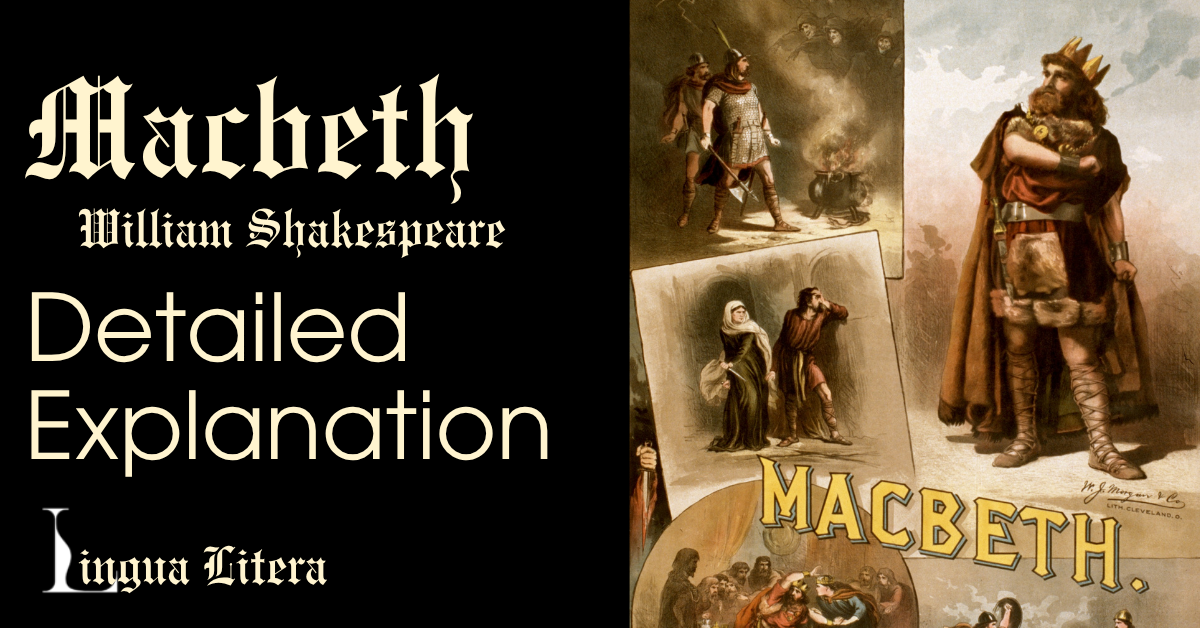
Macbeth is a five-act tragedy written by William Shakespeare approximately in 1606. It is one of his shortest tragedies and, arguably, his darkest. The play was written during the reign of King James I of England — a monarch deeply interested in witchcraft, the supernatural, and questions of legitimate kingship. Shakespeare wrote Macbeth in part as a tribute to, and a meditation on, the anxieties of Jacobean political life.
The play draws heavily from Raphael Holinshed’s Chronicles of England, Scotland and Ireland (1577), a historical source Shakespeare used frequently. However, Shakespeare dramatically altered the historical facts to sharpen the play’s psychological and moral dimensions. The historical Macbeth was a relatively stable ruler of Scotland for seventeen years. Shakespeare’s Macbeth is a tyrant consumed by paranoia within months of seizing the crown.
The year 1606 is also significant because the Gunpowder Plot — a failed Catholic conspiracy to assassinate King James I — had occurred just one year earlier, in 1605. Questions of regicide, treason, and the divine right of kings were not abstract philosophical concerns for Shakespeare’s audience. They were urgent and dangerous political realities.
Macbeth: A Complete Act-by-Act Plot Summary
Understanding the plot of Macbeth in full detail is the essential foundation for any deeper literary analysis. Here is a comprehensive act-by-act breakdown.

Act I — Prophecy and Temptation
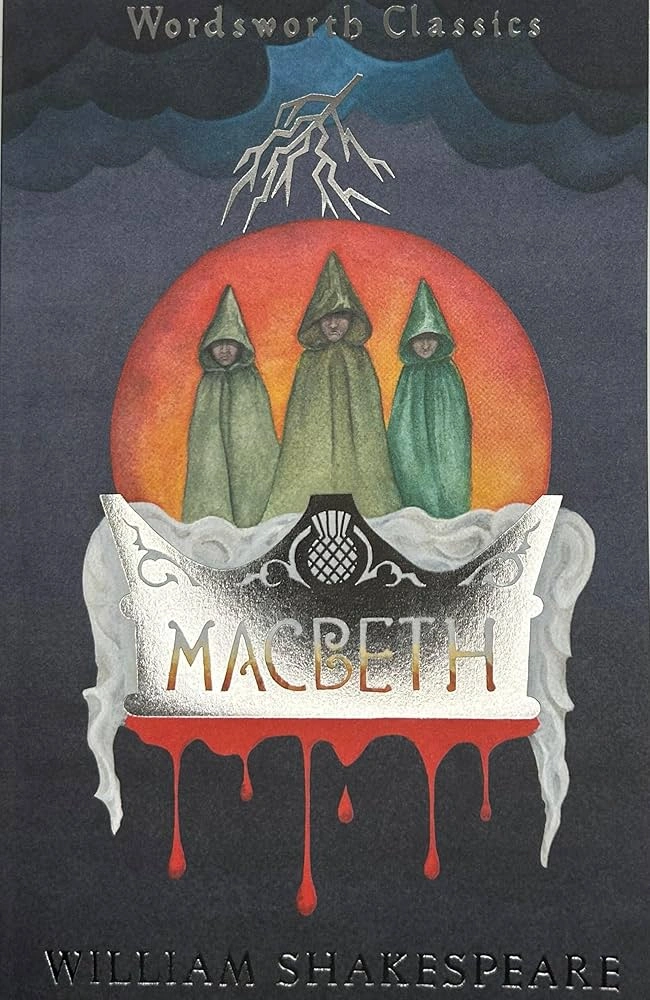
The play opens on a battlefield in Scotland. Macbeth, a highly decorated general serving King Duncan, has just helped defeat a Norwegian invasion. Three Witches — the Weird Sisters — intercept Macbeth and his fellow general Banquo on a heath. They deliver a series of prophecies: Macbeth will become Thane of Cawdor and then King of Scotland; Banquo’s descendants will be kings, though Banquo himself will not.
Shortly after, King Duncan names Macbeth the Thane of Cawdor, fulfilling the first prophecy immediately. Macbeth writes to his wife, Lady Macbeth, who immediately begins plotting to accelerate the rest. When Duncan arrives at their castle at Inverness, Lady Macbeth urges Macbeth to murder him that very night. Macbeth hesitates, but Lady Macbeth’s relentless pressure and manipulation override his moral instincts.
Act II — Murder and Its Immediate Consequences
Driven by ambition and his wife’s pressure, Macbeth murders King Duncan in his sleep. He is immediately overcome with guilt and horror — he believes he heard a voice cry out that he has murdered sleep itself. Lady Macbeth, by contrast, remains controlled and plants the murder weapons on the sleeping guards to frame them.
When Duncan’s murder is discovered the next morning, Macbeth kills the guards, claiming he acted in rage. Duncan’s sons, Malcolm and Donalbain, flee Scotland — Malcolm to England, Donalbain to Ireland — fearing they may be next. Their flight makes them appear guilty, and Macbeth is crowned King of Scotland.
Act III — Paranoia and the Murder of Banquo
Now king, Macbeth grows increasingly paranoid. The Witches’ prophecy that Banquo’s descendants will be kings torments him. He hires murderers to kill Banquo and his son Fleance. Banquo is killed, but Fleance escapes.
At a royal banquet, Macbeth is visited by the ghost of Banquo — a hallucination visible only to him — which causes him to behave erratically in front of his assembled nobles. Lady Macbeth attempts to cover for him, but the damage to his reputation is done. Macbeth resolves to revisit the Witches for further guidance, descending deeper into moral isolation.
Act IV — New Prophecies and the Macduff Massacre
Macbeth returns to the Witches, who show him three apparitions. The first warns him to beware Macduff. The second tells him that no man born of woman can harm him. The third says he will never be defeated until Birnam Wood comes to Dunsinane Hill. Macbeth interprets these as promises of invincibility.
He orders the murder of Macduff’s entire family — his wife, children, and household — in an act of pure tyrannical cruelty. Meanwhile, Macduff has fled to England, where he joins Malcolm and begins assembling an army to reclaim Scotland from Macbeth’s reign of terror.
Act V — Downfall, Madness, and Death
Lady Macbeth, now consumed by guilt, begins sleepwalking and compulsively washing her hands — attempting to remove the imaginary blood of Duncan. She eventually dies, apparently by suicide. Macbeth, isolated and deluded, prepares to defend his castle as the English and Scottish army approaches.
Malcolm’s soldiers cut down branches from Birnam Wood to use as camouflage, causing the forest to appear to move toward Dunsinane — fulfilling the Witches’ third prophecy. In single combat, Macduff reveals he was delivered by caesarean section and is therefore not “born of woman” in the conventional sense. He kills Macbeth. Malcolm is restored as the rightful King of Scotland.
Key Characters in Macbeth: In-Depth Analysis
Macbeth — The Tragic Hero
Macbeth is one of the most compelling tragic heroes in all of English literature. He begins the play as a courageous, honourable soldier — valiant in battle and deeply loyal to King Duncan. His fatal flaw, known as hamartia in Aristotelian terms, is his overwhelming ambition, which the Witches’ prophecy activates and Lady Macbeth then weaponises.
As the play progresses, Macbeth’s moral decline is depicted with extraordinary psychological realism. He moves from hesitation and genuine guilt before Duncan’s murder, through increasing paranoia during Banquo’s murder, to cold ruthlessness when he orders the massacre of Macduff’s family. Shakespeare presents unchecked ambition as inherently destructive — a theme as relevant in 2026 as it was in 1606.
Lady Macbeth — Ambition Without Restraint
Lady Macbeth is frequently cited as one of the most powerful and terrifying female characters in all of Shakespeare. In Act I, she calls upon dark spirits to “unsex” her and fill her with cruelty — she actively rejects the virtues of compassion and restraint in order to drive her husband to murder.
However, Shakespeare does not allow her to escape the psychological consequences. Her breakdown in Act V — the sleepwalking, the compulsive hand-washing, the self-accusation — reveals that she was never as free from conscience as she pretended. Her arc is a profound study in the impossibility of permanently suppressing guilt.
The Three Witches — Fate, Free Will, and the Supernatural
The Weird Sisters occupy a uniquely ambiguous position in the play. They do not force Macbeth to do anything — they simply make predictions. The central question Shakespeare raises through them is whether Macbeth was always destined to commit murder, or whether the prophecies simply gave shape to ambitions he already harboured.
In a Jacobean context, the Witches would have been understood as genuinely supernatural and demonic — King James I had written a book on witchcraft, Daemonologie (1597). For modern readers, they function equally well as symbols of temptation, fate, and the dark side of human psychology.
Banquo — The Moral Foil to Macbeth
Banquo receives the same prophecy as Macbeth but reacts with scepticism and caution. He represents what Macbeth could have been — a noble soldier who resists the temptation of the supernatural and does not allow ambition to override his moral sense. His ghost, which haunts Macbeth at the banquet, functions as the embodiment of the moral order Macbeth has violated.
Macduff — Justice and Human Feeling
Macduff is the instrument of justice in the play. His grief at the murder of his family in Act IV is one of the most emotionally devastating moments in Shakespeare, made all the more powerful by Malcolm’s instruction to “dispute it like a man.” Macduff’s reply — that he must also “feel it as a man” — is a profound statement about masculinity, grief, and moral feeling that directly challenges the play’s dominant equation of manhood with violence.
Major Themes in Macbeth
Ambition and Its Destructive Consequences
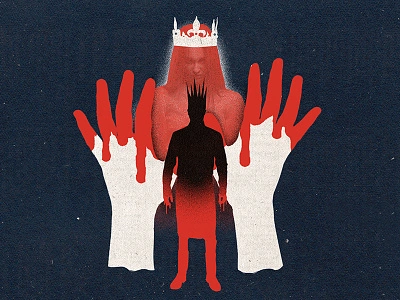
Ambition is the engine of Macbeth’s tragedy. Shakespeare does not present ambition as inherently evil — it is the “vaulting ambition” that “o’erleaps itself” that destroys Macbeth. The play consistently distinguishes between legitimate aspiration and the ruthless, morally unconstrained desire for power. This theme resonates powerfully in contemporary discussions of leadership, institutional corruption, and political ethics.
Guilt and the Psychology of Evil
No playwright before or since has explored the psychology of guilt with the depth that Shakespeare achieves in Macbeth. From Macbeth’s hallucination of a dagger before Duncan’s murder, to his vision of Banquo’s ghost, to Lady Macbeth’s sleepwalking, the play presents guilt not as an abstract moral concept but as a visceral, physical, and ultimately overwhelming psychological reality. Modern psychologists have cited Macbeth when discussing moral injury and the mechanisms of sustained self-deception.
Fate Versus Free Will
Do the Witches determine Macbeth’s fate, or does Macbeth create his own destruction? This is perhaps the play’s most enduring philosophical question. The text deliberately supports both readings simultaneously — which is precisely what makes it inexhaustible as a subject of literary analysis. The prophecies are always technically true, yet always misinterpreted. Macbeth acts with apparent free will at every step, yet the outcome the Witches predicted is always fulfilled.
Masculinity and Gender
Macbeth contains some of Shakespeare’s most sophisticated explorations of gender. Lady Macbeth calls upon spirits to “unsex” her in order to commit murder without hesitation. Throughout the play, characters equate courage, decisiveness, and violence with manliness. Yet the play simultaneously exposes the devastating consequences of this equation. Macbeth’s eventual moral emptiness — and Lady Macbeth’s psychological collapse — both arise directly from the suppression of empathy and compassion in the name of masculine valour.
Appearance Versus Reality
The play opens with the Witches’ paradox: “Fair is foul, and foul is fair.” This inversion of appearances and reality pervades every level of the drama. Duncan trusts Macbeth completely. The Witches’ prophecies sound like promises but are traps. Lady Macbeth appears composed when she is disintegrating internally. Shakespeare uses this theme to explore the fundamental instability of human judgement in a world saturated with self-interest and deception.
Language and Imagery in Macbeth
Understanding the play’s key linguistic and imagistic patterns is essential for high-level literary analysis.
Blood Imagery: Blood appears throughout Macbeth as a symbol of guilt and the impossibility of washing away moral transgression. “Will all great Neptune’s ocean wash this blood clean from my hand?” Macbeth asks after Duncan’s murder. Lady Macbeth’s sleepwalking compulsion to wash her hands later reverses this image — she cannot remove blood that only she can see.
Light and Darkness: Light consistently represents goodness and legitimate order; darkness represents evil and concealment. Macbeth calls on the stars to “hide their fires” so his “black and deep desires” will not be seen. Duncan’s death symbolically extinguishes the light of legitimate kingship in Scotland.
The Unnatural: On the night of Duncan’s murder, horses eat each other, owls kill falcons, and the natural order inverts. These disturbances reflect the Jacobean belief that regicide — the murder of God’s anointed representative on earth — would disturb the entire natural world.
Sleep: Sleep in Macbeth represents innocence, peace, and undisturbed conscience. When Macbeth believes he hears a voice saying “Macbeth does murder sleep,” Shakespeare tells us that the guilty cannot rest. Lady Macbeth’s sleepwalking is the most vivid dramatisation of this principle — she can only approach the truth about her actions in the unguarded state of sleep.
Step-by-Step Guide: How to Write a Top-Grade Essay on Macbeth
Step 1 — Read the Play Actively
Read Macbeth at least twice: once for plot comprehension and once to annotate for themes, language, and character development. Use a modern-spelling scholarly edition — Arden, Oxford, or Cambridge — for university-level work.
Step 2 — Establish a Clear Argument
Every strong essay on Macbeth begins with a debatable, specific argument. Do not simply describe what happens. Make a claim: “Shakespeare presents ambition as inherently self-destructive” or “Lady Macbeth is ultimately more tragic than Macbeth because she is more self-aware.”
Step 3 — Select and Analyse Quotations Carefully
Choose short, precise quotations that directly support your argument. Analyse individual words and phrases rather than paraphrasing. Ask what each specific word choice reveals about character, theme, or Shakespeare’s dramatic intent.
Step 4 — Integrate Contextual Knowledge
Connect your analysis to the Jacobean context, Aristotelian tragedy, or relevant critical perspectives — feminist, psychoanalytic, or new historicist. This integration is essential for achieving the highest marks at A-Level and university.
Step 5 — Structure Your Argument with Clarity
Use a clear PEEL structure — Point, Evidence, Explanation, Link — for each body paragraph. Your introduction should state your argument; your conclusion should develop it, not merely restate it.
10 Most Important Quotes in Macbeth and What They Mean
“Fair is foul, and foul is fair.” (Act I — The Witches) Establishes the play’s central theme of appearance versus reality. Nothing in Macbeth is what it seems.
“Stars, hide your fires; let not light see my black and deep desires.” (Act I — Macbeth) Reveals Macbeth’s ambition and his awareness that his desires are morally indefensible.
“Come, you spirits that tend on mortal thoughts, unsex me here.” (Act I — Lady Macbeth) Lady Macbeth rejects femininity in favour of ruthlessness — a central passage for gender analysis.
“Is this a dagger which I see before me?” (Act II — Macbeth) The first of Macbeth’s hallucinations. Demonstrates the psychological impact of guilt even before the murder is committed.
“Will all great Neptune’s ocean wash this blood clean from my hand?” (Act II — Macbeth) The most powerful expression of guilt in the play. Blood as moral stain that cannot be removed.
“Thou canst not say I did it; never shake thy gory locks at me.” (Act III — Macbeth) Macbeth addressing Banquo’s ghost. The guilt he tried to externalise through murder returns in supernatural form.
“Out, damned spot!” (Act V — Lady Macbeth) Lady Macbeth’s sleepwalking confession. The imaginary blood she cannot wash away is the physical manifestation of her guilt.
“Tomorrow, and tomorrow, and tomorrow.” (Act V — Macbeth) One of Shakespeare’s most celebrated speeches. Macbeth’s nihilistic meditation on the meaninglessness of existence — the direct result of his moral self-destruction.
“Yet I will try the last.” (Act V — Macbeth) Macbeth’s final defiance before death. A last echo of the warrior he was at the play’s opening.
“The time is free.” (Act V — Macduff) Spoken after Macbeth’s death. Signals the restoration of legitimate order and the liberation of Scotland from tyranny.
Questions and Answers About Macbeth
What is the main message of Macbeth?
The central message of Macbeth is that unchecked ambition — ambition that overrides moral conscience and legitimate boundaries — leads inevitably to psychological destruction and political ruin. Shakespeare shows that power gained through evil cannot be maintained, because guilt, paranoia, and moral isolation destroy the person who seized it.
Why is Macbeth considered a tragedy?
Macbeth follows the classical Aristotelian structure of tragedy: a noble protagonist with a fatal flaw who rises to greatness and then falls catastrophically because of that flaw. The audience experiences both pity — for the man Macbeth could have been — and fear — at the capacity for evil within human nature — which Aristotle identified as the defining emotional response to great tragedy.
What role do the Witches play in Macbeth?
The Witches function as catalysts, not controllers. They make accurate predictions but do not compel Macbeth to act on them. Their deeper dramatic function is to externalise the dark ambitions already present within Macbeth, raising the philosophical question of whether fate or free will drives human behaviour. In the Jacobean context, they also represented the genuine threat of supernatural evil that King James I and his court took seriously.
How is Lady Macbeth presented in the play?
Lady Macbeth is initially presented as more ruthlessly ambitious than her husband. She suppresses her conscience through an act of will, calling upon supernatural forces to harden her resolve. However, Shakespeare ultimately shows that this suppression is unsustainable. Her psychological collapse in Act V, culminating in her apparent suicide, demonstrates that guilt cannot be permanently denied — making her arc as tragic as Macbeth’s own.
What are the most important themes in Macbeth for exam purposes?
The themes most consistently rewarded in examinations at GCSE, A-Level, IB, and university level are: ambition and its consequences; guilt and psychological torment; appearance versus reality; fate versus free will; and the construction of masculinity and gender. For the highest marks, candidates should explore these themes in relation to each other and connect them consistently to the play’s Jacobean historical context.
Conclusion: Why Macbeth Still Matters in 2026
Macbeth endures because it addresses something permanent about human nature: the terrifying ease with which ambition, once unconstrained by conscience, can transform a good person into a monster. William Shakespeare wrote this play over four hundred years ago, yet its portrait of power, guilt, and moral self-destruction remains startlingly relevant — in politics, in institutions, and in individual lives.
Whether you are studying Macbeth for an examination, teaching it to a new generation of students, or simply reading it as one of the supreme achievements of English literature, this play repays every hour of attention you give it. The more carefully you read it, the more it reveals.
Start with the text. Follow the language. Trust Shakespeare’s extraordinary intelligence. Everything you need is already there on the page.
Explore more literary guides, study notes, and analysis articles at LinguaLitera.com
Academic Note: All quotations from Macbeth are drawn from the public domain text of William Shakespeare’s play. References to A.C. Bradley’s Shakespearean Tragedy (1904) and Stephen Greenblatt’s Will in the World (2004) are cited for educational purposes only. This article is intended as an educational resource for students, teachers, and researchers. It does not constitute formal academic advice. For university-level work, always consult peer-reviewed sources and your institution’s prescribed edition of the text.