Table of Contents
Introduction
There is a question that sits quietly at the heart of every classroom, every school policy, and every exam a student ever takes. It is not “What should students learn?” That part gets plenty of attention. The real question is “How do those two things, what we teach and how we teach it, actually work together?”
That is exactly what curriculum and instruction is about. These two concepts appear in the same breath so often that many people treat them as a single idea. They are not. Understanding the difference, and more importantly, the relationship between them, is what separates teachers who simply deliver content from educators who genuinely shape learning.
This guide covers the full picture. You will learn what curriculum and instruction each mean on their own, how they depend on each other, the major theories behind both, the most important instructional models used in US and UK classrooms today, and why getting this balance right matters far beyond test scores.
Quick Answer
Curriculum refers to the planned content, learning objectives, and sequences that educators intend to teach. Instruction refers to the methods, strategies, and interactions teachers use to deliver that content. Together, curriculum and instruction form the two-part engine of education: one defines what students should know, the other determines how they come to know it.
What Is Curriculum? Beyond the Textbook Definition
Most people hear “curriculum” and picture a printed syllabus or a government-approved reading list. That image is not wrong, but it is incomplete.
At its broadest, a curriculum is the total educational experience a school plans for its students. It includes not just subjects and textbooks, but the sequence in which topics appear, the skills students are expected to build, the values a school community considers worth passing on, and yes, even the experiences that happen outside formal lessons.
Ralph Tyler, one of the most cited figures in curriculum theory, framed it through four fundamental questions in his 1949 work, Basic Principles of Curriculum and Instruction. What educational purposes should the school seek to attain? What experiences will attain these purposes? How can these experiences be organized effectively? And how can we tell whether purposes are being attained? Those four questions still shape how curriculum designers think today.
Importantly, curriculum is not static. It shifts with political policy, cultural change, research findings, and the evolving needs of the workforce. What American middle schools considered essential in 1975 looks very different from what a National Curriculum review in England might prioritize in 2025.
What Is Instruction? More Than Teaching
If curriculum is the plan, instruction is what actually happens in the room.
Instruction includes every decision a teacher makes about how to engage students with content. The lecture they deliver, the group activity they design, the question they ask that shifts a student’s thinking, the feedback written on a returned essay. All of it is instruction.
This matters because two teachers can work from identical curriculum documents and produce completely different learning outcomes. One teacher reads from a textbook and assigns problems. Another uses the same material as a starting point, then builds in discussion, modelling, worked examples, and peer explanation. The curriculum is the same. The instruction is not.
This is where teaching becomes an art informed by science. Instruction draws on research in cognitive psychology, learning theory, and pedagogical studies to answer the question: given what I know my students need to learn, what is the most effective way to help them learn it?
Curriculum and Instruction: How They Differ and Why Both Matter
Think of it this way. Curriculum answers the question “what?” Instruction answers the question “how?” Neither alone is sufficient.
Strong curriculum with weak instruction means students encounter well-sequenced, carefully designed content and then receive it through monotonous delivery that fails to build real understanding. Strong instruction without coherent curriculum means brilliant, engaging teaching that never quite adds up to a complete education because the content is fragmented or inconsistent.
| Feature | Curriculum | Instruction |
|---|---|---|
| Primary question | What should students learn? | How will students learn it? |
| Who designs it | Curriculum developers, policymakers, teams | Teachers, instructional coaches |
| Scope | School, district, national level | Classroom, lesson level |
| Key documents | Syllabi, standards, frameworks | Lesson plans, unit plans |
| Evaluation tool | Standards alignment, assessment data | Observation, student feedback |
| Flexibility | Relatively stable | Highly adaptable |
The two work best when they are tightly aligned. In high-performing schools, instructional decisions are made with the curriculum intentionally in mind, and curriculum is designed with an understanding of how instruction actually unfolds in practice.
Types of Curriculum You Need to Know
This is where most blog posts stop short. Understanding that there is more than one kind of curriculum is genuinely important for any educator.
The Formal Curriculum
This is the official, documented learning plan. In the United States, it aligns with state standards. In England, it follows the National Curriculum set by the Department for Education. It specifies what students should know by the end of each year or key stage.
The Taught Curriculum
The taught curriculum is what a teacher actually delivers in the classroom. It often aligns closely with the formal curriculum, but real-time teaching decisions, pacing adjustments, and student needs mean it is never identical.
The Hidden Curriculum
This is one of the most underappreciated concepts in education. The hidden curriculum refers to the unspoken lessons students absorb from the culture, norms, and structures of school itself. Values like punctuality, obedience, competition, and deference to authority are rarely written into any lesson plan. Yet they are learned, consistently and powerfully.
Sociologist Philip Jackson first used the term in 1968 in his book Life in Classrooms, and the concept has remained a cornerstone of critical education theory ever since.
The Null Curriculum
Educator Elliot Eisner coined the idea of the null curriculum: what schools choose not to teach. The absence of financial literacy, critical media analysis, or emotional intelligence from most formal curricula is itself a curriculum decision. It shapes students just as much as what is included.
The Co-Curriculum
Activities like debate clubs, sports teams, drama productions, and student government sit alongside formal academic learning. They are not the same as extracurricular activities in that they are deliberately organized to complement and extend academic goals.
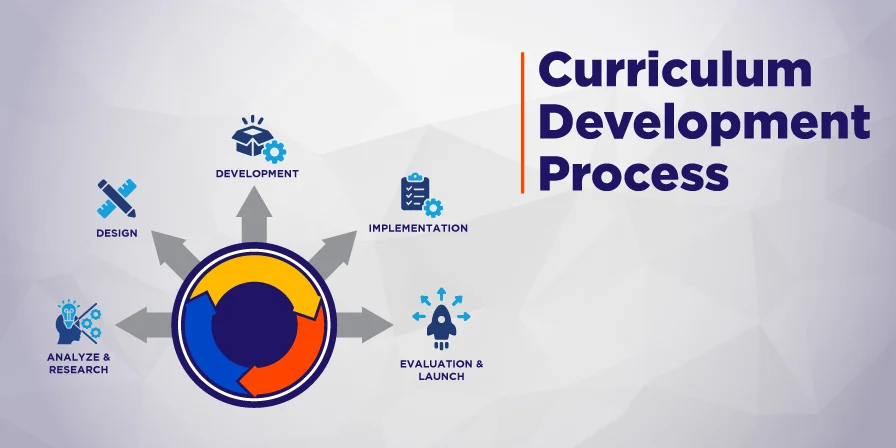
The Curriculum Development Process: A Step-by-Step Look
Curriculum does not appear from nowhere. It is built through a structured process, and understanding that process helps teachers and school leaders make better decisions.
Step 1: Needs Assessment Before writing a single learning objective, effective curriculum development starts with gathering data. Who are the learners? What do they already know? What gaps exist between current performance and desired outcomes? What does the community, workforce, or university system expect them to know?
Step 2: Setting Goals and Objectives Goals are broad statements of purpose. Objectives are specific, measurable targets. A goal might be “Students will develop critical reading skills.” An objective might be “By the end of the unit, students will identify the author’s central argument and evaluate three supporting claims.”
Step 3: Selecting and Organizing Content What content will help students reach those objectives? In what sequence should it appear? Curriculum designers consider scope (how much is covered) and sequence (in what order) very carefully here.
Step 4: Designing Instructional Strategies Here is where curriculum and instruction formally meet. The curriculum document begins to suggest how content should be delivered, what kinds of activities support learning, and what resources teachers need.
Step 5: Assessment Design Assessment is not an afterthought. It should be designed alongside the curriculum, not bolted on at the end. What evidence will show that students have learned what they were meant to learn?
Step 6: Implementation and Evaluation Once the curriculum is in classrooms, the work is not finished. Data from student performance, teacher feedback, and observation feeds back into revision. Curriculum is always a living document.
Major Instructional Models and Strategies
Instruction is not guesswork. Decades of educational research have produced models that consistently improve learning outcomes when applied thoughtfully.
Backward Design (Understanding by Design)
Developed by Grant Wiggins and Jay McTighe, backward design flips the traditional planning sequence. Instead of starting with content and moving toward assessment, teachers begin by identifying what they want students to understand at the end, then design assessments that will reveal that understanding, and finally plan the lessons and activities that will get students there.
This model is widely used in US school districts and has influenced curriculum frameworks across the UK. Its central insight is deceptively simple: if you do not know what success looks like, you cannot plan a reliable path to it.
Direct Instruction
Direct instruction is explicit, teacher-led teaching. It involves clear explanation, modelling, guided practice, and independent practice. Research consistently shows it is highly effective for teaching foundational skills, particularly in literacy and mathematics.
It is important not to confuse direct instruction with passive lecturing. A skilled direct instruction lesson is interactive, paced carefully, and continuously checks for student understanding.
Differentiated Instruction
Carol Ann Tomlinson’s model of differentiated instruction responds to the reality that students in any classroom learn at different rates, arrive with different background knowledge, and process information in different ways.
Differentiation involves adjusting content (what students learn), process (how they engage with it), product (how they demonstrate understanding), and learning environment. It is not about doing different things for every student every minute. It is about making thoughtful, strategic adjustments based on evidence about who students are and what they need.
Inquiry-Based Learning
Rather than presenting students with answers, inquiry-based approaches present them with questions, problems, or phenomena and ask them to investigate. This model draws heavily on constructivist theory, particularly the work of John Dewey, who argued that learning happens through doing and reflection, not passive reception.
Science lessons built around experiments students design themselves, history projects that begin with a primary source investigation, and maths lessons where students discover patterns before receiving formal instruction are all examples of inquiry-based learning in practice.
The Gradual Release of Responsibility
Sometimes described as “I do, we do, you do,” this model moves students progressively from supported learning to independent performance. The teacher first models the skill or process explicitly. Then students practise with teacher support. Then in groups. Then alone. Each stage should only proceed when evidence shows students are ready.
| Model | Core Idea | Best Used For |
|---|---|---|
| Backward Design | Start with the end in mind | Unit and course planning |
| Direct Instruction | Explicit modelling and practice | Skills-based learning |
| Differentiated Instruction | Adjust for learner variability | Mixed-ability classrooms |
| Inquiry-Based Learning | Students explore before being told | Science, history, problem-solving |
| Gradual Release | Scaffold then step back | New or complex skills |
The Role of Assessment in Curriculum and Instruction
Assessment is sometimes treated as something that comes after learning. That framing misses a lot.
Formative assessment happens during learning. Quick checks, classroom questions, exit tickets, brief writing tasks. These tools give teachers real-time information about whether their instruction is working and whether the curriculum is landing as intended. When formative data shows students have not understood something, effective teachers adjust. They do not simply move on because the curriculum schedule says so.
Summative assessment measures what students know at the end of a unit, semester, or year. End-of-term exams, national tests like SATs in England or state standardised tests in the US, and major projects all fall into this category.
The most powerful classrooms use both. Summative data informs future curriculum decisions. Formative data shapes daily instruction. Together they create a feedback loop that keeps teaching responsive rather than mechanical.
Curriculum and Instruction in the US vs. UK: Key Differences
The two education systems share a common language but organize curriculum and instruction quite differently.
| Feature | United States | United Kingdom (England) |
|---|---|---|
| Curriculum authority | State-level (with Common Core influence) | National Curriculum set by DfE |
| Key stages / grade levels | K-12 with state-specific standards | Key Stages 1-4 (ages 5-16) |
| Assessment milestones | State standardised tests, SAT, ACT | SATs (KS2), GCSEs, A-Levels |
| Teacher autonomy in instruction | Generally high | Moderate (Ofsted inspections influence practice) |
| Curriculum flexibility | Significant variation by district | More uniform nationally |
| Recent reform focus | Science of Reading, SEL integration | Knowledge-rich curriculum movement |
Understanding these differences matters for teachers moving between the two systems, for researchers comparing educational outcomes, and for students studying education as an academic field.
Common Mistakes in Curriculum Design and Delivery
Even experienced educators fall into predictable traps. Naming them directly is more useful than speaking around them.
Covering content instead of building understanding. When curriculum planning focuses on what will be taught rather than what students will genuinely know and be able to do, lessons become a march through topics. Coverage and understanding are not the same thing.
Designing curriculum without teachers. Top-down curriculum development that excludes the people who will deliver it produces documents that look coherent on paper and collapse in practice. Teachers know their students and their context. Curriculum built without that input often fails to account for real classroom complexity.
Ignoring assessment until the end. As mentioned above, assessment built after the curriculum is written is almost always misaligned with the curriculum’s actual goals. Wiggins and McTighe called this “teach, test, hope for the best” planning, and it remains far too common.
Treating differentiation as a separate activity. Differentiation is not a box of extra worksheets for struggling students. When it is added on rather than built in, it creates more work for teachers and less support for learners.
Overlooking the hidden curriculum. A school that claims to value collaboration but structures every assessment as individual competition is teaching something, just not what it intends. Effective educators examine the hidden messages in how their schools are organized.
Expert Tips for Stronger Classroom Practice
These are drawn from instructional research and classroom experience, not generic advice.
Teach the same concept in multiple modes. Verbal explanation, visual representation, worked example, and student application in the same lesson is not overkill. It is how durable understanding forms.
Use exit tickets with genuine follow-through. An exit ticket only has value if the teacher reads them before the next lesson and adjusts based on what they reveal. Otherwise it is just an end-of-class ritual.
Plan your questions before the lesson, not during it. Skilled questioning is not improvised. The most powerful classroom questions are designed in advance to reveal and deepen thinking, not just check whether students remember the answer.
Connect new learning to what students already know explicitly. The brain builds new understanding on existing structures. When teachers make that connection visible, retention improves.
Make the purpose of every lesson clear. Not just “today we are studying persuasion.” But “by the end of today, you will be able to identify three techniques a writer uses to shift a reader’s opinion, and you will be able to explain why each one works.” Students who understand what they are meant to learn pay better attention to the parts that matter.
Suggestions for Lingua Litera
- The 12 Tenses in English Grammar: A Complete Structural and Conceptual Guide — “Effective instruction in language learning means building grammar concepts in the right sequence. See how tense structures build on each other…”
- Subject-Verb Agreement: 20 Advanced Rules Every Exam Aspirant Must Know — “The gap between formal grammar curriculum and what students actually absorb shows up clearly in areas like subject-verb agreement…”
- Gerund and Present Participle: The One Grammar Distinction That Changes Everything — “Inquiry-based grammar instruction works well for topics where students can discover patterns themselves, as with gerunds versus participles…”
- What Is Business Communication? A Complete Guide — “Curriculum differences between the US and UK extend beyond schools into professional communication expectations as well…”
- 100 Modern C1 Vocabulary Words You Should Use Every Day — “Building academic vocabulary is itself a curriculum goal. For C1-level learners, targeted vocabulary instruction matters…”
Glossary of Terms
This glossary is intended as a reference companion to the article above. Terms are listed alphabetically for ease of use and are not exhaustive.
Backward Design: An instructional planning model developed by Grant Wiggins and Jay McTighe in which educators begin by identifying desired learning outcomes, then design assessments that reveal those outcomes, and finally create lessons that prepare students for those assessments. The approach reverses traditional content-first planning.
Co-curriculum: Structured learning experiences organized alongside the formal academic program, such as debate societies, school plays, and student-led publications. These are intentional educational activities, not merely recreational ones, and are designed to complement classroom learning.
Curriculum Alignment: The degree to which a school’s planned curriculum, instructional delivery, and assessments match each other and reflect agreed learning standards. Misalignment between any two of these elements reduces educational effectiveness.
Differentiated Instruction: A classroom approach developed by Carol Ann Tomlinson in which teachers adjust the content, process, product, and environment of learning in response to student readiness, interest, and learning profile, rather than delivering identical instruction to all students simultaneously.
Formative Assessment: Ongoing, low-stakes evaluation of student understanding that occurs during the learning process. Examples include exit tickets, classroom questioning, observation, and draft feedback. Its primary purpose is to inform and adjust instruction in real time.
Hidden Curriculum: The unwritten, unofficial lessons that students absorb from the culture and structure of schooling itself, including values such as compliance, time management, and social hierarchy. The term was introduced by Philip Jackson in 1968.
Inquiry-Based Learning: A pedagogical approach in which students are presented with questions or problems and guided to investigate, hypothesize, and draw conclusions rather than receiving pre-formed answers. Rooted in constructivist learning theory and John Dewey’s philosophy of experiential education.
Instructional Scaffolding: Temporary support structures that a teacher provides to help students access and engage with learning that they could not yet manage independently. Scaffolds are gradually removed as student competence grows, following Vygotsky’s concept of the zone of proximal development.
Knowledge-Rich Curriculum: A curriculum philosophy, currently influential in English education policy, which emphasizes the deliberate teaching of a broad, sequenced body of factual knowledge as the foundation for critical thinking and reading comprehension. Associated with the work of E.D. Hirsch.
Learning Objective: A specific, measurable statement describing what students will know or be able to do by the end of a lesson, unit, or course. Effective learning objectives guide both instructional planning and assessment design.
Null Curriculum: A concept introduced by Elliot Eisner referring to what schools choose not to teach. The deliberate or inadvertent exclusion of certain topics, perspectives, or skills from the curriculum is itself a curricular decision with real consequences for students.
Scope and Sequence: Two dimensions of curriculum organization. Scope refers to the breadth and depth of content to be covered. Sequence refers to the order in which content is arranged. A well-designed scope and sequence ensures that foundational concepts precede more complex ones.
Summative Assessment: Evaluation of student learning at the conclusion of a defined instructional period, such as an end-of-unit test, a term examination, or a national assessment. Its primary purpose is to measure achievement against established standards.
Zone of Proximal Development (ZPD): A concept from Soviet psychologist Lev Vygotsky describing the space between what a learner can do independently and what they can do with skilled guidance. Effective instruction targets this zone, challenging students appropriately without overwhelming them.
Frequently Asked Questions
What is the difference between curriculum and instruction?
Curriculum is the structured plan that defines what students should learn, including content, learning objectives, and their sequence. Instruction is how a teacher delivers that content, including the methods, strategies, and interactions used in the classroom. Curriculum sets the destination; instruction determines the path. Both are essential, and neither works well when disconnected from the other.
What are the main types of curriculum in education?
The most important types include the formal curriculum (officially documented standards and syllabi), the taught curriculum (what teachers actually deliver), the hidden curriculum (unwritten values students absorb from school culture), the null curriculum (what is deliberately left out), and the co-curriculum (structured activities that complement academic learning). Each shapes students in different ways.
What does backward design mean in curriculum planning?
Backward design is a planning model developed by Grant Wiggins and Jay McTighe. It asks educators to start with the end goal: what do you want students to understand when the unit is over? From there, teachers design assessments that will reveal that understanding, and then create lessons that prepare students for those assessments. It prevents “teaching without a destination.”
How does differentiated instruction work?
Differentiated instruction means adapting what students learn, how they engage with it, how they show their understanding, and the environment in which they work, based on evidence about individual student readiness, interest, and learning profile. It is not about creating individual lesson plans for every student but about making strategic adjustments that keep all learners appropriately challenged.
What is the hidden curriculum and why does it matter?
The hidden curriculum refers to the social norms, values, and behavioural expectations that students learn from school culture rather than from formal lesson content. Things like respecting authority, competing for grades, managing time, and conforming to institutional expectations are all part of it. It matters because these lessons can reinforce or undermine the values a school officially promotes.
How do US and UK education systems approach curriculum differently?
In the US, curriculum is primarily set at the state level, giving individual districts and schools significant flexibility. In England, the National Curriculum provides a centrally determined framework for all state-funded schools. The US relies heavily on standardised tests like SATs and ACTs for accountability, while England uses GCSEs and A-Levels at key transition points. Teacher instructional autonomy varies considerably in both systems.
What role does assessment play in curriculum and instruction?
Assessment is not a separate activity that comes after teaching. Formative assessment runs through instruction and gives teachers real-time information to adjust their approach. Summative assessment measures achievement at the end of a learning period and informs future curriculum design. When curriculum, instruction, and assessment are aligned, student learning outcomes improve significantly.
What is the null curriculum?
The null curriculum is a term coined by educator Elliot Eisner for what schools choose not to teach. Every decision to include a topic implies a decision to exclude another. Topics like personal finance, media literacy, emotional regulation, and diverse cultural histories are often absent from formal curricula. Their absence is not neutral. It shapes what students come to believe is important or worth knowing.
Is direct instruction effective?
Yes. Research consistently shows that direct instruction, when well-executed, is highly effective for building foundational skills, particularly in literacy and numeracy. The key distinction is that effective direct instruction is not passive lecturing. It involves explicit modelling, guided practice, regular comprehension checks, and a gradual move toward student independence. The confusion arises when people conflate it with uninspired, one-way delivery.
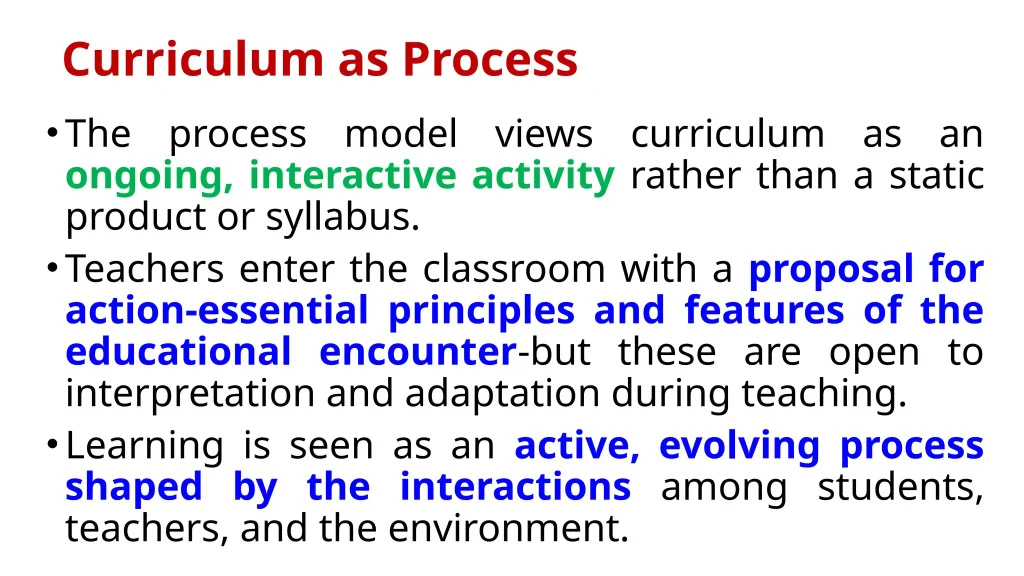
Why is curriculum development a process rather than a product?
Curriculum is never truly finished. It responds to changes in research, policy, student demographics, and social priorities. A curriculum designed in 2010 without revision will become increasingly misaligned with what students need in 2025. Effective schools treat curriculum as a living document, continuously gathering evidence from assessment data, teacher experience, and student feedback to improve it over time.
Conclusion
Curriculum and instruction are two sides of the same educational coin. Neither is more important than the other, and the persistent tendency to treat them as separate concerns is itself one of the most damaging habits in educational planning.
Getting curriculum right means being honest about what students genuinely need to know, sequencing content thoughtfully, and building in the hidden messages you actually want to send. Getting instruction right means knowing your students, choosing strategies that match the learning goal, and staying responsive to what the evidence tells you is working.
The best educators do not just deliver a curriculum. They understand why it is designed as it is, where the gaps are, and how their daily instructional decisions either reinforce or undermine the plan. That kind of reflective, evidence-informed practice is what turns a good school into a great one.
Recommended External References
- U.S. Department of Education (ed.gov) — for information on national education policy, Common Core standards, and federal curriculum guidelines
- Department for Education, UK (gov.uk/government/organisations/department-for-education) — for the National Curriculum framework and Ofsted inspection criteria
- ASCD (Association for Supervision and Curriculum Development) — for research on instructional models including backward design
- ERIC (Education Resources Information Center) (eric.ed.gov) — the world’s largest educational research database, peer-reviewed and freely accessible
- Education Endowment Foundation (educationendowmentfoundation.org.uk) — UK-based research on effective instructional strategies with evidence ratings