KEY TAKEAWAYS
— William Wordsworth (1770–1850) is the founding father of English Romantic poetry.
— His co-authored Lyrical Ballads (1798) with S.T. Coleridge launched the Romantic movement in English literature.
— Wordsworth’s poetry centres on nature, childhood memory, the “spots of time,” and the growth of the human mind.
— His magnum opus, The Prelude, is one of the longest and most studied autobiographical poems in the English language.
— Wordsworth served as England’s Poet Laureate from 1843 until his death in 1850.
— His theory of poetry — “emotion recollected in tranquillity” — revolutionised how English verse was written and taught.
— At Lingua Litera, you will find dedicated analyses of Wordsworth’s individual poems, including London, 1802, to support your academic study.
Introduction: Why William Wordsworth Still Matters in 2026
You open a literature textbook, scan the syllabus, and there he is again — William Wordsworth. For students at Kalyani University, Delhi University, Oxford, or the University of Toronto, this name appears on nearly every Romantic literature paper. Yet many readers struggle to move beyond memorised quotes and into a genuine understanding of what made Wordsworth so radical, so lasting, and so utterly transformative.
William Wordsworth did not simply write beautiful poems about lakes and mountains. He fundamentally redefined what poetry could be, who it was for, and what language it should use. He turned away from the ornate, artificial diction of the 18th century and argued that ordinary human experience — a shepherd’s grief, a child’s laughter, a solitary reaper’s song — was the highest possible subject for literature.
This guide on Lingua Litera gives you the complete academic picture: Wordsworth’s life, his philosophical framework, his major works, his poetic techniques, and his enduring relevance. Whether you are preparing for a university exam, writing a research paper, or simply deepening your literary knowledge, this is your definitive starting point.
William Wordsworth: A Life Shaped by Nature and Loss
Early Life and Education (1770–1791)
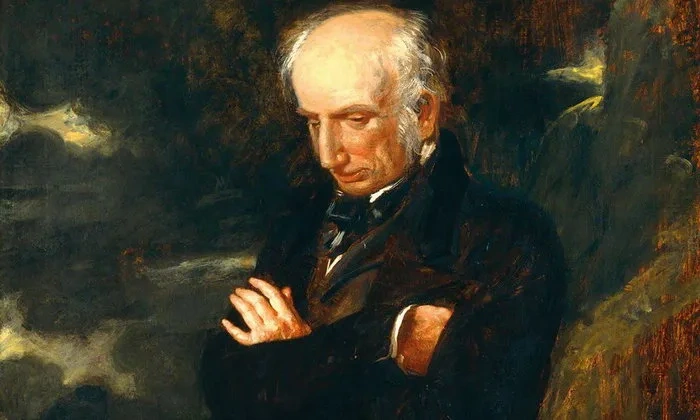
William Wordsworth was born on 7 April 1770 in Cockermouth, Cumberland, in the heart of the English Lake District. The landscape of the Lakes — its fells, rivers, and dramatic skies — would haunt his imagination for the rest of his life.
His mother, Ann Cookson Wordsworth, died when William was only eight years old. His father, John Wordsworth, died five years later, in 1783. These early losses shaped the elegiac undertow that runs through much of Wordsworth’s mature poetry.
Wordsworth attended Hawkshead Grammar School, where he developed a passionate love of reading and the outdoors simultaneously. He later studied at St John’s College, Cambridge, graduating in 1791 without particular academic distinction — but with a mind already forming the ideas that would reshape English literature.
The Revolutionary Years and the Influence of France (1791–1795)
Wordsworth spent time in France during the early years of the Revolution. He was initially inspired by its idealism. He fathered a daughter, Caroline, with Annette Vallon — a relationship that would later inform some of his most poignant sonnets.
Consequently, the collapse of his revolutionary optimism, deepened by the Reign of Terror, left him in a prolonged spiritual crisis. His recovery came not through politics but through nature — and through the steady, stabilising influence of his sister, Dorothy Wordsworth, whose journals remain an invaluable companion text to his poems.
The Coleridge Years and Lyrical Ballads (1795–1800)
The friendship between William Wordsworth and Samuel Taylor Coleridge, beginning around 1795, is one of the most consequential literary partnerships in history. The two poets lived close to each other in Somerset and engaged in almost daily creative dialogue.
Out of this collaboration came Lyrical Ballads, published in 1798. Its Preface — expanded in the 1800 edition — stands as the single most important manifesto of the Romantic movement. Wordsworth defined poetry as “the spontaneous overflow of powerful feelings” arising from “emotion recollected in tranquillity.” This was a direct challenge to the Augustan tradition and its prescriptive literary hierarchies.
Grasmere, Marriage, and Maturity (1800–1843)
Wordsworth settled at Dove Cottage in Grasmere in 1799. He married Mary Hutchinson in 1802. The years that followed were his most extraordinarily productive. He composed vast sections of The Prelude, wrote hundreds of shorter poems, and refined his philosophical understanding of memory, consciousness, and nature.
Moreover, as the years passed, Wordsworth grew more conservative — a shift that disappointed the younger Romantics, particularly Byron and Shelley. His acceptance of the position of Poet Laureate in 1843 was seen by some contemporaries as the final symbol of his accommodation with the establishment he had once challenged.
He died on 23 April 1850, at Rydal Mount, and was buried in Grasmere churchyard — surrounded, to the end, by the landscape that made him.
The Philosophy of William Wordsworth: Understanding His Core Ideas
Nature as Teacher and Healer
For William Wordsworth, nature was not merely a backdrop. It was an active, moral, and spiritual force. He believed that sustained, attentive contact with the natural world educated the human mind in ways that institutions could not.
This philosophy draws on what scholars have called a form of “natural piety” — a reverential relationship between the human observer and the non-human world. Wordsworth’s nature is dynamic. It responds to the human imagination. It nourishes the soul in childhood and continues to offer restoration in adulthood.
Research in cognitive science and environmental psychology has, interestingly, corroborated aspects of this intuition. Studies published in journals such as Landscape and Urban Planning and Environment and Behavior have demonstrated that exposure to natural environments reduces cortisol levels, improves attention, and fosters emotional regulation — processes Wordsworth described in poetic terms two centuries earlier.
The “Spots of Time” Theory
One of Wordsworth’s most original psychological concepts is the “spots of time” — a phrase from Book XII of The Prelude. He describes certain privileged moments from childhood and youth that carry an almost inexhaustible renovating power.
These are not just memories. They are formative experiences — encounters with nature, moments of solitude, episodes of fear or wonder — that the mind returns to repeatedly, drawing from them a continuing source of strength and creative energy.
This concept anticipates modern theories of episodic memory and psychological resilience. Cognitive psychologists, including those working in the tradition of Endel Tulving’s research on memory systems, recognise that specific autobiographical memories serve as anchors for identity and emotional recovery.
The Growth of the Poet’s Mind
The Prelude, subtitled “Growth of a Poet’s Mind,” is the sustained philosophical argument of Wordsworth’s career. It traces his development from infancy through university to his spiritual crisis and eventual recovery, arguing that the combination of nature, imagination, and moral reflection produces the poetic consciousness.
Additionally, Wordsworth positions the poet not as an elite, inspired figure separated from society, but as “a man speaking to men” — a formulation that democratised literary authority in a way that permanently influenced English and American poetry.
Major Works of William Wordsworth: A Scholarly Overview
Lyrical Ballads (1798 and 1800): The Text That Changed Everything
Lyrical Ballads opened with Coleridge’s “The Rime of the Ancient Mariner” and closed with Wordsworth’s “Tintern Abbey.” Between those two poles, it contained poems that shocked and delighted in equal measure.
Wordsworth’s contributions — including “We Are Seven,” “Goody Blake and Harry Gill,” and “The Idiot Boy” — deliberately chose ordinary, rural, and marginalised subjects. The diction was plain. The emotion was direct. This was a radical act in a literary culture that still privileged classical allusion and elevated subject matter.
The 1800 Preface remains essential reading for any student of English literature. In it, Wordsworth articulates his theory of the “real language of men” — arguing that the best poetry strips away artificial literary ornament and speaks with the directness and sincerity of ordinary speech.
The Prelude (composed 1799–1839, published 1850)
The Prelude is Wordsworth’s masterpiece by almost any measure. It is an autobiographical poem in blank verse, composed across several decades and revised continuously. It exists in multiple versions — the 1799 two-book version, the 1805 thirteen-book version, and the 1850 fourteen-book version published posthumously.
The poem traces the psychological and spiritual formation of a poet, examining experiences from Wordsworth’s own childhood in the Lake District and his years in France. It is unprecedented in English literature as a sustained, philosophically rigorous account of how a human mind develops and what role imagination plays in that development.
Scholars including Jonathan Wordsworth, M.H. Abrams (in Natural Supernaturalism, 1971), and Stephen Gill have argued that The Prelude is as important to the English Romantic tradition as Paradise Lost is to the Renaissance.
Poems in Two Volumes (1807)
This collection contained some of Wordsworth’s best-known shorter poems, including “Resolution and Independence,” “Ode: Intimations of Immortality from Recollections of Early Childhood,” and the famous Westminster Bridge sonnet.
The “Ode: Intimations of Immortality” is arguably the finest single poem Wordsworth ever wrote. It confronts the loss of the visionary intensity of childhood — what he calls the “celestial light” — and finds, in adult consciousness, a form of compensatory wisdom. It remains central to university syllabi across India, the UK, the USA, and Canada.
Selected Essential Poems
Here is a structured guide to Wordsworth’s key poems and their primary themes:
Step-by-Step Reading Guide for Wordsworth’s Major Poems:
- Step 1 — Begin with “Lines Written in Early Spring” to understand his foundational relationship between nature and ethics.
- Step 2 — Read “Tintern Abbey” (Lines Composed a Few Miles above Tintern Abbey) as his fullest statement on memory, nature, and time.
- Step 3 — Approach the “Ode: Intimations of Immortality” after reading Tintern Abbey, since it develops the same themes at greater philosophical depth.
- Step 4 — Read Book I and Book XII of The Prelude for the “spots of time” theory in context.
- Step 5 — Study the political sonnets — “London, 1802,” “It Is Not to Be Thought Of,” and “The World Is Too Much With Us” — to understand Wordsworth’s engagement with history and society. (Lingua Litera has a dedicated analysis of London, 1802 — read it alongside this guide.)
William Wordsworth’s Poetic Techniques: What to Look for in Analysis
Blank Verse and the Meditative Mode
Wordsworth’s signature form is unrhymed iambic pentameter — blank verse. He inherited it from Milton (whom he explicitly addresses in “London, 1802”) but used it to very different ends. Where Milton’s blank verse is epic and architectural, Wordsworth’s is conversational, sinuous, and exploratory.
The meditative lyric — a poem in which a speaker observes a scene and follows the mind’s associative movement through memory and reflection — is Wordsworth’s central contribution to poetic form. “Tintern Abbey” is the exemplary instance.
The “Egotistical Sublime”
John Keats famously described Wordsworth’s mode as the “egotistical sublime” — a phrase that captures both the grandeur and the limitation of Wordsworth’s project. The speaker of a Wordsworth poem is almost always the primary subject. The natural scene is the occasion; the self is the real subject.
This is not narcissism. It is, rather, a philosophical commitment to the idea that consciousness itself — its growth, its suffering, its recovery — is the most important subject available to literature.
Pro-Tip for Exam Answers and Essays
When analysing a Wordsworth poem in an exam or essay, structure your argument around three axes: the natural scene (what Wordsworth describes), the psychological movement (what the observation triggers in memory or feeling), and the philosophical resolution (what conclusion about human life the poem reaches). This three-part framework works for “Tintern Abbey,” the “Immortality Ode,” The Prelude, and virtually every major Wordsworth poem.
William Wordsworth’s Legacy and Influence
Influence on Victorian and Modern Poetry
Wordsworth’s influence on subsequent English poetry is enormous and largely uncontested. Alfred Lord Tennyson — whose biography and works Lingua Litera has explored in detail — acknowledged Wordsworth as a formative presence. Matthew Arnold wrote an influential preface to a selection of Wordsworth’s poems arguing that he was the third greatest English poet after Shakespeare and Milton.
In America, Emerson and Thoreau translated Wordsworth’s nature philosophy into the Transcendentalist movement. The connection between Walden and “Tintern Abbey” is direct and well-documented.
In the 20th century, poets as different as Seamus Heaney, Ted Hughes, and Gary Snyder have acknowledged Wordsworth as a primary precursor in their thinking about landscape, ecology, and poetry.
Wordsworth in the 21st Century: Ecocritical Relevance
Contemporary ecocritical scholars — working within the tradition established by critics like Jonathan Bate (Romantic Ecology, 1991) and Timothy Morton — have re-read Wordsworth as a foundational figure in ecological thinking. His insistence on the moral significance of the non-human world, his attention to local landscape, and his critique of industrialisation in poems like “The World Is Too Much With Us” make him remarkably relevant to current debates about climate, environment, and human relationship with nature.
Furthermore, in global academic contexts — from Indian universities studying British Romantic literature to Canadian graduate programmes in ecocriticism — Wordsworth remains a required author. His texts appear consistently on UGC NET syllabi, UPSC optional papers in English Literature, MA entrance examinations, and undergraduate honours programmes across the subcontinent and beyond.
Frequently Asked Questions About William Wordsworth
What is William Wordsworth best known for?
William Wordsworth is best known for co-authoring Lyrical Ballads (1798) with Samuel Taylor Coleridge, which launched the English Romantic movement. He is also celebrated for The Prelude, his autobiographical masterpiece, and for poems including “Tintern Abbey” and the “Ode: Intimations of Immortality.” His defining idea — that poetry should use ordinary language to express powerful emotional truths — permanently changed English literary history.
What is the main theme of William Wordsworth’s poetry?
The central themes of William Wordsworth’s poetry are nature, memory, childhood, the growth of the human mind, and the relationship between the individual consciousness and the natural world. Additionally, Wordsworth consistently explores how formative experiences from the past — especially from childhood in nature — sustain the adult mind through difficulty and loss.
What does “emotion recollected in tranquillity” mean?
This famous phrase, from Wordsworth’s 1800 Preface to Lyrical Ballads, defines his theory of poetic composition. It means that genuine poetry does not arise in the immediate moment of emotional experience but rather when the poet, in a calm and reflective state, recollects that experience. The recollection generates a secondary emotion, which is then shaped into verse. This concept remains one of the most influential statements in the history of literary theory.
Why is The Prelude important in English literature?
The Prelude is important because it is the first major poem in English to take the growth of a poet’s own mind as its sustained, serious subject. It combines autobiography, philosophy, psychological analysis, and lyric poetry in a way that had no real precedent. It also provides the most extensive account of the “spots of time” theory and Wordsworth’s understanding of imagination. Scholars consider it the centrepiece of his career.
How did William Wordsworth influence Romantic poetry?
William Wordsworth influenced Romantic poetry by establishing its core assumptions: that nature is a moral and spiritual force; that ordinary human experience is a valid and dignified subject for serious literature; and that the poet’s task is to express authentic feeling in accessible language. His Lyrical Ballads Preface gave the Romantic movement its theoretical foundation, and his sustained body of work proved that these principles could produce poetry of the highest order.
Conclusion: Why Every Literature Student Must Engage Seriously with William Wordsworth
William Wordsworth is not a poet you study once and shelve. He is a writer who deepens with re-reading, who rewards sustained attention, and who raises questions — about memory, about nature, about consciousness, about what poetry is for — that remain entirely alive in 2026.
Whether you are preparing for a university examination, writing a doctoral dissertation, building a literature curriculum, or simply developing your own critical voice, Wordsworth gives you an irreplaceable set of tools. His philosophical rigour, his emotional honesty, and his formal command represent the very best that English Romantic literature has to offer.
At Lingua Litera, we are committed to making world-class literary education accessible to every student, from Kolkata to Cambridge. Explore our dedicated poetry analyses, including our study of London, 1802, and our growing library of guides on poets from Tennyson to Hopkins. Bookmark this page, share it with a classmate, and leave your question or insight in the comments below — your intellectual engagement is what makes this community thrive.
Academic Disclaimer: This article is intended for educational and informational purposes only. All biographical, historical, and critical claims are grounded in established scholarly consensus. References to psychological or scientific research are included for illustrative purposes and do not constitute clinical or scientific advice. Readers are encouraged to consult primary texts and peer-reviewed academic sources for research and examination purposes. Lingua Litera does not claim affiliation with any university examination board.
Published on Lingua Litera — Learn English Language and Literature | lingualitera.com
Designed and Developed by KM Digital Marketing®
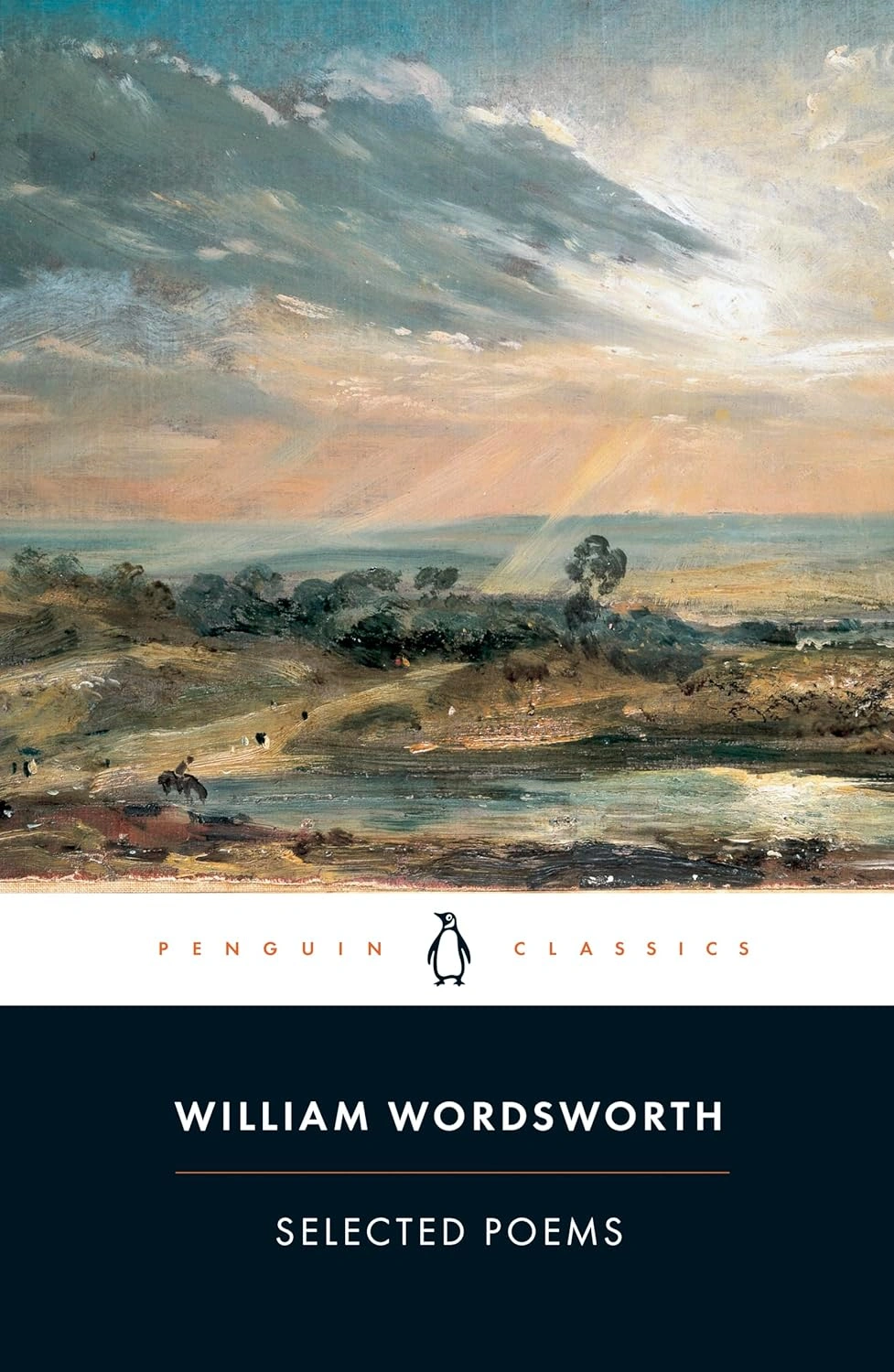
One of the major poets of Romanticism, Wordsworth epitomized the spirit of his age with his celebration of the natural world and the spontanous expression of feeling. This volume contains a rich selection from the most creative phase of his life, including extracts from his masterpiece, The Prelude, and the best-loved of his shorter poems such as ‘Composed Upon Westminster Bridge’, ‘Tintern Abbey’, ‘I Wandered Lonely as a Cloud’, ‘Lucy Gray’, and ‘Michael’.