Introduction
To Autumn by John Keats Explanation is one of the most searched topics among literature students because the poem is considered the finest celebration of nature in English poetry. Written in 1819, To Autumn is the last major ode composed by John Keats and is often regarded as his most perfect poetic achievement.
Unlike many poems that focus on spring as a symbol of beauty and renewal, Keats turns his attention to autumn. He presents the season not as a sign of decline but as a period of richness, maturity, fulfillment, and quiet beauty.
In this guide, you will learn the poem’s summary, stanza-wise explanation, themes, literary devices, symbolism, and deeper meanings in simple language.
Quick Answer
To Autumn by John Keats is an ode celebrating the beauty, abundance, and peaceful maturity of autumn. The poem portrays nature’s richness through vivid imagery and shows how every stage of life has its own beauty. Rather than mourning the end of summer, Keats appreciates the fullness and harmony of autumn.
About John Keats
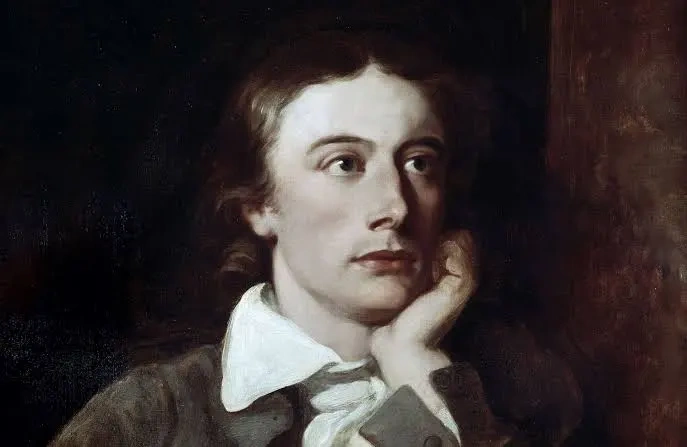
John Keats (1795–1821) was one of the greatest Romantic poets in English literature. Although he died at the age of twenty-five, he produced some of the most celebrated poems in the English language.
His major works include:
- Ode to a Nightingale
- Ode on a Grecian Urn
- To Autumn
- La Belle Dame Sans Merci
- Endymion
Keats believed that beauty and truth were deeply connected. His poetry often explores nature, imagination, beauty, and mortality.
Historical Background
Keats wrote To Autumn in September 1819 after a walk through the countryside near Winchester, England.
The year 1819 is often called Keats’s “Great Year” because he produced many of his greatest poems during this period. The poem was written during a time of political unrest in England, yet Keats chose to focus on nature’s harmony and beauty.
Many critics consider To Autumn the perfect expression of Romanticism because it celebrates nature while reflecting on the passage of time.
About the Poem
To Autumn is an ode consisting of three stanzas.
Each stanza focuses on a different aspect of autumn:
| Stanza | Focus |
|---|---|
| First | Abundance and ripeness |
| Second | Autumn personified as a worker |
| Third | Sounds and music of autumn |
The poem follows the natural progression of the season from growth to harvest and finally toward the approach of winter.
To Autumn Summary
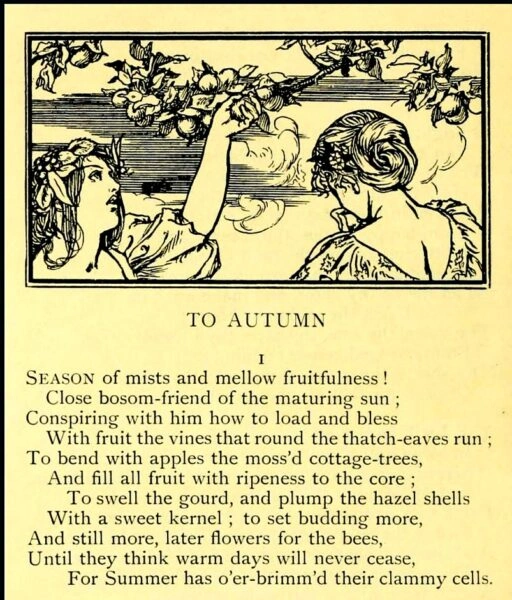
The poem begins by describing autumn as a close friend of the sun. Together they help fruits ripen, flowers bloom, and crops mature.
In the second stanza, autumn is personified as a woman engaged in harvesting activities. She appears relaxed and content amid the harvest.
The final stanza shifts attention to the sounds of autumn. Instead of longing for the songs of spring, Keats appreciates the unique music produced by insects, birds, and nature during autumn.
The poem ultimately teaches readers to appreciate every stage of life and nature.
To Autumn by John Keats Explanation: Stanza-Wise Analysis
Stanza 1 Explanation
“Season of mists and mellow fruitfulness”
The poem opens with one of the most famous lines in English literature.
Autumn is described as a season filled with gentle mist and abundant fruit. The phrase “mellow fruitfulness” suggests maturity, richness, and completion.
“Close bosom-friend of the maturing sun”
Autumn and the sun are presented as close friends working together.
The sun provides warmth while autumn oversees the ripening process.
Ripening Fruits and Crops
Keats describes vines, apples, gourds, and hazelnuts becoming fully ripe.
The imagery highlights abundance and prosperity. Everything in nature reaches its fullest stage during autumn.
Deeper Meaning
The first stanza symbolizes maturity in human life.
Just as fruits ripen over time, people gain wisdom and experience as they grow older.
Stanza 2 Explanation
Autumn as a Person
In the second stanza, Keats personifies autumn as a woman.
She appears in different roles associated with harvesting.
Sitting Carelessly on a Granary Floor
Autumn is shown resting comfortably among harvested grain.
This image suggests satisfaction after successful labor.
Sleeping Amid Half-Reaped Furrows
Keats presents autumn as peacefully sleeping in fields.
The image creates a sense of calmness and contentment.
Watching the Cider Press
Autumn patiently observes apple juice flowing from a cider press.
This scene symbolizes completion and fulfillment.
Deeper Meaning
The stanza reflects the rewards that come after effort and hard work.
Autumn is not rushed. It moves calmly and confidently through its tasks.
Read More: God’s Grandeur by Gerard Manley Hopkins
Read More: To Autumn by John Keats – Full Text
Stanza 3 Explanation
The Music of Autumn
The final stanza begins with a question:
“Where are the songs of Spring?”
Instead of longing for spring, Keats encourages readers to appreciate autumn’s own beauty.
Natural Sounds
The poet describes:
- Buzzing gnats
- Bleating lambs
- Singing crickets
- Redbreasts whistling
- Swallows gathering
These sounds create autumn’s unique music.
Approaching Winter
Although winter is approaching, the poem remains positive.
Keats accepts change as a natural part of life.
Deeper Meaning
Life constantly changes.
Rather than resisting change, the poem encourages acceptance and appreciation of every stage.
Major Themes in To Autumn
1. Beauty of Nature
The poem celebrates nature’s richness and harmony.
Keats shows that beauty exists not only in youth but also in maturity.
2. Passage of Time
Autumn represents a stage between growth and decline.
The poem reflects the natural cycle of life.
3. Fulfillment and Maturity
Everything in the poem reaches completion.
The season symbolizes achievement, wisdom, and fulfillment.
4. Acceptance of Change
Keats accepts seasonal change without sadness.
The poem teaches readers to appreciate life’s transitions.
5. Harmony Between Humans and Nature
Nature functions peacefully and productively.
The poem presents an ideal balance between natural processes and human activities.
Literary Devices in To Autumn
| Device | Example | Effect |
| Personification | Autumn as a woman | Makes the season vivid |
| Imagery | Fruits, flowers, grain | Appeals to the senses |
| Alliteration | “Season of mists” | Creates musical quality |
| Metaphor | Autumn as harvester | Deepens meaning |
| Symbolism | Ripening fruit | Maturity and fulfillment |
| Enjambment | Flowing lines | Reflects natural movement |
Symbolism and Imagery
Ripened Fruit
Represents maturity and success.
Harvest
Symbolizes achievement after effort.
Setting Sun
Suggests the later stages of life.
Swallows
Represent transition and movement toward the future.
The poem is rich in visual, auditory, and tactile imagery, making readers feel immersed in the autumn landscape.
Tone and Mood
Tone
- Appreciative
- Reflective
- Calm
- Celebratory
Mood
- Peaceful
- Warm
- Content
- Thoughtful
Unlike many poems about passing time, To Autumn avoids fear and sadness.
Structure and Rhyme Scheme
The poem contains three stanzas of eleven lines each.
The rhyme scheme varies slightly but generally follows:
ABABCDEDCCE
The balanced structure contributes to the poem’s sense of harmony and completeness.
Important Quotations
| Quotation | Significance |
| “Season of mists and mellow fruitfulness” | Introduces autumn’s abundance |
| “Close bosom-friend of the maturing sun” | Personifies autumn |
| “Where are the songs of Spring?” | Introduces comparison |
| “Think not of them” | Encourages appreciation of the present |
Key Takeaways
Remember These Points
- Written in 1819.
- Considered Keats’s greatest ode.
- Celebrates autumn rather than mourning summer.
- Focuses on maturity and fulfillment.
- Uses rich imagery and personification.
- Accepts change as part of life.
Common Mistakes Students Make
Mistake 1
Thinking the poem is about sadness.
Correction: The poem celebrates autumn positively.
Mistake 2
Ignoring the symbolism.
Correction: Many images represent stages of human life.
Mistake 3
Viewing autumn only as nature description.
Correction: The poem also explores time, maturity, and acceptance.
Expert Tips for Exams
- Discuss personification in detail.
- Explain how autumn symbolizes maturity.
- Mention Romantic characteristics.
- Use quotations to support analysis.
- Connect imagery with themes.
Frequently Asked Questions
What is the main message of To Autumn?
The poem teaches that every stage of life and nature has its own beauty. Keats celebrates maturity, fulfillment, and acceptance rather than focusing on decline.
Why is autumn personified?
Personification makes autumn vivid and relatable. By presenting the season as a woman involved in harvest activities, Keats creates stronger emotional and visual impact.
Is To Autumn a Romantic poem?
Yes. It contains key Romantic features such as love of nature, sensory imagery, emotional depth, and appreciation of ordinary experiences.
Why is To Autumn considered Keats’s greatest poem?
Many critics admire its perfect structure, rich imagery, balanced language, and profound reflection on nature and time.
What does the harvest symbolize?
The harvest symbolizes achievement, maturity, and the rewards that come after patience and effort.
What is the tone of the poem?
The tone is calm, reflective, and celebratory. Keats appreciates autumn without regret or melancholy.
Why is the poem still relevant today?
The poem reminds readers to appreciate the present moment and recognize beauty in every phase of life, a message that remains meaningful today.
Conclusion
This To Autumn by John Keats Explanation shows why the poem remains one of the greatest achievements of Romantic poetry. Through vivid imagery, personification, and rich symbolism, Keats transforms an ordinary season into a meditation on maturity, fulfillment, and the beauty of change. Rather than fearing the passage of time, the poem encourages readers to appreciate every stage of life, making it as meaningful today as it was when it was first written more than two centuries ago.
Read More About John Keats
Read More About Ode to Autumn