Introduction
There is something oddly familiar about a boy who does not want to go to school on a Monday morning. He fakes a headache. He stretches his excuses. He watches his mother soften, then panics when his father walks in. Most of us have lived some version of this morning, even if we never admitted it.
“Father’s Help” by R.K. Narayan is exactly that story, told with a quiet genius that makes you laugh and think at the same time. Published in the iconic Malgudi Days collection, this short story follows young Swaminathan through a single school morning that spirals into a chain of lies, guilt, and an ironic lesson he never saw coming.
Narayan wrote it with the lightness of someone who has watched children closely and the sharpness of someone who never forgot what childhood actually felt like. What seems like a simple school-avoidance story turns out to be a careful study of conscience, honesty, and the strange way parents sometimes teach without trying to teach.
This guide covers everything: the full story summary, deep character analysis, major themes, the moral of the story, its irony and literary significance, and answers to the most common questions students ask about it.
Quick Answer
What is “Father’s Help” by R.K. Narayan about? “Father’s Help” tells the story of Swaminathan, a schoolboy who lies to his father about his teacher Samuel’s cruelty to avoid going to school. His father, instead of excusing him, writes a complaint letter and sends him anyway. Swami then faces the guilt of his lie and the irony of the situation he has created.
About the Author: R.K. Narayan
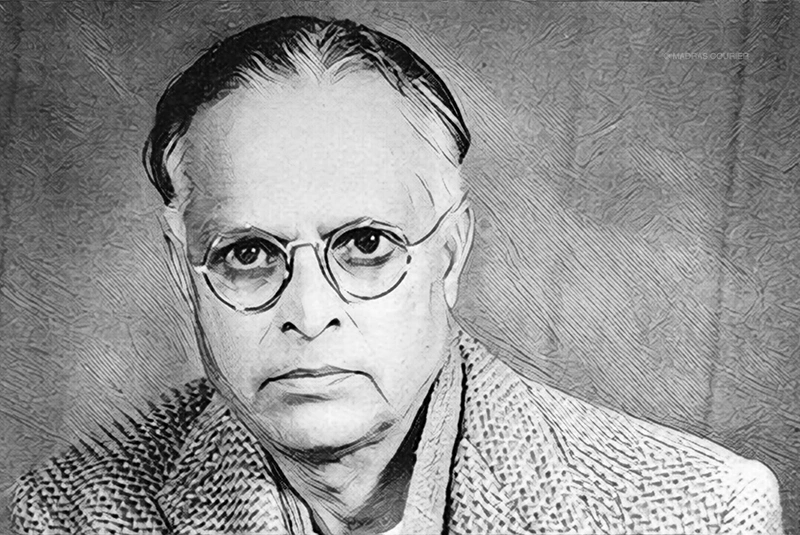
Rasipuram Krishnaswami Iyer Narayanaswami, known simply as R.K. Narayan, was born on October 10, 1906, in Madras (now Chennai), India. He grew up in Mysore and was educated at Maharaja’s College there. He is widely regarded as one of the finest Indian writers in the English language.
Narayan did not write about grand historical events or political upheavals. His subject was ordinary Indian life, specifically the fictional South Indian town of Malgudi, which he invented and populated across more than a dozen novels and hundreds of short stories. Through Malgudi, he captured the rhythms, contradictions, and quiet humor of middle-class Indian existence in the 20th century.
His first novel, Swami and Friends (1935), introduced the world to Swaminathan, or Swami, the young protagonist who also appears in “Father’s Help.” Graham Greene helped Narayan find his first British publisher, a sign of how universally readable his work was from the very beginning.
Narayan received the Sahitya Akademi Award in 1960, the Padma Bhushan in 1964, and was nominated for the Nobel Prize in Literature. He died on May 13, 2001, at the age of 94.
Interesting Fact: Narayan created Malgudi entirely from imagination, but the town drew so heavily from the geography and atmosphere of Mysore that many readers assumed it was real. Some even wrote letters addressed to “Malgudi, South India.”
Read More: Gitanjali by Rabindranath Tagore: A Complete Literary Analysis
Publication Background: Where Does This Story Come From?
“Father’s Help” is part of Malgudi Days, a collection of 32 short stories by R.K. Narayan. The original Malgudi Days was first published in 1943 by Indian Thought Publications, a press Narayan himself founded during World War II when British publishers were inaccessible.
The version of Malgudi Days most widely read today was published in 1982 by William Heinemann Limited, and it is in this edition that “Father’s Help” appeared with familiar characters from Narayan’s first novel, Swami and Friends.
The story is not technically part of Swami and Friends, but it continues the character of Swaminathan with the same tone and setting. Narayan himself called these Swami stories semi-autobiographical. His memoir My Days reveals a deep preoccupation with the violence some teachers inflicted on students in the colonial Indian school system, and “Father’s Help” carries traces of that real anger, softened just enough by comedy.
The story was later adapted as part of the beloved Doordarshan television series Malgudi Days (1986-1987), directed by Shankar Nag. The series brought Narayan’s characters to a national Indian audience for the first time and is still remembered with deep affection by viewers who grew up watching it.
Read More: How to Write a Literary Research Paper
Father’s Help: Full Story Summary
The Monday Morning Problem
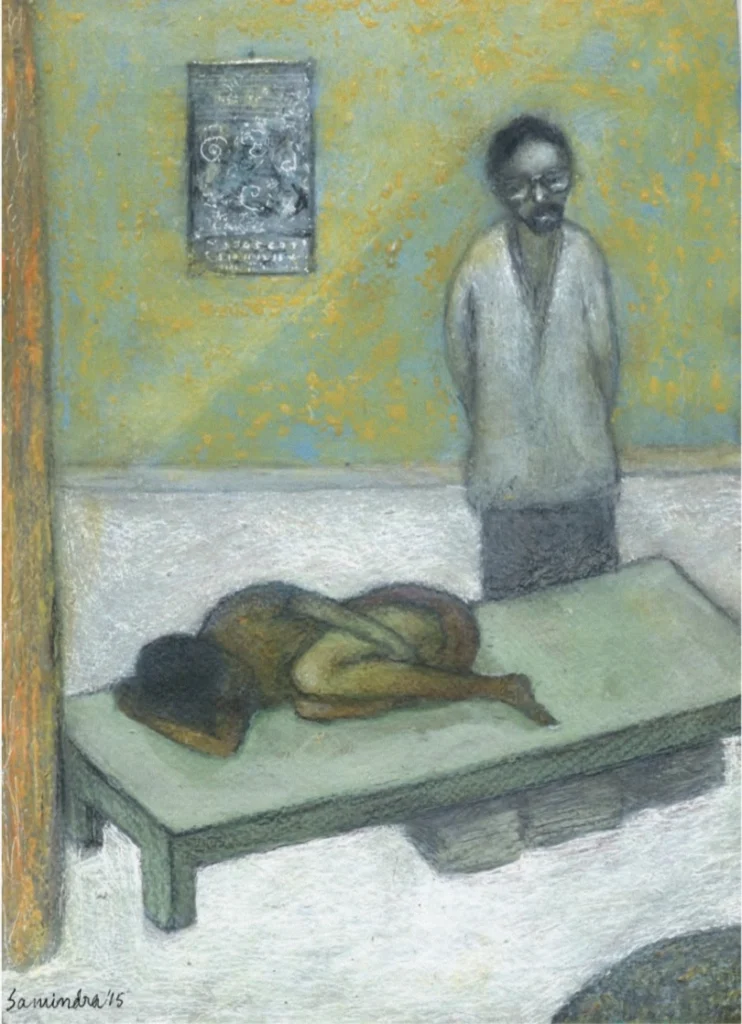
The story opens on a Monday morning. Swaminathan wakes up and immediately wishes it were not a school day. He lies in bed, works himself into a mood, and tells his mother he has a headache. His mother, kind and somewhat indulgent, begins to believe him.
But then his father walks in.
Swami’s father is not easily moved by complaints about headaches. He asks whether Swami has any important lessons today. Swami says no, and goes further: the geography teacher has been repeating the same lesson for a year, and the arithmetic teacher just spends the hour punishing students. His mother, hearing this, gives him tentative permission to stay home.
The Lie About Samuel
His father, however, presses further. Swami panics and escalates. He tells his father that his teacher Samuel is violent and cruel, that Samuel beats children until they bleed and then makes them smear the blood on their forehead like a caste mark. This image is vivid, specific, and entirely fabricated.
The detail about blood on the forehead is revealing. It uses a familiar religious symbol (the vermilion mark) to frame violence as ritual humiliation. Swami has not invented this entirely from nothing. He has heard rumors about Samuel from older students. But he delivers it to his father as if it were personal experience.
Swami expects his father to agree that missing school is reasonable. Instead, his father’s reaction is the opposite. He is outraged, not at Swami, but at Samuel.
The Letter
Rather than excusing Swami from school, his father writes a formal complaint letter to the headmaster about Samuel’s behavior. He then hands the letter to Swami and orders him to go to school and deliver it to the headmaster before attending class.
Swami has trapped himself. He wanted to stay home. Instead, he is now carrying a letter that could destroy his teacher’s career, based on a story he made up.
The Walk to School
On the walk to school, Swami’s conscience begins to trouble him. <cite index=”26-1″>He felt that he was the worst perjurer on earth. Apart from hearsay, he had no personal knowledge of Samuel’s cruelties.</cite> The story is shifting. Swami is no longer a clever boy who outsmarted his parents. He is a frightened child carrying a weight too large for him.
He decides to deliver the letter at the end of the day, not the beginning. This delay is significant. He tells himself it is strategy, but it is actually guilt.
In the Classroom
When Swami arrives, Samuel is teaching arithmetic. Beyond all his expectations, Samuel permitted him to enter the class without scolding him for being late.
This small act of kindness from the teacher Swami has painted as a monster makes everything worse.
Swami now needs Samuel to behave badly. If Samuel is kind, the letter makes no sense. So Swami starts deliberately misbehaving in class: refusing to answer questions, being insolent, disrupting the lesson. He wants Samuel to lose his temper.
Samuel eventually does. He canes Swami eight times.
Swami feels a grim relief. Now the letter seems justified. He rushes to the headmaster’s office with the letter.
The Twist
The peon at the headmaster’s office informs Swami that the headmaster is on leave for a week. If Swami wants to submit the letter, he should give it to the assistant headmaster, who is currently in charge.
The assistant headmaster is Samuel.
Swami does not hand over the letter. He turns and runs.
The Ending
At home, his father asks whether the letter was delivered. Swami admits it was not. His father tears the letter up and throws it in the wastepaper basket. He tells Swami that he is a coward who does not deserve help with a brute like Samuel.
The father’s help, such as it was, is withdrawn. Swami is left exactly where he started, except now he has eight cane strokes, a guilty conscience, and the knowledge that lying makes everything harder, not easier.
Character Analysis
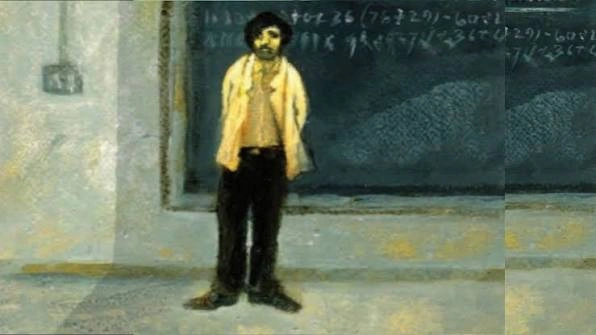
Swaminathan (Swami)
Swami is the heart of the story and one of Narayan’s most carefully observed characters. He is not simply naughty. He is genuinely complex.
He is clever enough to lie but not shrewd enough to see where the lie leads. He fears his father’s authority but also respects it enough to feel genuine guilt. He hates school with the honest passion of a child who would rather be anywhere else, but he also shows unexpected moments of conscience, feeling sorry for Samuel during the walk to school, questioning whether his accusations are fair.
Swami symbolises a school-going boy’s tendency to twist situations to his advantage. But Narayan is careful not to make him a villain. He is a child doing what children do: avoiding discomfort, exaggerating to get sympathy, then getting tangled in the consequences.
What makes Swami interesting is that he experiences guilt before he is caught. That guilt, walking to school and feeling like a perjurer, is the moral weight of the story. Narayan trusts his young readers to understand that guilt without being told what to do with it.
Swami’s Father
The father is strict, principled, and entirely misread by his son. Swami expects him to be sympathetic. Instead, he takes the complaint about Samuel seriously and acts on it. This is not indifference to his son; it is a different kind of care.
The father believes institutions should be held accountable. A teacher beating children until they bleed is, to him, a genuine injustice worth protesting. He does not know the story is invented. He acts in good faith on what his son tells him. Without knowing it, Swami has been taught a lesson by his father. Swami’s father knew that Swami was exaggerating Samuel’s behavior with the other pupils. When the father tears up the letter at the end and calls Swami a coward, it reads less like anger and more like a disappointed lesson. He gave Swami a path out, and Swami did not take it.
There is also a subtle reading here. Some critics suggest the father knew all along that the story was exaggerated, and the letter was always intended to be a test of Swami’s courage and honesty. Whether that reading holds entirely depends on the text, but it adds an interesting layer to the father’s calm authority throughout.
Samuel
In reality there are two guilty parties in the story. Both Swami and Samuel have done something wrong. Samuel did cane Swami, but only after Swami deliberately provoked him. The teacher is not the monster of Swami’s fabricated account, but he is not entirely blameless either.
What is notable about Samuel is how ordinary he is in the classroom scenes. He lets Swami in late without comment. He teaches normally. He only reacts to Swami’s deliberate and escalating misbehavior. Narayan uses this to show how rumor can distort perception: Swami’s imagined Samuel and the real Samuel in the classroom are almost different people.
Swami’s Mother
The mother appears only briefly but serves an important structural role. She is the soft barrier that Swami expected his father to be. Her willingness to believe the headache is what Swami counts on. When his father overrides her sympathy, the story’s central conflict begins. She represents parental indulgence; the father represents parental expectation. Swami is caught between the two.
Major Themes in Father’s Help
Honesty and Its Consequences
The story’s spine is a lie. Swami lies about his headache. He lies about Samuel’s cruelty. Each lie leads not to relief but to a bigger problem. Narayan does not moralize. He simply shows the mechanics of how dishonesty works: it creates its own trap and requires constant maintenance.
The guilt Swami feels on the walk to school is not punishment from an adult. It comes from inside him. That internal moral compass, even in a child who is actively being dishonest, is what Narayan is most interested in.
The Gap Between Parents and Children
The story highlights how the perspectives of a young boy and those of the adults around him differ. Swami’s world is immediate: he does not want to go to school today. His father’s world is principled: if a teacher is violent, that must be addressed. These two worldviews collide, and Swami ends up worse off precisely because he tried to bridge them with a lie.
This gap is not presented as a failure of communication or understanding. It is simply part of growing up. Children lie to avoid consequences; adults create consequences from the lies. Narayan presents this without judgment, which is part of why the story feels so honest.
Conscience and Moral Development
The most underappreciated theme in this story is Swami’s developing conscience. He is not a boy who lies without feeling anything. He starts feeling sorry for Samuel before anything bad has even happened. He describes himself, internally, as the worst perjurer on earth. These are not the thoughts of someone without a moral sense. They are the thoughts of someone whose moral sense is being tested and slowly strengthened.
By the end, Swami does not deliver the letter partly out of cowardice, as his father says, but also partly because something in him knows it would be wrong to destroy a teacher based on a fabricated story.
Authority, Fear, and Respect
Swami is afraid of both his father and Samuel, but for different reasons. His father represents domestic authority: expectation, discipline, and the possibility of disappointment. Samuel represents institutional authority: the unpredictable power of a teacher over a student.
Swami’s fear is partly a product of his imagination. He has built both figures into larger threats than they actually are. The story quietly asks whether the authority we fear in childhood is always what we imagine it to be.
Satire of Colonial Education
Narayan consistently used his fiction to critique the Indian education system, particularly in its colonial form. The Albert Mission School where Swami studies is a missionary school, an institution shaped by British educational philosophy in British India. His writings are protest-oriented in many areas concerning the social, economic, and political conditions of the time.
Read More: Hamartia in Oedipus Rex and Macbeth
The Irony of the Title
The title “Father’s Help” is one of the most carefully constructed ironies in Narayan’s short fiction.
On the surface, it promises parental support. A child is in trouble; his father will help. That is the natural reading.
But the help that arrives is not what Swami wanted. He wanted permission to stay home. His father’s help sends him to school with a letter that threatens his teacher’s career. This help makes his problem much worse.
The assistance takes the form of a letter sent to the headmaster. This action exacerbates Swami’s problems, ultimately resulting in the exposure of his lie. Thus, his father’s help leads him into trouble and imparts a lesson to him.
By the end, the father’s help is withdrawn entirely: he tears the letter. The help that was offered, that caused all the trouble, disappears before it does any real damage. What remains is not rescue but education. Swami has not been helped out of a problem. He has been walked through a lesson about what lying costs.
The title, read carefully, is less a description and more a quiet joke at the expense of anyone who expects adults to solve what children create.
Narrative Style and Literary Techniques
Third-Person Narration with Close Interiority
Narayan tells the story from a third-person perspective, but the narration stays very close to Swami’s consciousness. We experience his reasoning, his fear, his guilt, and his calculations in real time. This technique, often called free indirect discourse, creates intimacy without switching to first-person narration.
The effect is that we understand Swami completely, even when we see exactly where he is wrong.
Understated Humor
The humour lies in Swami’s imaginative portrayal of Mr Samuel, his miscalculations, and intentional misbehaviour in class. Narayan’s comedy is never slapstick. It works through understatement and situational irony: the letter Swami tries to bury becoming the object his father keeps asking about; the misbehavior Swami uses to justify the letter ending with the very caning he claimed to fear.
Economy of Language
The story is remarkably short, perhaps 1,500 to 2,000 words in the original, yet it covers a complete emotional arc. Narayan does not waste sentences. Every detail serves a purpose: the blood-and-vermilion image establishes Swami as someone who can construct a vivid, culturally loaded lie; the locked headmaster’s office shows that consequences have a way of redirecting themselves; Samuel as the assistant headmaster is the perfect structural irony.
Realism Without Sentimentality
Narayan does not clean up the ending. Swami does not confess, apologize, and receive his father’s warm forgiveness. The father tears the letter and calls him a coward. That is the end. The lesson is delivered without ceremony. This emotional restraint is one of Narayan’s most distinctive qualities.
The Moral of Father’s Help
The moral of “Father’s Help” is not a single clean sentence, which is actually what makes it worth thinking about.
On one level, the story says: lying creates more problems than it solves. Swami wanted one morning off from school. His lie gave him a caning, a guilty conscience, eight hours of dread, and a reprimand from his father.
On a deeper level, the story says something about the nature of fear. Swami was afraid of both his father and Samuel. The story reveals that both fears were largely imagined. Samuel, in reality, was kind enough to let a late student in without comment. The father’s anger, in the end, is more disappointment than punishment.
The story also suggests that conscience is not something parents install in children through lectures. It grows on its own, sometimes inconveniently. Swami’s guilt on the walk to school is not the product of any lesson his father taught him that morning. It is simply his own moral sense pushing back.
Finally, and perhaps most quietly: help is not always what we think it is. The title’s irony points to the idea that the most useful things parents do for their children are rarely the things children want them to do.
Why This Story Still Matters
“Father’s Help” was written in the early-to-mid 20th century, set in colonial India, and published in 1982. Yet students from WBBSE West Bengal to CBSE Delhi to ICSE schools across the country still study it. Why?
Because Monday morning has not changed. The desire to stay home has not changed. The specific algebra of lying to a parent, watching the lie take on a life of its own, and then having to manage its consequences is a completely timeless experience.
Narayan wrote about Malgudi, but he was writing about everyone. The specific details of the Albert Mission School, the South Indian setting, the colonial-era teacher caning students — these are historical. But Swami’s inner life, the guilt before he is caught, the relief that turns into dread, the discovery that the person he slandered was actually kind — these are permanent.
The story is also studied because it teaches craft. It demonstrates how to build irony, how to use a title as a thematic device, how to write comedy that has a moral point without becoming a fable. For literature students, it is a masterclass in the short story form.
Comparison Table: Swami vs. His Father vs. Samuel
| Trait | Swaminathan (Swami) | Father | Samuel |
|---|---|---|---|
| Core motivation | Avoid school | Uphold justice | Maintain order in class |
| Response to lies | Creates them | Acts on them (unknowingly) | Unaware of them |
| Use of authority | None (child) | Formal letter | Cane |
| Emotional register | Fearful, guilty, imaginative | Principled, controlled | Mild, patient; briefly angry |
| Outcome in story | Eight cane strokes, reprimand | Letter torn, lesson delivered | Caned Swami; still in his job |
| Relationship to truth | Departs from it | Believes he acts on it | Victim of it being distorted |
| Symbolic role | Everychild | Everyman’s conscience | Institutional authority |
Common Mistakes in Understanding This Story
Mistake 1: Assuming Swami’s father is harsh or unsympathetic. He is not. He acts on what he believes to be a genuine injustice. He takes his son’s words seriously, which is, ironically, what causes the problem.
Mistake 2: Assuming Samuel is a villain. The story does not support this. Samuel’s actual behavior in the classroom is measured. He punishes Swami only after Swami deliberately and repeatedly provokes him.
Mistake 3: Reading the ending as punishment. When the father tears the letter and calls Swami a coward, it is easy to read this as cruelty. It is better read as a withdrawn intervention. The father is not punishing; he is stepping back.
Mistake 4: Missing the conscience theme. Students often focus on the surface plot (lie, letter, caning) and miss the interior emotional journey. Swami’s guilt on the walk to school is the emotional center of the story, not the caning.
Mistake 5: Treating the title as straightforward. “Father’s Help” is ironic. Any answer in an exam that reads the title literally will miss half the point.
Expert Tips for Writing About This Story in Exams
Tip 1: Always mention the irony of the title. Examiners at every level, from CBSE to university, reward students who can identify and explain this irony clearly.
Tip 2: Use the word “conscience” when analyzing Swami’s walk to school. This shows you understand the moral interior of the story, not just the plot events.
Tip 3: Do not forget Samuel. Many answers about this story treat Samuel as a background figure. A strong answer will discuss how his actual classroom behavior contrasts with Swami’s exaggerated description of him.
Tip 4: Name the techniques. Situational irony, free indirect discourse, understatement, satire. Even naming one or two with brief explanations shows literary awareness.
Tip 5: Link the story to Malgudi Days as a whole. Mentioning that this story connects to Swami and Friends, that it shares themes with other Narayan works, or that it was adapted for television shows broader familiarity.
Recommended External References
- R.K. Narayan’s Memoir — My Days (1974) — for Narayan’s own account of schooling and teacher-student dynamics in colonial India
- Sahitya Akademi — sahitya.gov.in — for authoritative biographical information on R.K. Narayan
Frequently Asked Questions
What is the full summary of “Father’s Help” by R.K. Narayan?
Swaminathan doesn’t want to go to school on a Monday. He fakes a headache but fails to convince his father. He then invents a story about his teacher Samuel being brutally violent. His father, enraged by the account, writes a complaint letter to the headmaster and sends Swami to school anyway. Swami feels guilty during the walk, deliberately provokes Samuel to justify the letter, gets caned, rushes to the headmaster, but finds Samuel is in charge. He goes home without delivering the letter, and his father tears it up and calls him a coward.
What is the moral lesson of “Father’s Help”?
The story teaches that lying creates more problems than it solves. Swami wanted one day off from school. His lie gave him guilt, a caning, and a reprimand. Beyond the surface lesson, the story also shows that conscience develops from within, not just from adult instruction. Swami’s guilt appears before any consequence, which is what makes the moral genuinely interesting rather than preachy.
What is the significance of the title “Father’s Help”?
The title is deeply ironic. On the surface, it suggests Swami’s father will rescue him from a difficult situation. In practice, the father’s “help” makes things significantly worse by sending Swami to school with a letter against a teacher who, in reality, was not particularly cruel. By the end, even this help is withdrawn. The title works as a kind of quiet joke on the idea of parental rescue.
Who is Samuel in “Father’s Help”?
Samuel is Swami’s arithmetic teacher at Albert Mission School. Swami claims he is violently cruel, but in the actual classroom scenes, Samuel lets Swami in late without comment and teaches normally. He only punishes Swami after Swami deliberately misbehaves multiple times. Samuel is also the assistant headmaster, which creates the story’s final irony: Swami cannot deliver the letter because the person it accuses is the one he would have to hand it to.
What kind of character is Swaminathan in this story?
Swami is clever but not shrewd. He is imaginative enough to construct a vivid lie but cannot foresee its consequences. He is genuinely afraid of authority figures: his father and Samuel. Most importantly, he has a functioning conscience that produces guilt before any adult punishes him. He is not a bad child; he is a very ordinary one, which is why Narayan’s readers across generations recognize him so readily.
What is the theme of “Father’s Help”?
The major themes include honesty and its consequences, the gap between adult and child perception, the nature of conscience, the role of fear in childhood, and a subtle satire of colonial Indian education. Narayan does not present a single clean theme; the story works because multiple ideas operate simultaneously without any one of them dominating.
Is “Father’s Help” from Malgudi Days?
Yes. “Father’s Help” is one of the 32 stories collected in Malgudi Days. It was included in the 1982 William Heinemann edition. The character of Swaminathan in this story is the same boy who appears in Narayan’s first novel, Swami and Friends (1935), making this story a kind of extended universe entry in the Malgudi world.
Conclusion
“Father’s Help” by R.K. Narayan is three pages that carry the weight of a much longer moral argument, delivered so lightly that you almost miss it.
Narayan was not interested in stories where children learn their lessons through tearful confessions and warm parental forgiveness. He was interested in how life actually teaches people: sideways, through irony, through situations that turn out nothing like planned, through the quiet work of a conscience that was already doing its job before any adult spoke a word.
Swami lies, gets caught in the lie’s own machinery, fails to execute the letter that the lie made necessary, and returns home to find his father’s help taken away. He is not forgiven. He is not lectured. He is just left with the knowledge of what lying costs, written in the currency of eight cane strokes and one very uncomfortable Monday.
That is Narayan’s method: precise, humane, and exact. He does not tell you what to think. He arranges events so that you cannot avoid thinking it yourself.
For students reading this story for the first time: pay attention to Swami on the walk to school. That section, where he feels like the worst perjurer on earth, is where the real story lives. Everything else is plot. That moment is the story.