
Introduction
There is a moment almost every professional knows. You are in a meeting, your idea is ready, the point is valid — but the words do not come out the way you planned them. You second-guess your phrasing, hesitate, and someone else says what you were thinking. That gap between knowing English and speaking it confidently in a professional setting is exactly what this guide addresses.
Spoken English for business communication is not about speaking like a BBC anchor or sounding like someone from a foreign country. It is about speaking clearly, confidently, and appropriately in the workplace — in meetings, calls, client conversations, presentations, and interviews. It is a skill that can be learned, practised, and improved at any stage of your career.
This guide covers everything from real workplace phrases to the psychology of confident speaking, with practical frameworks you will not find strung together anywhere else.
Quick Answer
What is spoken English for business communication? It is the ability to use English effectively in professional settings — meetings, negotiations, presentations, phone calls, and client interactions. It goes beyond grammar. It involves clarity of thought, appropriate tone, listening skills, and the confidence to express ideas without hesitation in a workplace environment.
Why Spoken English Matters More Than You Think
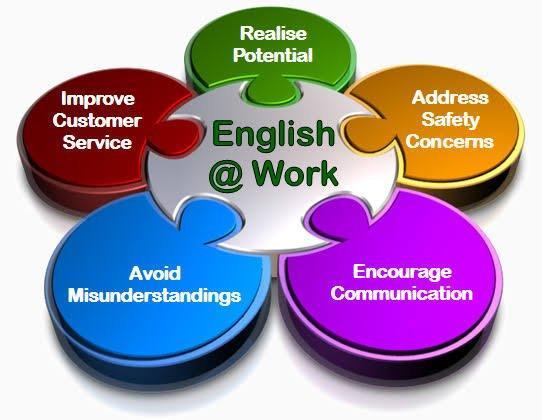
Most people treat English fluency as a binary thing — either you speak it or you do not. The reality inside a professional environment is far more layered than that.
A software engineer who writes excellent code but cannot present it in a team meeting gets overlooked. A sales executive who understands the client’s needs perfectly but cannot frame them well in English loses the contract. The ability to express yourself in spoken English at work is not a soft skill anymore — it is a professional asset with a measurable impact on career growth.
Research cited in multiple business communication studies consistently shows that employees who communicate confidently in English earn significantly more over time than equally qualified peers who cannot. This is not because employers are biased against non-native speakers — it is because clear communication builds trust, and trust accelerates everything in business.
The Real Difference Between General English and Business English
People often assume that if they can hold a conversation in English, they are ready for a professional environment. This is where most learners hit an invisible wall.
General English helps you describe your weekend, order food, or chat with a friend. Business English is structured differently — it operates on a different register, relies on specific phrases, and carries expectations of formality, precision, and context-awareness that everyday conversation simply does not demand.
| Feature | General English | Business English |
|---|---|---|
| Tone | Casual, relaxed | Formal to semi-formal |
| Vocabulary | Everyday words | Industry-specific, formal |
| Structure | Flexible, can be vague | Clear, organised, precise |
| Purpose | Social connection | Professional outcomes |
| Grammar | Errors are tolerated | Errors affect credibility |
| Listening | Passive listening acceptable | Active listening expected |
| Examples | “Let me think about it” | “I will review this and revert by EOD.” |
The transition from one to the other is not about overhauling your personality. It is about adding a professional layer on top of what you already know.

Spoken English for Business Communication: Core Skills
Good business speaking rests on four pillars. Leave any one out, and communication starts to break down.
1. Clarity Say exactly what you mean, without unnecessary words. “The project will be ready by Friday” is better than “So, I was thinking, like, the project should probably be done by, you know, end of this week or maybe Friday.”
2. Appropriate Tone Tone signals your relationship with the listener. Speaking to a senior manager requires a different tone than speaking to a colleague you have worked with for years. Business English is not about being stiff — it is about reading the room and adjusting accordingly.
3. Active Listening This is the most underrated skill in professional communication. Listening actively — making eye contact, nodding, asking relevant follow-up questions, paraphrasing what someone said to confirm understanding — signals professionalism and builds rapport faster than any vocabulary list can.
4. Confident Delivery You can say the right words in the wrong way and still fail to communicate. Pace, pausing, eye contact, and vocal variety are delivery elements that carry weight in professional settings, especially in presentations and client-facing conversations.
Language for Meetings: What to Say and When
Meetings are where most professionals feel the pressure of business English most intensely. The good news is that meeting language follows very predictable patterns. Learn the patterns, and you can handle almost any meeting situation.
Opening a Meeting
- “Let’s get started. Today’s agenda covers three things…”
- “Thank you all for joining. Before we begin, I want to quickly share the objectives for this meeting.”
- “We have about 45 minutes, so let’s move efficiently through the points.”
Contributing to a Discussion
- “I’d like to add something to that point.”
- “That’s a valid concern. From my experience, what tends to work is…”
- “Can I just clarify something before we move on?”
- “I think we need to take a step back here.”
Interrupting Politely
In a professional setting, interruption without permission is considered rude. Use these phrases to enter the conversation cleanly:
- “Sorry to jump in — I think this is important.”
- “If I may — there’s something relevant I want to add.”
- “Can I just come in here for a second?”
Asking for Clarification
- “Could you elaborate on that a bit?”
- “Just to confirm — are you saying that…?”
- “I’m not sure I followed the last point. Could you walk me through it?”
Wrapping Up a Meeting
- “To summarise what we have agreed today…”
- “The next steps are clear — [Name] will handle X, and [Name] will take care of Y.”
- “We will reconvene on this on Thursday. Thank you, everyone.”
Presentation English: Saying It with Authority
Standing in front of a room — or a screen full of faces — and presenting in English is one of the moments when confidence matters most. The structure of a presentation affects how your audience receives the content. A well-delivered presentation uses language that signals transitions clearly and keeps the listener engaged.
Opening Strong
Most presenters open with “Good morning, I am going to talk about…” and immediately lose the room. Try this instead:
- “Three months ago, our team discovered something that changed how we approach this problem entirely.”
- “Before I share the solution, let me show you the scale of the challenge.”
Opening with something surprising, a number, a question, or a short story — resets the room’s attention immediately.
Signposting Through the Presentation
Signposting is the practice of telling your audience where you are in the presentation before you get there. It is one of the most important tools in spoken English for business communication.
- “There are three key points I want to cover today. Let’s start with the first one.”
- “Moving on to the second point…”
- “This brings me to the most important part of today’s discussion.”
- “To wrap up, let me quickly summarise…”
Handling Questions During Presentations
- “That’s a great question. Let me address it directly.”
- “I am glad you raised that — it’s something we considered as well.”
- “I don’t have the exact figures right now, but I can follow up with you after this session.”
Business Phone Calls and Video Meetings
Phone calls and video calls have their own spoken English conventions. Without the visual cues of an in-person meeting, language carries even more responsibility.
Opening a Business Call
- “Good morning, this is [Name] calling from [Company]. Am I speaking with…?”
- “Thank you for taking my call. I wanted to discuss…”
- “I hope I haven’t caught you at a bad time.”
When You Cannot Hear Clearly
- “I’m sorry, the line is a bit unclear. Could you repeat that?”
- “I missed the last part — could you say that again, please?”
Ending a Call Professionally
- “Thank you for your time today. I’ll send over a summary email within the hour.”
- “It was great speaking with you. I’ll follow up with the documents we discussed.”
- “I look forward to our next conversation. Have a good day.”
For video calls, a few additional habits matter. Keep your camera on whenever possible — it signals engagement. Mute yourself when not speaking. Begin by confirming everyone can hear you. These small practices read as professional instincts rather than technical habits.
Negotiation Language: The Words That Win Deals
Negotiation is where business English gets strategic. Every word choice carries weight. The goal is to hold your position without sounding confrontational, push back without dismissing the other party, and find common ground without appearing desperate.
Expressing Your Position
- “Our position on this is quite clear.”
- “We are committed to delivering value at this price point.”
- “This is the best we can offer within these constraints.”
Acknowledging the Other Side
- “I understand your concern, and I appreciate you raising it.”
- “That’s a fair point, and here’s how we see it…”
- “We recognise that this might not be ideal for you, which is why we’d like to propose…”
Making Counteroffers
- “We are not in a position to move on the price, but we can offer…”
- “What if we approached this differently — would [alternative] work for you?”
- “We can meet you halfway on the timeline if you can agree to…”
Reaching Agreement
- “I think we are aligned on the key points.”
- “Let us put this in writing so both sides are clear.”
- “I’m glad we found a way forward on this.”
How to Handle Difficult Conversations at Work
Delivering bad news, disagreeing with a senior, or giving critical feedback — these are the spoken English situations most professionals avoid preparing for. And then they get caught in the moment and say either too little or too much.
Delivering Bad News
Start with context before the news itself. Give the listener a moment to absorb what is coming.
- “I want to be transparent with you about something that has come up.”
- “There’s been a development that affects the timeline, and I want to walk you through it.”
- “I have some news that’s not ideal, but I also have a plan for how we move forward.”
Disagreeing with a Senior Without Being Dismissive
- “I see this slightly differently, and I’d like to share my reasoning if that’s alright.”
- “I respect the thinking behind this approach. Could I offer an alternative perspective?”
- “With due respect, I am not fully convinced that this is the best route, and here’s why.”
Giving Feedback to a Colleague
- “I wanted to share some feedback from the client’s perspective — it’s constructive.”
- “What you did on the last project was strong. Here’s one area I think we can sharpen together.”
The pattern across all difficult conversations is the same: acknowledge, frame, deliver, offer forward. That structure holds even when the language feels challenging.
Common Mistakes Professionals Make When Speaking Business English
Mistake 1: Translating from the Mother Tongue
This creates phrasing that is grammatically acceptable but culturally awkward. “I will do the needful” is a classic example — grammatically fine, but rarely used by native English speakers in business settings. Think in English when you speak in English.
Mistake 2: Overusing Filler Words
Words like “basically,” “actually,” “you know,” and “like” used repeatedly signal nervousness. One or two is fine. Peppering every sentence with them breaks the professional impression you are trying to build.
Mistake 3: Speaking Too Fast When Nervous
Speed is the enemy of clarity. When people are anxious, they rush to get through their point. Slow down. Pause after key statements. Pausing actually signals confidence, not hesitation.
Mistake 4: Being Too Indirect
Indian business communication often defaults to indirectness out of politeness. In international business settings, this can be misread as vagueness or lack of conviction. Learn to be politely direct — say what you mean, but frame it considerately.
Mistake 5: Not Confirming Understanding
Assuming the other person understood what you said is one of the most common sources of workplace miscommunication. Get into the habit of checking: “Does that make sense?” or “Are we aligned on this?”
A 30-Day Self-Practice Plan for Working Professionals
You do not need a coaching class to improve your spoken business English. You need a structured habit. Here is a realistic 30-day plan you can follow without disrupting your work schedule.
| Week | Daily Focus | Practice Activity |
|---|---|---|
| Week 1 | Meeting language | Record yourself using 3 new meeting phrases each day |
| Week 2 | Presentation opening and signposting | Deliver a 3-minute mock presentation on your own work |
| Week 3 | Phone and video call etiquette | Replay your recorded calls, note where you hesitated |
| Week 4 | Negotiation and difficult conversations | Role-play one difficult conversation daily with a colleague or yourself |
Three additional habits that accelerate improvement:
- Read your emails aloud before sending. This trains your ear to professional English rhythm.
- Summarise one work meeting verbally after it ends. Say the key points in English, out loud, even if you are alone.
- Listen to one business podcast episode per week. Not to take notes — just to absorb the pace, phrasing, and tone of professional English in natural use.
Key Takeaways
Spoken English for business communication is a learnable skill, not a fixed talent.
- The gap between general English and business English is about register, not intelligence.
- Meeting language, presentation signposting, and negotiation phrases follow predictable patterns — learn the patterns.
- Clarity, tone, active listening, and confident delivery are the four pillars of professional speaking.
- The most common mistake professionals make is translating directly from their native language instead of thinking in English.
- A consistent 30-day self-practice habit can produce noticeable change without any formal coaching.
Write These:
These are posts from lingualitera.com that are directly relevant and should be linked within this article:
- Voice Change in English Grammar: Active and Passive Voice Explained — Understanding how active and passive voice affects tone in professional communication.
- Subject-Verb Agreement: 20 Advanced Rules Every Exam Aspirant Must Know — Grammatically correct sentences are the foundation of credible meeting communication.
- Change of Narration: Complete Rules for Direct and Indirect Speech — Direct and indirect speech patterns are used constantly in professional environments.
- 100 Modern C1 Vocabulary Words You Should Use Every Day — Build the vocabulary base that gives your spoken business English precision and range.
- Parts of Speech in English Grammar: Easily Detailed Explained — A strong grasp of parts of speech helps you construct business sentences that are precise and error-free.
Glossary of Business Communication Terms
This section provides definitions of key terms used in business communication contexts. These terms appear frequently in professional settings and are essential for anyone building their spoken English for business communication skills.
Active Listening A communication technique where the listener fully concentrates on the speaker, processes what is being said, and responds in a way that shows genuine understanding. In business meetings, active listening involves eye contact, brief verbal acknowledgements (“I see,” “Go on”), and follow-up questions that build on what the speaker said — not simply waiting for your turn to talk.
Register The level of formality in language, adjusted depending on the context and relationship. Business English typically operates in a formal or semi-formal register. Using casual register in a client meeting (saying “yeah” instead of “yes,” or “gonna” instead of “going to”) can undermine professional credibility even when the content of what you say is entirely correct.
Signposting A presentation and speaking technique where the speaker uses language to guide the listener through the structure of what they are saying. Phrases like “Moving on to the next point,” “To summarise,” and “Let me now turn to the final section” are all signposts. They reduce cognitive load for the listener and make the speaker appear organised and prepared.
Turn-Taking The social and linguistic convention governing when one person stops speaking and another begins in a conversation. In business meetings, poor turn-taking (interrupting, talking over others, or going silent at the wrong moment) is one of the most common sources of miscommunication. Professional English speakers learn to use verbal and non-verbal cues to take and yield turns smoothly.
Hedging Language A type of language that softens claims, expresses uncertainty, or reduces the force of a statement to make it more diplomatic. Examples include “It seems to me that,” “This might be worth considering,” and “To some extent, this could be true.” Hedging is not a sign of weakness — in business communication, it signals nuance and professional judgement rather than overconfidence.
Cold Call An unsolicited phone or video call to a prospect or contact with whom you have had no prior business relationship. In spoken business English, the opening of a cold call requires specific scripting — introducing yourself, the company you represent, and the purpose of the call within the first thirty seconds to maintain the listener’s attention.
Softener A word or phrase used at the beginning of a request or critical statement to reduce its directness. Common business softeners include “I was wondering if…,” “Would it be possible to…,” and “With all due respect…” They do not weaken your message — they frame it in a way that the recipient can receive without feeling attacked.
Elevator Pitch A concise, compelling spoken summary of who you are, what you do, or what you want — designed to be delivered in roughly sixty seconds. The name comes from the idea that you should be able to pitch your idea to a senior decision-maker in the time it takes to share an elevator ride. In spoken English for business communication, a well-rehearsed elevator pitch is one of the most valuable tools for professional networking and interviews.
Rapport A state of mutual understanding, trust, and connection between two people in a conversation. Rapport in business communication is built through active listening, mirroring the other person’s communication style, using the person’s name appropriately, and showing genuine interest in what they say. Strong rapport makes negotiations easier, client relationships stickier, and team communication more fluid.
Revert In Indian business English, “revert” is commonly used to mean “get back to you” or “respond.” For example, “I will revert by end of day.” While this usage is widely understood in South Asian professional contexts, it differs from its standard English meaning (to return to a previous state). Being aware of such regional variations helps you communicate clearly in both local and international business settings.
Frequently Asked Questions
How can I improve my spoken English for business communication?
Start by learning the specific phrases used in your most common workplace situations — meetings, calls, and presentations. Record yourself regularly and listen back critically. Read your emails aloud before sending. Speak in English even when thinking through a work problem on your own. Consistency over a period of thirty to sixty days produces noticeable improvement without formal coaching.
What is the difference between spoken English and written business English?
Spoken business English is more dynamic, allows for tone and delivery, and tolerates minor informality in the right contexts. Written business English is more permanent, requires clearer structure, and carries no vocal tone to soften or support meaning. Both demand precision, but spoken English adds the dimensions of pace, pause, and vocal variety that written communication cannot use.
Is accent reduction necessary for business communication?
No. Accent reduction is neither necessary nor typically recommended for professional communication. What matters is clarity — whether the listener can understand you without effort. A strong regional accent that produces clear, intelligible speech is far more professional than a forced accent that sounds unnatural. Focus on pronunciation of specific sounds that cause confusion rather than trying to change your accent wholesale.
How do I sound confident in English even when I am nervous?
Slow down. Nervousness speeds people up, which makes them sound uncertain. Deliberately slowing your pace signals control. Pause after key statements. Use complete sentences rather than trailing off mid-thought. The physical act of standing or sitting straight also affects vocal tone in ways that register as confidence to listeners.
Should I use formal or informal English at work?
It depends on context. Client-facing conversations, presentations, and written communications generally call for formal to semi-formal English. Internal conversations with trusted colleagues can be more relaxed. The skill is reading the room — adjusting your register based on who you are speaking with, what the occasion is, and what the expected outcome of the interaction is.
What is the biggest mistake non-native speakers make in business English?
Translating directly from their native language into English. This produces sentences that are technically grammatical but idiomatically awkward or culturally misaligned with professional English norms. The solution is not to speak less, but to learn the set phrases and structures that business English actually uses — and use those as ready-made building blocks rather than constructing every sentence from translation.
How important is vocabulary in spoken business English?
Important, but probably not in the way most people imagine. You do not need a vast or sophisticated vocabulary to speak well in business settings. You need the right vocabulary — the specific words and phrases that appear in your professional context. Ten well-chosen, correctly used business phrases outperform fifty obscure vocabulary words used awkwardly.
Conclusion
Spoken English for business communication is not a privilege reserved for people who studied at English-medium schools or grew up in certain cities. It is a skill that responds to practice, attention, and the right kind of effort.
The professionals who communicate well in business English are rarely those who had a head start. They are the ones who stopped waiting until they were “good enough” and started practising in real situations. They learned the patterns that professional English follows, built a vocabulary for the specific situations they faced, and kept showing up even when the words did not come out perfectly.
Your English does not need to be flawless. It needs to be clear, confident, and appropriate for the situation in front of you. That is a standard you can reach, and this guide has given you everything you need to start.
Read the Reference: https://www.zoom.com/en/blog/business-communication/



1 comment
[…] Guide: Spoken English for Business Communication — Lingua […]