📌 Key Takeaways
- William Shakespeare (1564–1616) wrote 37+ plays, 154 sonnets, and several long poems that redefined the English language.
- He invented over 1,700 words now embedded in modern English — from “bedroom” to “lonely” to “generous.”
- Macbeth (c. 1606) remains his darkest tragedy, exploring ambition, guilt, and the corrupting nature of power.
- Shakespeare’s works are performed more frequently than those of any other playwright in history.
- Lingua Litera’s dedicated Macbeth explanation offers a full scene-by-scene breakdown for deeper study.
William Shakespeare stands alone in the Western literary canon. His genius was not merely poetic — it was psychological, structural, and socially diagnostic. By the end of this article, you will not only understand Shakespeare; you will be equipped to teach, write about, and argue for his enduring relevance with confidence.
1. Who Was William Shakespeare? A Biographical Overview
William Shakespeare was born in April 1564 — most scholars accept April 23rd, St. George’s Day — in Stratford-upon-Avon, Warwickshire, England. His father, John Shakespeare, was a glove maker and local alderman; his mother, Mary Arden, came from a family of minor gentry. This dual social position, straddling the artisan class and landed respectability, arguably shaped Shakespeare’s lifelong sensitivity to social hierarchy.
He attended the King’s New School in Stratford, where he received a rigorous humanist education in Latin, rhetoric, and classical literature — the intellectual bedrock of his dramatic world. At 18, he married Anne Hathaway, eight years his senior, and they had three children: Susanna, and the twins Hamnet and Judith.
The Lost Years and London Arrival
Between 1585 and 1592 — the so-called “Lost Years” — documentary evidence of Shakespeare’s life is almost entirely absent. Scholars have proposed various theories: that he worked as a schoolmaster in Lancashire, that he trained in a law office, or that he had already begun working in the theatre. What is certain is that by 1592 he had arrived in London and was sufficiently established to attract the envious criticism of playwright Robert Greene, who dismissively called him an “upstart crow.”
That phrase is historically significant. It confirms that by his late twenties, William Shakespeare was already a recognisable — and threatening — presence in the London theatrical world. He joined the Lord Chamberlain’s Men (later the King’s Men) as both actor and principal playwright, an arrangement that gave him financial security and creative freedom simultaneously.
Stratford, Retirement, and Death
Around 1613, Shakespeare retired to Stratford, having acquired substantial wealth including New Place, the second-largest house in town. He died on April 23, 1616, and was buried in the chancel of Holy Trinity Church. His epitaph, famously, curses anyone who moves his bones.
2. The Globe Theatre and the Elizabethan Stage
To understand William Shakespeare‘s plays, you must understand the physical and social context in which they were performed. The Globe Theatre, built in 1599 on Bankside in Southwark, could hold approximately 3,000 spectators — from the penny-paying “groundlings” standing in the open yard to the wealthy patrons seated in the galleries above.
This heterogeneous audience profoundly shaped Shakespeare’s dramaturgy. He wrote simultaneously for the educated and the uneducated, for those who could follow intricate classical allusions and for those who needed physical comedy and spectacle. Consequently, his plays operate on multiple registers — a quality that accounts for much of their extraordinary longevity.
Performance Conventions and Dramatic Power
Elizabethan theatre operated without naturalistic scenery. Location was established entirely through language. All female roles were played by boy actors, a convention that Shakespeare exploited brilliantly in comedies such as As You Like It and Twelfth Night, where female characters disguise themselves as men, creating a dizzying recursion of performed gender.
Additionally, plays were performed in natural daylight, without artificial lighting, requiring Shakespeare to construct atmosphere through verbal imagery alone. The famous darkness of Macbeth, for instance, is built entirely through language rather than stage lighting — a remarkable technical achievement.
3. William Shakespeare’s Major Works: An Academic Survey
Shakespeare’s canon — as established by the First Folio of 1623, compiled by his colleagues John Heminges and Henry Condell — comprises 36 plays. Most modern scholars add a 37th, The Two Noble Kinsmen, co-written with John Fletcher. His non-dramatic output includes 154 sonnets and two substantial narrative poems, Venus and Adonis and The Rape of Lucrece.
The Four Genres: A Structural Overview
| Genre | Key Plays | Central Themes |
|---|---|---|
| Tragedies | Hamlet, Othello, Macbeth, King Lear | Mortality, ambition, jealousy, power |
| Comedies | A Midsummer Night’s Dream, Much Ado About Nothing, Twelfth Night | Love, identity, social transgression |
| Histories | Richard II, Henry IV (I & II), Henry V | Kingship, legitimacy, nationhood |
| Romances | The Tempest, The Winter’s Tale, Cymbeline | Reconciliation, magic, loss & recovery |
The Sonnets: Architecture of Desire and Time
Shakespeare’s 154 sonnets, published in 1609, constitute one of the most sustained lyric sequences in the English language. The first 126 sonnets address a young man (the “Fair Youth”), exhorting him to preserve his beauty against time’s ravages. Sonnets 127–152 concern the “Dark Lady,” a figure of ambivalent attraction.
Sonnet 18 — “Shall I compare thee to a summer’s day?” — remains perhaps the most widely read poem in English. Its central argument is audacious: that the beloved will achieve immortality not through procreation but through the poem itself. This reflexive claim — that literature transcends time — is one Shakespeare returns to repeatedly throughout the sequence.
4. Macbeth: Shakespeare’s Darkest Tragedy — A Deep Analysis
Of all Shakespeare’s tragedies, Macbeth occupies a uniquely compressed and terrifying space. Written approximately in 1606 — likely as a compliment to the newly crowned King James I, whose interests included witchcraft and Scottish history — the play charts the catastrophic psychological and moral collapse of a soldier who murders his way to a throne he cannot hold.
Lingua Litera has published a comprehensive scene-by-scene explanation of Macbeth — an essential companion resource for students preparing for university examinations. The analysis below offers the scholarly layer that complements that detailed textual guide.
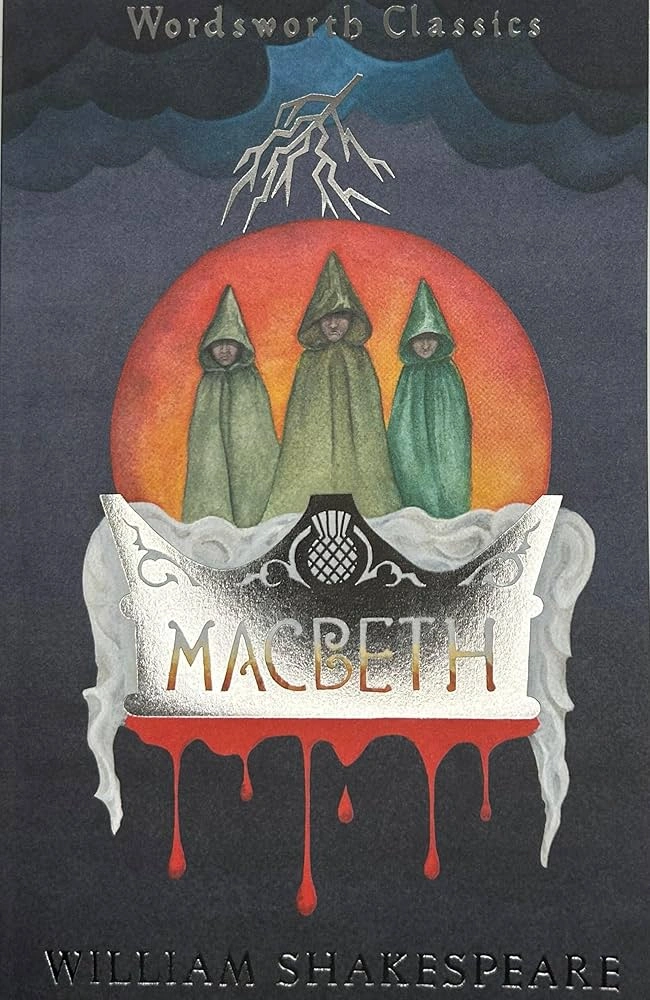
The Tragedy of Macbeth, or Macbeth, is one of his Shakespeare’s shorter tragedies, and was probably written between 1599–1606, and is thought to have been first performed in 1606.
Plot Architecture and Dramatic Structure
Macbeth opens in medias res — in the chaos of a battlefield. The three Witches establish the play’s central ambiguity immediately: “Fair is foul, and foul is fair.” This chiasmus is not merely a memorable phrase; it is the epistemological foundation of the entire drama. In Macbeth’s world, appearances systematically deceive, judgement is corrupted by desire, and the natural order is perpetually inverted.
The play’s five-act structure accelerates with unusual speed after the murder of King Duncan in Act II. Unlike Hamlet, which famously delays its central action, Macbeth rushes forward — each new murder generating not resolution but deeper entrapment. The dramatic momentum mirrors the psychological logic of tyranny: once the first transgression is made, the tyrant cannot stop.
The Major Themes of Macbeth
Ambition and its consequences. Macbeth is not a straightforwardly evil man at the play’s outset — he is a celebrated warrior with a functioning conscience. His tragedy lies precisely in his awareness of his own wrongdoing. “I have no spur / To prick the sides of my intent, but only / Vaulting ambition, which o’erleaps itself.” This self-awareness intensifies rather than mitigates his culpability.
Gender and power. Lady Macbeth is among the most complex female characters in world drama. Her famous “unsex me here” soliloquy — in which she invites demonic forces to strip her of feminine compassion — reveals the play’s anxiety about gendered virtue. Modern feminist scholars, including Janet Adelman in her influential 1992 study Suffocating Mothers, have argued that Lady Macbeth represents a profound male fear of female agency.
The supernatural and political legitimacy. The Witches’ prophecies are simultaneously self-fulfilling and ambiguous. They tell Macbeth what he wants to hear, and in doing so they expose the dangerous alignment between political ambition and wishful interpretation. The play implicitly asks: do the Witches cause Macbeth’s downfall, or do they merely reveal a predisposition already present in him?
Character Analysis: Macbeth and Lady Macbeth
Macbeth undergoes one of the most dramatically concentrated arcs in all of tragedy. He moves from heroic soldier to regicidal usurper to paranoid tyrant with a psychological coherence that anticipates modern clinical understandings of trauma, guilt, and dehumanisation. His final soliloquy — “Tomorrow, and tomorrow, and tomorrow” — is widely considered the most philosophically desolate passage Shakespeare ever wrote.
Lady Macbeth, by contrast, initially appears stronger and more resolute than her husband. Yet it is she who breaks first — her sleepwalking scene in Act V represents a complete psychological disintegration. The reversal of their psychological trajectories across the play’s five acts constitutes one of Shakespeare’s most sophisticated dramatic ironies.
💡 Pro Tip: For essay writing, always connect thematic analysis to specific dramatic techniques. In Macbeth, Shakespeare’s use of iambic pentameter breakdown — where verse fractures into irregular rhythms — signals psychological collapse before the character explicitly expresses it. Cite Act III, Scene iv (the Banquet scene) as your primary example.
5. Shakespeare’s Linguistic Legacy: 1,700 Words and a Reshaped Language
William Shakespeare‘s contribution to the English language is without parallel. Linguist David Crystal, in his study Evolving English, estimated that Shakespeare coined or first recorded approximately 1,700 words that remain in active use today. These include: “bedroom,” “lonely,” “generous,” “obscene,” “swagger,” “radiance,” “accommodation,” and “eyeball.”
Moreover, Shakespeare’s phrases have entered the language as fixed idioms. “Break the ice,” “heart of gold,” “wild goose chase,” “foregone conclusion,” “in a pickle,” “seen better days,” and “all that glitters is not gold” all originate in his plays. Native English speakers use Shakespearean language every day without realising it.
Step-by-Step: How to Analyse Shakespeare’s Language
Step 1: Identify the metre. Shakespeare primarily writes in iambic pentameter. Deviations — a missing syllable, a feminine ending, a spondee — are always deliberate and always meaningful.
Step 2: Locate the imagery. Track recurring image clusters (light/dark, disease/health, clothing, nature). In Macbeth, blood imagery appears over forty times; its evolution from honour to guilt to dehumanisation maps the play’s entire moral arc.
Step 3: Examine the syntax. Shakespeare frequently inverts normal English word order (hyperbaton) for emphasis or metre. “What light through yonder window breaks” prioritises the verb “breaks” for rhythmic and dramatic effect.
Step 4: Contextualise the vocabulary. Many Shakespearean words carried different connotations in the 1600s. “Naughty” meant wicked; “awful” meant deserving of awe; “nice” meant foolish. Always consult the OED for historical meanings.
Step 5: Connect language to character psychology. The complexity of a character’s syntax often reflects cognitive complexity. Hamlet’s elaborate subordinate clauses mirror his recursive, self-defeating thought; Iago’s short, declarative sentences mirror his direct manipulative intelligence.
6. Global Influence: Shakespeare Across Cultures and Centuries
The global reach of William Shakespeare is genuinely extraordinary. His plays have been translated into over 100 languages. The Royal Shakespeare Company reports that a Shakespeare play is performed somewhere in the world every single day of the year.
In India, Shakespeare has had a particularly rich and complex reception history. Introduced through colonial education systems in the nineteenth century, his plays were adopted, adapted, and contested by Indian writers and scholars. Bengali translations appeared as early as the 1850s. Today, Indian universities — from Delhi University to Jadavpur to Kalyani — teach Shakespeare as a central component of English Literature curricula, precisely the academic context that Lingua Litera serves.
Shakespeare in Film and Popular Culture
Shakespeare’s influence on cinema is equally vast. Direct adaptations range from Laurence Olivier’s landmark Hamlet (1948) to Akira Kurosawa’s transposition of Macbeth to feudal Japan in Throne of Blood (1957) to Joel Coen’s austere The Tragedy of Macbeth (2021). Consequently, Shakespeare is not a relic of the past but a living creative force. Every generation discovers in his work a mirror for its own anxieties — about power, identity, love, and mortality.
7. How to Study William Shakespeare: An Academic Roadmap
For students and researchers approaching Shakespeare seriously, a structured methodology produces significantly better results than unsystematic reading. The following roadmap reflects current best practice in English Literary Studies.
Essential Primary and Secondary Sources
- The First Folio (1623) — The primary textual authority for 36 of Shakespeare’s plays. The Bodleian Library’s digital facsimile is freely accessible online.
- The Arden Shakespeare (3rd edition) — The academic gold standard for annotated individual plays, with substantial critical introductions and full commentary.
- Stephen Greenblatt, Will in the World (2004) — A landmark biographical and cultural study situating Shakespeare’s imagination within late Elizabethan political anxieties.
- Harold Bloom, Shakespeare: The Invention of the Human (1998) — A controversial but indispensable work arguing that Shakespeare invented the modern concept of human interiority.
- Stanley Wells & Gary Taylor (eds.), The Oxford Shakespeare (1986) — The most rigorous modern critical edition, with important textual decisions on chronology and authorship.
- Janet Adelman, Suffocating Mothers (1992) — The definitive psychoanalytic feminist reading of Shakespeare’s major tragedies.
💡 Pro Tip: Lingua Litera (lingualitera.com) offers detailed drama explanations, poetry analyses, and study notes for university-level English Literature students. Their Macbeth explanation page provides scene-by-scene breakdowns that pair perfectly with the scholarly analysis in this guide.
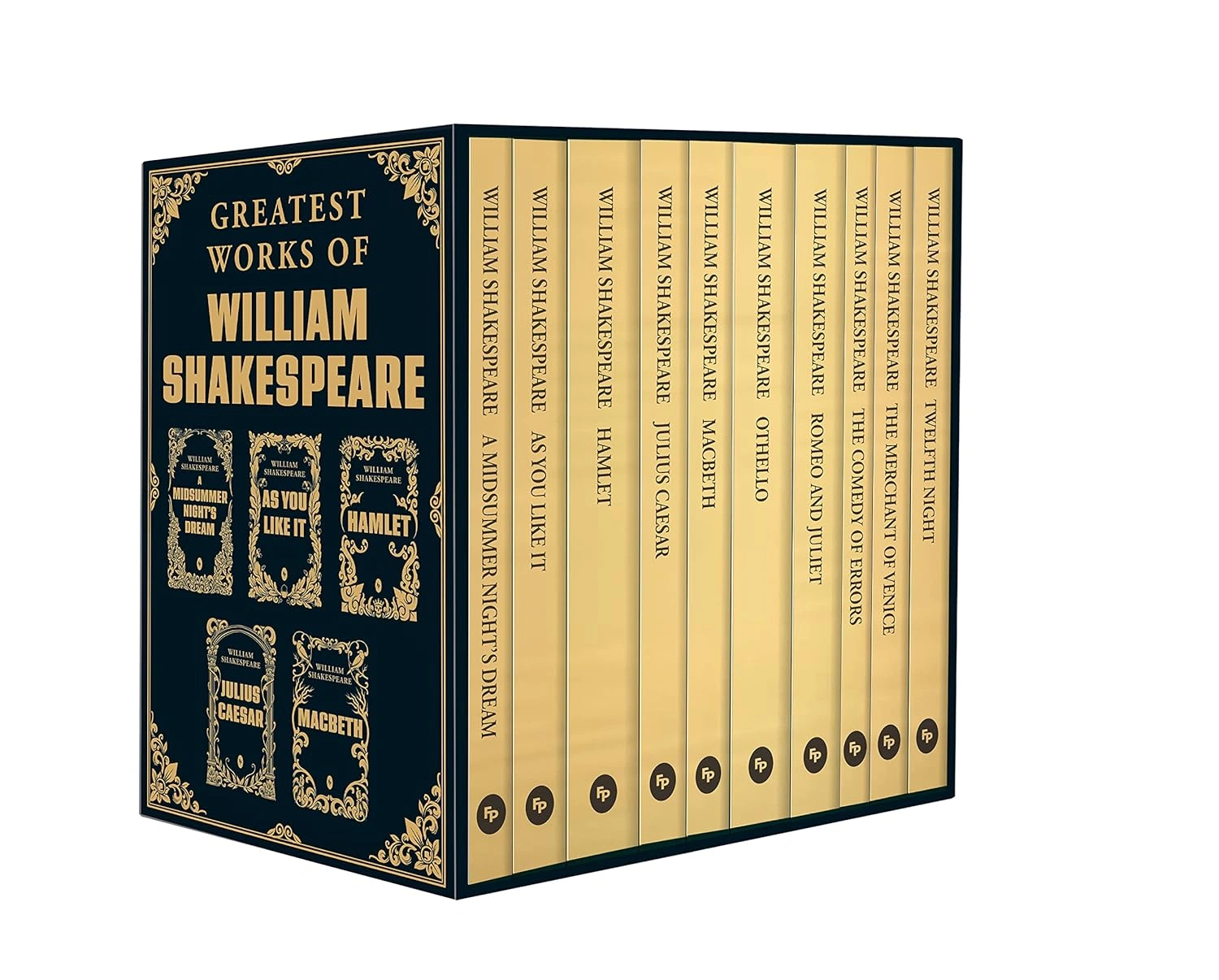
Hamlet,Othello,The Merchant of Venice,Macbeth,The Comedy of Errors,Romeo & Juliet,Julius Caeser,Twelfth Night,A Midsummer Night’s Dream
Frequently Asked Questions
Why is William Shakespeare considered the greatest writer in the English language?
Shakespeare is regarded as the greatest writer in English primarily because of the unparalleled breadth and psychological depth of his work. Across 37+ plays and 154 sonnets, he explored every dimension of human experience with linguistic precision and dramatic power that no subsequent writer has matched. His invention of approximately 1,700 new words, his perfection of the sonnet form, his creation of psychologically complex characters like Hamlet, Iago, and Lady Macbeth, and his structural mastery across all dramatic genres collectively justify his canonical status. Moreover, his plays continue to generate new interpretations after 400+ years — a mark of genuine artistic inexhaustibility.
What is the central theme of Macbeth?
The central theme of Macbeth is the catastrophic consequences of unchecked ambition. However, the play is thematically multi-layered: it simultaneously explores the nature of evil, the psychological cost of guilt, the corruption of power, the instability of gender roles, and the limits of human knowledge. What makes Macbeth distinctive among Shakespeare’s tragedies is its focus on the internal — on what happens to the human mind when it knowingly crosses a moral boundary it cannot uncross.
When was William Shakespeare born and when did he die?
William Shakespeare was born in April 1564 in Stratford-upon-Avon, England — the traditional date is April 23rd. He died on April 23, 1616, aged 52, in the same town, and was buried in the chancel of Holy Trinity Church. His wife Anne Hathaway was buried beside him in 1623, the same year the First Folio of his collected plays was published.
Did William Shakespeare actually write all his plays?
The overwhelming consensus among professional literary historians and textual scholars — including those at the Folger Shakespeare Library, the British Academy, and the Oxford English Faculty — is that William Shakespeare of Stratford-upon-Avon wrote the works attributed to him. Alternative theories (the Baconian theory, the Oxfordian theory) are considered fringe positions unsupported by primary source evidence. The resistance often reflects a class-based assumption that a grammar school boy from a provincial town could not have produced such sophisticated work — an assumption that itself merits critical scrutiny.
What are the best Shakespeare plays to study for university examinations?
The most frequently examined Shakespeare plays at university level are Hamlet, Macbeth, King Lear, Othello, A Midsummer Night’s Dream, The Tempest, and Twelfth Night. For Indian university curricula (DU, Jadavpur, Kalyani, Mumbai), Macbeth and Othello are particularly prevalent, as their themes speak directly to postcolonial critical frameworks. Lingua Litera (lingualitera.com) provides accessible yet academically rigorous study materials covering all key plays, characters, and themes.
Conclusion
William Shakespeare is not a historical curiosity to be memorised for examinations and then set aside. He is a living intellectual resource — a writer whose understanding of human psychology, political power, language, and moral complexity remains as penetrating in 2026 as it was in 1606.
From Macbeth‘s terrifying dissection of ambition’s self-destructive logic to the philosophical vertigo of Hamlet, from the linguistic playfulness of the comedies to the transcendent reconciliations of the Romances, Shakespeare‘s canon offers rewards proportional to the seriousness with which you engage it.
Use this guide as a launching pad, not a destination. Read the primary texts. Consult the Arden editions. Engage with the scholarly debates. And return to Lingua Litera for rigorous, accessible academic support throughout your literary studies.
📚 Explore More on Lingua Litera
Read our full Macbeth Explanation — Scene by Scene, Themes & Characters (2026)
Visit: lingualitera.com | Category: Drama Explanation
Academic Disclaimer: This article is intended for educational and informational purposes only. All scholarly references and interpretative claims are presented as part of an academic survey. Readers are encouraged to consult primary sources and peer-reviewed scholarship for original research. Nothing in this article constitutes professional academic advice tailored to any individual’s specific examination or research requirements.
– Lingua litera
MACBETH NOTES
Get Important Notes and Questions and Answers about MACBETH