Introduction
Some poems travel across centuries without aging. Banalata Sen by Jibanananda Das is one of them.
Written in 1934 and published in 1935 in the Bengali literary journal Kavita, this three-stanza poem has since become what many consider the most beloved poem in the Bengali language. It has been called a masterpiece of modern Bengali literature — a poem that captures exhaustion, longing, and the tender promise of rest, all in eighteen lines.
Banalata Sen by Jibanananda Das introduces us to an unnamed wanderer who has walked the earth for a thousand years — through ancient empires, through sea and darkness — and finds peace only in the gaze of one woman: Banalata Sen of Natore. The poem is at once a love lyric, a philosophical meditation, and a piece of cultural history.
This guide covers everything — the poet’s life, the poem’s origins, a stanza-by-stanza analysis, themes, literary devices, critical interpretations, and a complete glossary of terms used in the poem and its study.
A Quick View
What is Banalata Sen by Jibanananda Das? Banalata Sen is a three-stanza Bengali poem written in 1934 by Jibanananda Das. It follows a weary, time-travelling narrator who finds brief peace in the presence of a woman named Banalata Sen from Natore. It is widely regarded as one of the greatest love poems in Bengali literature and won the Rabindra Memorial Award in 1953.
About the Poet: Jibanananda Das
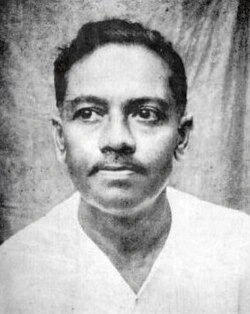
Jibanananda Das was born on February 17, 1899, in Barisal (now in Bangladesh). He taught English literature and spent much of his adult life in Calcutta, living quietly, writing prolifically, and publishing reluctantly. He died on October 22, 1954, eight days after being struck by a tram in Kolkata.
His work occupies a unique position in Bengali literary history. He moved beyond the towering shadow of Rabindranath Tagore to create a poetry world defined by solitude, introspection, nature, and time. As Das himself once said:
“I am a symbolist, a surrealist, a whatnot. These are all partially correct, I suppose. But they do not explain the total fabric.”
His major poetry collections include Dhusar Pandulipi, Banalata Sen, Mahaprithibi, Shreshtha Kavita, and the posthumously published Rupashi Bangla. Among all his works, the poem Banalata Sen remains the one most memorized, most quoted, and most loved.
In 1953 — just a year before his death — Das received the Rabindra Memorial Award for the collection Banalata Sen.
Timeline of Jibanananda Das’s Life
| Year | Event |
|---|---|
| 1899 | Born in Barisal |
| 1919 | Graduates from Barisal Brojo Mohun College |
| 1929 | Publishes first major collection Dhusar Pandulipi |
| 1934 | Writes Banalata Sen while unemployed in Calcutta |
| 1935 | Poem first published in the journal Kavita |
| 1942 | Collection Banalata Sen (31 poems) published |
| 1953 | Receives Rabindra Memorial Award |
| 1954 | Dies following a tram accident in Kolkata |
Historical Background of the Poem
Das composed Banalata Sen in 1934, during one of the most difficult periods of his personal life. He had recently lost his position as Assistant Lecturer at City College, Kolkata, and was living in financial hardship and professional uncertainty.
The manuscript of the poem was later discovered, catalogued as Book-8, and is preserved in the National Library of Calcutta. The poem appears on page 24 of that manuscript.
When Banalata Sen first appeared in the December 1935 issue of Kavita, it signalled a turning point in Bengali poetry. Seven years later, in December 1942, it was published as the title poem of Das’s third poetry collection — a volume of 31 poems that would come to define modernist Bengali verse.
The poem emerged against the backdrop of pre-independence Bengal — a period of political uncertainty, economic depression, and social upheaval. The narrator’s exhaustion and his longing for stillness speak directly to that historical moment, even if the poem’s imagery stretches across millennia.
The Poem: Original Bengali and English Translation
Download the Original Text PDF
The Bengali Text is translated by Professionals at Lingua Litera
Original Bengali (Transliterated)
Hazar bazar bachar dhare ami path hatitechi prithibir porte, Shinhala shamudraar theke nishitha’r andhakaare Malaya Saagare Onek ghurechi ami…
English Translation (Clinton B. Seely)
Stanza 1:
For thousands of years I roamed the paths of this earth, From waters round Ceylon in dead of night to Malayan seas. Much have I wandered. I was there in the grey world of Asoka And Bimbisara, pressed on through darkness to the city of Vidarbha. I am a weary heart surrounded by life’s frothy ocean. To me she gave a moment’s peace — Banalata Sen from Natore.
Stanza 2:
Her hair — the ancient darkness of Vidisha, Her face — the sculptural work of Sravasti. As a sailor, lost in the sea at the world’s edge, Sees suddenly the green of a grass island — So, in the darkness, she raised her bird’s-nest eyes and said: “Where have you been so long?” — Banalata Sen from Natore.
Stanza 3:
At day’s end, evening comes like the sound of dew. A kite wipes the scent of sunlight from its wings. When all colours fade from the world and manuscripts are ready with tales, And fireflies write the story of the dusk — All birds come home, all rivers; all of life’s labours end. Only darkness remains, face to face with Banalata Sen.
(Multiple English translations exist; the above draws from published translations by Clinton B. Seely and other established translators.)
Stanza-by-Stanza Summary and Analysis
Stanza 1: The Weary Wanderer Finds Peace
The poem opens with an image of cosmic exhaustion. The narrator — unnamed, timeless — has been walking the earth for a thousand years. He has sailed from Ceylon (Sri Lanka) through the Malayan seas, passed through the civilisations of Ashoka and Bimbisara, and pressed on through the dark ruins of Vidarbha.
This is not a realistic journey. The thousand-year timespan immediately signals that the narrator is a metaphorical figure — perhaps the poet himself, perhaps every human being who has wandered through history searching for meaning.
After all this wandering, he encounters Banalata Sen from Natore — and she gives him “a moment’s peace.” That single phrase, dudondo shanti (two moments of peace), is one of the most celebrated lines in all of Bengali poetry. The contrast is deliberate: a thousand years of wandering rewarded by just two moments of stillness.
Stanza 2: The Description and the Question
The second stanza describes Banalata Sen with extraordinary images. Her hair resembles the ancient darkness of Vidisha (an archaeological site in Madhya Pradesh). Her face carries the delicacy of the sculptures of Sravasti (a sacred city in ancient India, associated with Buddhist art).
Then comes a nautical simile: the narrator compares himself to a shipwrecked sailor who suddenly spots an island of green cinnamon grass. The comparison is visceral — relief, disbelief, gratitude, all in a single image.
And then she speaks. Her question — “Eto din kothay chilen?” (“Where have you been so long?”) — reverses the expected dynamic. She asks, as if she has been waiting. As if she, too, has been longing.
Her eyes are compared to a bird’s nest — not conventionally beautiful, but deeply suggestive of shelter, home, and rest.
Stanza 3: The End of Day, The End of Life
The final stanza shifts to dusk. Evening arrives not with a dramatic sunset, but with the delicate sound of dew. A kite wipes the scent of sunlight off its wings as darkness descends.
All birds return home. All rivers find the sea. All transactions of the day conclude. The world winds down.
Only darkness remains — and in that darkness, Banalata Sen sits face to face with the narrator. The poem ends not with death, but with presence. Not with loss, but with companionship.
Download Questions and Answers
Download 10 Important Marks 10 Questions and answers from this poetry for UGC NEP 7th SEMESTER ENGLISH MAJOR
Themes in Banalata Sen
1. Exhaustion and the Human Condition
The thousand-year wandering is the poem’s emotional core. Das uses the narrator’s fatigue to speak to a universal human experience — the tiredness of living, striving, and never arriving. Banalata Sen is the rest at the end of that journey.
2. Time and History
The poem spans millennia. It invokes ancient empires (Ashoka, Bimbisara), forgotten cities (Vidarbha, Vidisha, Sravasti), and remote geographies (Ceylon, Malayan seas). This temporal sweep makes Banalata Sen not just a woman but a symbol that transcends any single era.
3. Love as Sanctuary
The poem does not describe romantic love in a conventional sense. It describes something deeper: the experience of finding another person who makes existence bearable. Banalata Sen is less a lover than a refuge.
4. Nature as Metaphor
Evening, darkness, dew, kites, rivers, fireflies — nature is not decorative here. It mirrors the emotional arc of the poem: the fading of the day parallels the exhaustion of life.
5. Mortality and Rest
The third stanza reads like the end of a life. All things return to their origins. The darkness that descends is as much death as it is nightfall. Banalata Sen, then, waits on the other side of that darkness — a companion even in the final silence.
Literary Devices and Poetic Techniques
| Device | Example | Effect |
|---|---|---|
| Synesthesia | “sound of dew,” “scent of sunlight” | Merges senses; creates dreamlike atmosphere |
| Simile | Hair like the darkness of Vidisha; eyes like a bird’s nest | Evokes beauty through unexpected comparison |
| Extended Metaphor | The sailor and the green island | Captures the narrator’s relief at finding Banalata |
| Allusion | Ashoka, Bimbisara, Vidarbha, Sravasti | Grounds the poem in historical depth |
| Refrain | “Banalata Sen from Natore” ends each stanza | Creates unity and reinforces emotional weight |
| Personification | Evening comes “like the sound of dew” | Gives the abstract a sensory quality |
| Hyperbole | “Thousand years I have wandered” | Signals the epic scale of the narrator’s journey |
| Free Verse / Payar | 14-syllable lines with caesura | Maintains rhythm without rigid rhyme |
| Imagery | Fireflies, kites, cinnamon grass | Paints the poem’s landscape in vivid, sensory strokes |
Symbolism in Banalata Sen
Darkness: Far from purely negative, darkness in the poem represents rest, intimacy, and the end of struggle. Banalata Sen appears at the end of the day, in darkness — which aligns her with peace rather than fear.
The Bird’s Nest: Banalata Sen’s eyes are compared to a bird’s nest — not for visual beauty but for what they mean. A nest is home, shelter, the place where tired wings finally fold.
Cinnamon Island: The green island seen by a shipwrecked sailor signals salvation. It tells us the narrator, at the point of breaking, finds rescue in her presence.
The Kite Wiping Sunlight: This haunting image captures the exact moment the day ends — not by the sun setting, but by a bird erasing its warmth from its wings.
The River Returning: In the third stanza, rivers return to the sea as birds return to nests. This is a metaphor for life completing its cycle — suggesting the poem is about something larger than a single day.
Historical and Geographical References Explained
The poem is dense with specific historical and geographical names. Understanding them deepens the reading enormously.
| Reference | What It Is | Why It Matters |
|---|---|---|
| Ceylon | Present-day Sri Lanka | Ancient maritime trade hub; symbol of the eastern sea |
| Malayan seas | Waters around Malaya / Malaysia | Distant, mysterious; signals vast travel |
| Ashoka (Asoka) | Mauryan Emperor (304–232 BCE) | Associated with a vast, grey empire and Buddhist melancholy |
| Bimbisara | Magadha King (c. 558–491 BCE) | Pre-Mauryan ruler; adds historical depth |
| Vidarbha | Ancient region in present-day Maharashtra | A “dark city” — forgotten, atmospheric |
| Vidisha | Archaeological site in Madhya Pradesh | Known for ancient ruins; “darkness” suggests its antiquity |
| Sravasti | Ancient city in present-day Uttar Pradesh | A major Buddhist pilgrimage and art site; known for sculpture |
| Natore | Town in Rajshahi, Bangladesh | Grounds Banalata Sen in the ordinary; contrast to the grand historical sweep |
The poem moves deliberately from the grand — empires, seas, millennia — to the intimate: one woman, one small town.
Critical Interpretations
The Romantic Reading
The most common reading sees Banalata Sen as a love poem — a timeless encounter between an exhausted man and a woman who gives him peace. The romantic interpretation focuses on Banalata as the ideal beloved.
The Existential Reading
Several scholars argue that the poem is less about love and more about meaning — the search for something that makes the effort of living worthwhile. Banalata Sen is not so much a woman as an answer to the question: why go on?
The Surrealist Reading
Academic research (notably published in IIUC Studies, 2016) places the poem within a surrealist framework. The fluid movement of time, the dreamlike imagery, and the blending of historical eras suggest the poem operates on a subconscious level, beyond realistic narrative.
The Mythological Reading
Some scholars read Banalata Sen as an aeon — a cosmic, timeless feminine principle rather than a human being. Her hair predates history. Her face recalls ancient sculpture. She has been waiting as long as the narrator has been wandering.
Comparison: Banalata Sen vs. Other Iconic Love Poems
| Feature | Banalata Sen (Das) | To Helen (Poe) | Solitary Reaper (Wordsworth) |
|---|---|---|---|
| Subject | Mysterious woman from Natore | Helen of classical beauty | A highland girl singing alone |
| Setting | Across civilisations / Natore | Classical Greece | Scottish highlands |
| Tone | Melancholic, tender | Reverent, adoring | Wistful, contemplative |
| Time | Spans millennia | Mythological past | A single moment |
| Nature imagery | Rich and integral | Absent | Central |
| Resolution | Companionship in darkness | Arrival home | Memory carrying forward |
| Cultural rooting | Deeply Bengali and subcontinental | Western classical | British Romantic |
The Identity of Banalata Sen: Real or Imagined?
This question has fascinated readers for decades. Was Banalata Sen a real person?
Jibanananda Das was famously private — he preferred obscurity and rarely spoke about his personal life. For years, scholars believed it unlikely he had a romantic connection to any woman by that name.
However, the discovery of his diaries in the mid-1990s revealed a more complex inner life than previously known. Whether or not a specific Banalata Sen existed remains unconfirmed.
What scholars agree on is this: the name Banalata would have been a fashionable choice for women in the Bengali middle-class Bhadralok community of Das’s parents’ generation. The surname Sen belongs to the Vaidya caste — the same caste as Das’s own family before they became Brahmo.
The name may have been drawn from life, or constructed deliberately to evoke a particular social world. Either way, the character of Banalata Sen has long outgrown any single biographical origin. She belongs to all of Bengali literature now.
Influence and Legacy
The influence of Banalata Sen on Bengali culture extends well beyond the page.
- The poem gave its name to Das’s third collection (1942), which marked him as one of the foremost modernist poets in the Bengali language.
- It has been set to music and performed extensively in both West Bengal and Bangladesh.
- Natore — a small town in Bangladesh — has become associated with the poem. The phrase “Natore’s Banalata Sen” functions almost as a cultural reference in itself.
- The poem has been translated into numerous languages, though translators consistently note that the musicality of the original Bengali cannot be fully reproduced.
- Banalata Sen has been placed in the company of great literary figures: Lucy (Wordsworth), Helen (Poe), and the Solitary Reaper (Wordsworth) — figures who define feminine mystery and beauty in world literature.
Common Mistakes in Interpreting the Poem
Mistake 1: Reading it as a simple love poem Banalata Sen is not a conventional romance. It is about exhaustion, time, and the human need for stillness — not courtship or passion.
Mistake 2: Taking the thousand years literally The millennium of wandering is a metaphor for the entire weight of human history and individual fatigue — not a supernatural claim.
Mistake 3: Ignoring the historical references Readers who skim over Ashoka, Bimbisara, Vidisha, and Sravasti miss half the poem’s meaning. These are not decorative names — they anchor the narrator’s journey in real human civilisation.
Mistake 4: Treating the third stanza as grief The ending is not tragic. The darkness that remains is not despair — it is peace, intimacy, and the end of effort. Banalata Sen waits in that darkness as a comfort, not a loss.
Mistake 5: Undervaluing the refrain The phrase “Banalata Sen from Natore” ends each stanza. This repetition is deeply deliberate — it pulls the cosmic back to the local, the mythological back to the human, every time.
Expert Tips for Reading and Writing About This Poem
Tip 1: Read it aloud — even in translation The poem is built around sound. The Bengali original uses payar meter — 14-syllable lines with a natural pause in the middle. Reading aloud, even a translation, reveals its musicality.
Tip 2: Study the movement from large to small Each stanza moves from the grand (empires, seas, millennia) to the intimate (one woman, one moment). Understanding this structure is the key to understanding the poem’s emotional logic.
Tip 3: Take the geography seriously Look up Ashoka, Sravasti, Vidisha, and Natore. Even a brief familiarity with these places transforms the poem from a vague historical backdrop into a specific, layered world.
Tip 4: Consider multiple translations No translation of Banalata Sen fully captures the original. Read at least two — Clinton B. Seely’s version and Faizul Latif Chowdhury’s, for instance — and let them illuminate each other.
Tip 5: Resist a single interpretation The poem sustains romantic, existential, mythological, and surrealist readings simultaneously. Part of its greatness is that it does not resolve into one meaning. Sit with the ambiguity.
Key Takeaways
✅ Banalata Sen was composed in 1934 and published in 1935 in the journal Kavita.
✅ The poem consists of three six-line stanzas following the Bengali payar metre.
✅ The unnamed narrator wanders across a thousand years of history before finding peace with Banalata Sen.
✅ Key literary devices include synesthesia, simile, extended metaphor, allusion, and a structural refrain.
✅ The poem spans ancient Indian empires and geographies — from Ceylon to Sravasti — grounding it in the subcontinent’s deep history.
✅ Banalata Sen represents not just romantic love, but sanctuary, rest, and meaning.
✅ Das received the Rabindra Memorial Award for the Banalata Sen collection in 1953.
✅ The poem is widely regarded as one of the greatest love poems in the Bengali language.
Recommended External Reference
- Wikipedia: Banalata Sen — en.wikipedia.org/wiki/Banalata_Sen — factual background and textual notes
Conclusion
Banalata Sen by Jibanananda Das is not simply a poem about a woman. It is a poem about what it means to be human — to carry the weight of history, to wander without arrival, and to find, at the end of everything, a face in the darkness that asks: Where have you been so long?
The poem’s genius lies in its layering. On the surface, it is intimate and lyrical. Beneath that surface, it spans civilisations, philosophies, and the full length of human longing. The refrain “Natore’s Banalata Sen” does not merely name a character — it pulls the entire journey home.
More than eight decades after it was first published, this poem continues to be memorised, set to music, quoted in conversation, and written about by scholars across the world. That endurance is not coincidence. It is the measure of how perfectly Das understood — and expressed — what it means to be tired, alive, and in need of peace.
Read Related Poetry Explanation
- To Autumn by John Keats: Explanation, Summary, Themes, and Literary Analysis
- Ulysses by Alfred Lord Tennyson – A Complete Analysis