Introduction
Take the word running. One sentence can make it a noun. Another sentence can make it an adjective. A third can make it part of a verb phrase. The word does not change at all. Only its role does.
That is exactly what makes the gerund and present participle so confusing for learners. Both come from the same verb form — the –ing form — yet they behave like completely different parts of speech inside a sentence. Misidentifying them is not just a grammar error; it changes how you understand and build sentences.
This guide goes beyond the usual definitions. You will learn not only what each form is, but how to spot them in any sentence, why even experienced writers sometimes get confused, and what no other resource usually tells you — how context, not form, is the only real test.
Quick Answer
What is the difference between a gerund and a present participle? Both are the –ing form of a verb, but they serve different functions. A gerund acts as a noun — it names an activity. A present participle acts as an adjective or part of a continuous verb phrase. The form is identical; the function is what separates them.
What Is a Gerund?
A gerund is simply the –ing form of a verb that steps into the role of a noun. It does not describe. It does not show ongoing action. It names something — an activity, a concept, an experience.
Think of it this way. The word swim is a verb. The activity of swimming, however, can become a thing you talk about, a subject of discussion, or an object of a sentence. Once it does that, it is no longer functioning as a verb. It has become a gerund.
Gerunds in their four main roles:
- As a subject: Swimming improves cardiovascular health.
- As an object of a verb: She loves reading before bed.
- As an object of a preposition: He apologized for arriving late.
- As a subject complement: His greatest weakness is procrastinating.
In every one of those examples, you could replace the gerund with a regular noun and the sentence would still work grammatically. Replace swimming with exercise. Replace reading with books. That noun-swap test is one of the most reliable tools you have.
What Is a Present Participle?
A present participle is also the –ing form of a verb — the very same form — but it works in one of three completely different ways inside a sentence.
1. As part of a continuous verb phrase (with an auxiliary verb)
The engine is running smoothly. They were laughing at the joke.
Here, the –ing form pairs with a helping verb to express ongoing action. It is not a noun; it is part of the predicate.
2. As an adjective (modifying a noun)
The barking dog woke the neighbours. She caught the falling glass just in time.
The word directly modifies a noun, describing its current state or ongoing behaviour. You can replace it with a typical adjective: “the loud dog,” “the fragile glass.” Same structure.
3. As part of a participial phrase (modifying a noun or the sentence)
Running through the corridor, he collided with a professor. The child sat in the corner, crying softly.
In both cases, the participial phrase describes a noun or pronoun — it adds detail about what someone is doing while something else happens.

The Core Difference: Function Over Form
Here is the thought that most grammar books state but rarely make vivid enough: you cannot tell a gerund from a present participle by looking at the word alone.
The word crying is identical in these two sentences:
- Crying is a sign of emotional release. (gerund — it is the subject, a noun)
- The crying child ran to her mother. (present participle — it modifies the noun child)
The word did not change. The sentence structure did.
This is why function — not spelling, not sound, not position alone — is the only accurate test. Ask one question every single time:
What job is this –ing word doing in the sentence?
If it is doing a noun’s job, it is a gerund. If it is doing an adjective’s or verb’s job, it is a present participle. The form tells you nothing. The function tells you everything.
How to Identify Gerund and Present Participle in a Sentence
Here is a practical, step-by-step method that works on any sentence.
Step 1: Find the –ing word.
Step 2: Ask what role it plays.
- Can you replace it with a noun or pronoun (like it or this activity)? → Gerund
- Does it modify a noun (like an adjective would)? → Present participle
- Does it combine with is/was/were/has been etc.? → Present participle in a verb phrase
- Is it at the start of a phrase that describes a noun? → Present participle in a participial phrase
Step 3: Run the substitution test.
| Test | Method | Result |
|---|---|---|
| Noun swap | Replace with a simple noun | If grammatical → gerund |
| Adjective swap | Replace with a plain adjective | If grammatical → present participle |
| Pronoun swap | Replace with “it” or “this” | If grammatical → gerund |
Example walkthrough:
Painting is her true calling.
Replace painting with a noun: Art is her true calling. — Works. It is a gerund.
The painting child stayed quiet.
Replace painting with an adjective: The quiet child stayed quiet. — Works. It is a present participle.
Gerund and Present Participle After Linking Verbs (The Hardest Case)
This is where most learners — and many textbooks — struggle. When an –ing form appears after a linking verb like is, was, or seems, it could be either.
Consider:
- Her hobby is painting. — Gerund. Painting renames the subject (hobby). Replace: “Her hobby is art.” Works.
- The wall is painting. — Present participle. Painting describes what the wall is currently doing. Replace: “The wall is drying.” Works as a continuous verb.
- She is exciting. — Present participle used as an adjective. Exciting describes her personality.
- She is excited about painting. — Here excited is an adjective; painting after the preposition is a gerund.
The linking verb test: ask whether the –ing word renames the subject (gerund) or describes/modifies the subject (present participle as adjective).
Cooking is my passion. → Cooking renames passion. Gerund.
The soup is cooking. → Cooking shows ongoing action—present participle in a continuous verb phrase.
Participial Phrases vs Gerund Phrases
Both gerunds and present participles can lead phrases. Understanding which phrase type you are dealing with depends entirely on the phrase’s function in the sentence.
Gerund Phrase
A gerund phrase is a group of words with a gerund at its head. The entire phrase functions as a noun.
- Eating fast food every day is not a wise habit. (subject)
- He finally quit smoking cigarettes after thirty years. (object)
- She is proud of finishing her thesis on time. (object of preposition)
Participial Phrase
A participial phrase has a present (or past) participle at its head and the whole phrase functions as an adjective or adverbial modifier.
- Holding her breath, she opened the results envelope.
- The man standing near the gate is the principal.
- Realising his mistake, he apologised immediately.
The key diagnostic question: Does the phrase name something or answer “what”? (gerund phrase) Or does it describe a noun or tell us something about the context of an action? (participial phrase)
When Both Interpretations Are Technically Valid
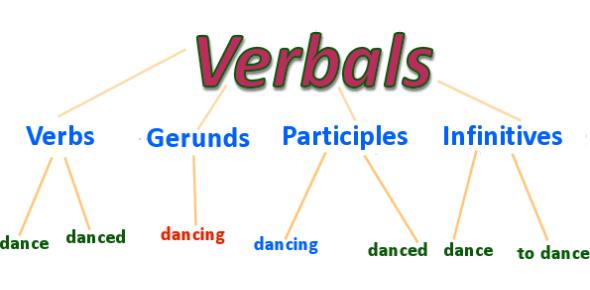
Modern linguistics — and some contemporary grammarians — actually use the combined term gerund-participle for the –ing form, acknowledging that in certain constructions the boundary is genuinely blurry.
Consider: I saw him running.
Traditional grammar calls running a present participle forming an object complement. But “his running” is also possible — treating it more like a gerund. Both readings describe the same event.
The ambiguity is real and recognised. It does not mean the distinction is useless — it means that in a handful of constructions, both analyses are defensible. For exam purposes, however, look at the most dominant function in context.
Common Mistakes and How to Fix Them
Mistake 1: Confusing a gerund subject with a present participle
✗ Identifying running in “Running is good for the heart” as a present participle because it “looks like an action.” ✔ Running is the subject of the sentence — it is a gerund.
Mistake 2: Missing a present participle disguised as an adjective before a noun
✗ Calling the boiling water a gerund because it ends in –ing. ✔ Boiling modifies water — it is a present participle functioning as an adjective.
Mistake 3: Treating a continuous tense verb as a gerund
✗ “She is reading the report” — some learners label reading a gerund. ✔ Is reading is a continuous verb phrase. Reading here is a present participle combined with the auxiliary is.
Mistake 4: Misreading the linking verb trap
✗ “His job is teaching” — calling teaching a present participle. ✔ Teaching renames the subject (job) — it is a gerund acting as a subject complement.
Mistake 5: Confusing a participial phrase with a gerund phrase
✗ Labelling “Running down the road, he tripped” as having a gerund. ✔ “Running down the road” is a participial phrase modifying the subject he. It describes what he was doing — it does not name anything.
Comparison Table: Gerundvs. Present Participle
| Feature | Gerund | Present Participle |
|---|---|---|
| Form | Verb + –ing | Verb + –ing |
| Function | Acts as a noun | Acts as adjective or part of verb phrase |
| Position | Subject, object, complement, after preposition | Before/after noun, with auxiliary verb, in participial phrases |
| Substitution test | Can be replaced by a noun or pronoun | Can be replaced by an adjective |
| Example | Smoking is harmful. | The smoking chimney darkened the sky. |
| In a phrase | Gerund phrase (noun function) | Participial phrase (adjective/adverb function) |
| After linking verbs | Renames the subject | Describes/modifies the subject |
| After prepositions | Always a gerund | Never directly after a preposition |
| With auxiliary verbs | Never | Always (is/was + –ing) |
Real Exam Sentences Decoded
These are the kinds of sentences that appear in competitive exams, entrance tests, and grammar exercises. Let us decode each one clearly.
1. Travelling broadens the mind. → Travelling is the subject of the sentence. Replace it: “Experience broadens the mind.” Works. Gerund.
2. The travelling salesman knocked on the door. → Travelling modifies the noun salesman. Replace it: “The tired salesman knocked.” Works. Present participle (adjective).
3. She was travelling to Kolkata when the call arrived. → Travelling is part of the continuous verb phrase was travelling. Present participle (in verb phrase).
4. Travelling through rural Bengal, she discovered stories no map could hold. → Travelling through rural Bengal is a participial phrase modifying she—present participle (in participial phrase).
5. She is afraid of travelling alone. → Travelling follows the preposition of. Anything after a preposition that ends in –ing is a gerund. Gerund.
All five sentences use the same verb. All five are different grammatically. That is the real lesson.
Expert Tips
Tip 1: The preposition rule is absolute. If an –ing word immediately follows a preposition (about, of, for, in, on, by, without, after, before), it is always a gerund. No exception. “Thank you for coming.” “She left without saying goodbye.” — both gerunds.
Tip 2: “Is/was/were + –ing” almost always signals a present participle. The auxiliary verb is the giveaway. She is cooking. They were laughing. These are continuous tenses, not gerund constructions.
Tip 3: Try the “it” replacement test. Mentally replace the –ing word with “it.” If the sentence makes sense, it is likely a gerund. “Swimming is fun” → “It is fun.” Makes sense. Gerund.
Tip 4: Participial phrases love sentence beginnings and endings. A present participial phrase that opens a sentence (set off by a comma) always modifies the subject. “Sighing deeply, she closed the file.” → Sighing deeply describes her. Present participle.
Tip 5: Do not let continuous tense fool you. Many learners see a sentence like “He is annoying” and ask: gerund or present participle? The answer is present participle functioning as a predicate adjective. The verb links the subject to the adjective annoying—no gerund involved.
More from Lingua Litera
- The 12 Tenses in English Grammar
- Subject-Verb Agreement: 20 Advanced Rules
- Voice Change in English Grammar
- 100 Voice Change Exercises for Competitive Exams
- Grammar category page on Lingua Litera
Conclusion
The gerund and present participle belong to one of English grammar’s most interesting paradoxes: two forms that look identical but think completely differently. A gerund lives in the world of nouns — it names, it stands as a subject, it follows prepositions. A present participle lives in the world of description and action — it modifies nouns, creates continuous tenses, and builds participial phrases.
The moment you stop asking “what does this word look like?” and start asking “what is this word doing?” — the confusion fades. That shift in thinking, from form-based to function-based analysis, is not just the key to understanding gerunds and present participles. It is the key to understanding English grammar as a whole.
Practice with real sentences. Use the substitution test. Notice –ing words in books and articles and ask that one question each time. Over a few weeks, the distinction stops being a rule you look up and becomes something you see.
FAQs
Do gerunds always take singular verbs?
Yes. Because a gerund functions as a noun, and a singular noun takes a singular verb. “Swimming is good for you” — not “Swimming are.” Even a gerund phrase as a subject takes a singular verb: “Finishing both papers in one night is nearly impossible.” This also connects directly to subject-verb agreement rules.
What is the difference between a gerund phrase and a participial phrase?
Both are phrases led by an –ing form, but their functions differ entirely. A gerund phrase acts as a noun: “Reading classic novels” broadened his perspective. A participial phrase acts as an adjective: “Reading by the window,” she finished the novel in one sitting. The noun function vs modifier function is the key distinction.
Why do some modern grammarians use the term “gerund-participle”?
Some contemporary linguists — particularly Huddleston and Pullum in their influential Cambridge Grammar — argue that the traditional split between gerund and present participle is unnecessarily complicated, since both use the same morphological form. They prefer “gerund-participle” as a single category defined by the –ing ending, with grammatical function determining the rest. However, most school curricula and standardised exams still use the traditional distinction, so knowing both perspectives is useful.
Can a gerund have a subject?
Yes, but it is possessive. In formal English, the noun or pronoun before a gerund should be in the possessive case. “I appreciate your helping me” is more grammatically precise than “I appreciate you helping me.” The possessive shows that the action (helping) belongs to “you” — which is now functioning as part of a noun phrase, not as an active agent.
What is the easiest trick to identify a present participle in a sentence?
Look for two signals: first, does the –ing word follow a form of be (is, was, were, am, are, been)? If yes, it is a present participle in a continuous verb phrase. Second, does the –ing word sit directly before or after a noun and describe it? If yes, it is a present participle functioning as an adjective. Either signal reliably identifies a present participle.
Is the -ing form after a preposition always a gerund?
Yes, always. When an –ing form directly follows a preposition — of, for, about, in, without, before, after, by — it is always a gerund. Examples: “Thank you for helping,” “She left without saying a word,” “He succeeded by working hard.” This is one of the most reliable rules in English grammar.
How do I know if an -ing word is a gerund or a present participle?
Ask what job the –ing word is doing. If it names something and could be replaced by a pronoun like “it,” it is a gerund. If it describes a noun like an adjective, or pairs with a helping verb like “is” or “was,” it is a present participle. The substitution test — swapping in a noun or adjective — is the fastest practical check.
What is the main difference between a gerund and a present participle?
A gerund and a present participle share the same –ing form, but their functions are completely different. A gerund acts as a noun — it names an activity or experience. A present participle acts as an adjective or forms part of a continuous verb tense. The word itself does not change; only the role it plays in the sentence changes.